Quranic Answer
The Holy Quran, regarded as the divine guide for over a billion Muslims worldwide, presents a profound narrative that encompasses not only spiritual truths but also elements that inspire creativity, artistry, and an appreciation for beauty. While the Quran does not explicitly delineate the notions of art and beauty, it does offer an abundance of verses that allow for a deeply contemplative approach to understanding these concepts. In this article, we will explore how the Quran indirectly imparts wisdom on art and beauty, demonstrating how these elements reflect both the essence of human spirit and the relationship between humankind and the divine. 1. The Nature of Beauty in the Quran The Quran suggests that beauty transcends the superficial attributes of physical appearances. Rather, it is entwined with the essence of creation and the spiritual journey of individuals. For instance, in Surah Al-Baqarah, Verse 164, Allah states: "Indeed, in the creation of the heavens and the earth and the alternation of the night and day are signs for those of understanding." This verse invites believers to observe the intricate and awe-inspiring manifestations of the universe. Essentially, it implies that an understanding of beauty requires a deep contemplation of nature and its divine origins, resonating with the principles that artists and poets have long embraced in their work. The Quran encourages individuals to reflect upon creation, and this act of contemplation can inspire new artistic expressions. 2. The Relationship Between Art and Spirituality Art and spirituality share a profound relationship, as both seek to express and explore the depths of human existence. The Quran supports the idea that human creativity is rooted in the divine connection between the creator and the created. In Surah Maryam, Verse 26, it is stated: "So eat and drink and be content." This verse gives emphasis to appreciating the simple beauties of life, taking the time to savor existence itself. The essence of joy, tranquility, and contentment are all elements that an artist seeks to convey through their work. The Quran acknowledges that life's beauty is intertwined with spiritual fulfillment, suggesting that the act of creation can be a form of worship. 3. Artistic Expression as a Reflection of Divine Signs The Quran often refers to the signs of Allah present throughout the universe. This is indicative of how art can serve not only as a personal expression but also as a reflection of divine signs. Surah An-Nahl, Verse 78 states: "And Allah has brought you out of your mother’s wombs while you knew nothing, and He has made for you hearing, sight, and hearts that you might give thanks." This verse highlights the gifts bestowed upon humanity, encouraging individuals to use their abilities creatively. Artists draw inspiration from their surroundings, be it the beauty of nature, the complexities of human emotion, or the divine light that shapes the world. The Quran posits that true beauty emanates from recognizing and reflecting upon the myriad signs of God. 4. The Art of Language One cannot discuss art without acknowledging the power of language as a medium through which beauty is expressed. The Quran is a profound literary masterpiece, employing styles and forms that demonstrate a high level of artistry. The eloquent use of metaphors, rhythm, and vivid imagery presents the Quran as an art form in itself. The linguistic beauty found within its verses serves as inspiration for writers, poets, and speakers. The Quran’s ability to convey profound meanings through succinct language resonates deeply with individuals, fostering a yearning to replicate such beauty in their own artistic endeavors. 5. Nature as an Ultimate Muse Throughout Islamic history, nature has always been a significant source of inspiration for art. The Quran continuously draws attention to the awe-inspiring aspects of the natural world. This reverence for nature can be seen in countless verses that implore individuals to witness the beauty of Allah’s creation. The natural elements, from mountains and rivers to flora and fauna, are not merely aspects of the environment but are filled with beauty and meaning. When an artist immerses themselves in nature, they are tapping into the same divine signs that the Quran encourages believers to observe. The Quran’s teachings thus suggest that nature is not just a backdrop for art but a crucial element that informs and enriches the creative process. 6. The Role of the Artist in Society In considering art’s social function, the Quran promotes values that encourage artists to use their talents for the benefit of humanity. By promoting spiritual values through their work, artists can inspire hope, love, and kindness in society. The Quran emphasizes compassion and community, fostering an understanding that artistry can be a tool for social change and unity. Furthermore, the Quran empowers the artist to convey messages of beauty, truth, and morality, encouraging a deeper connection among individuals and between humanity and the divine. 7. Conclusion: The Intersection of Art and Faith The Quran’s indirect references to beauty and art illuminate the intrinsic connection between these two components of human experience. It champions a perspective where art transcends mere aesthetics and becomes a medium that fosters spiritual growth and connection with the divine. While the Quran does not provide a strict definition of art or beauty, the principles and reflections it offers can guide artists in their creative journeys. In sum, the Quran paints a picture of a world rich in beauty and artistry, inviting individuals to engage with their environment fully and to create with intention and purpose. The divine signs within nature, the eloquence of language, and the call to observe and reflect on creation elevate the concept of beauty to a spiritual level, enriching human life with purpose, joy, and connection to the divine. Thus, embracing these values through art not only enriches the artist's spirit but becomes a means of worship and a channel for conveying beauty into the world.
Related Verses
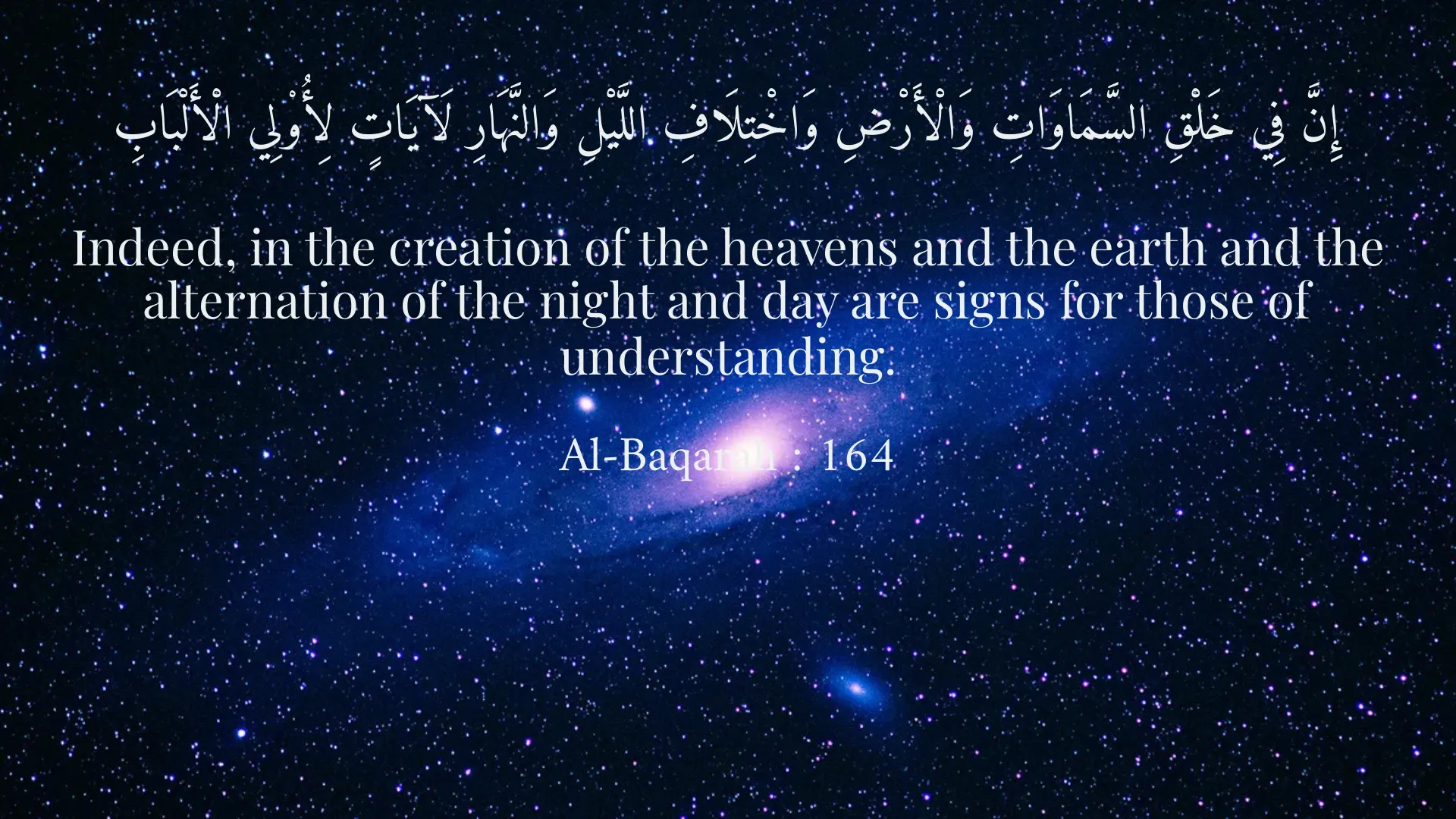
إِنَّ فِي خَلْقِ السَّمَاوَاتِ وَالْأَرْضِ وَاخْتِلَافِ اللَّيْلِ وَالنَّهَارِ لَآيَاتٍ لِأُو۟لِي الْأَلْبَابِ
Indeed, in the creation of the heavens and the earth and the alternation of the night and day are signs for those of understanding.
Al-Baqarah : 164
فَكُلِي وَاشْرَبِي وَقَرِّي عَيْنًا
So eat and drink and be content.
Maryam : 26
Short Story
There is a story of a young artist named Ali who was always fascinated by the beauty of nature. He had many dreams about art. One day, he decided to go to the mountains to draw inspiration from the natural beauty. On his way, he reflected on the verses of the Quran that depict the beauty of creation. When he reached the mountain peak, he looked down at the breathtaking views and tears of joy filled his eyes. There he realized that true art lies in understanding the divine beauty and expressing it in life.