Quranic Answer
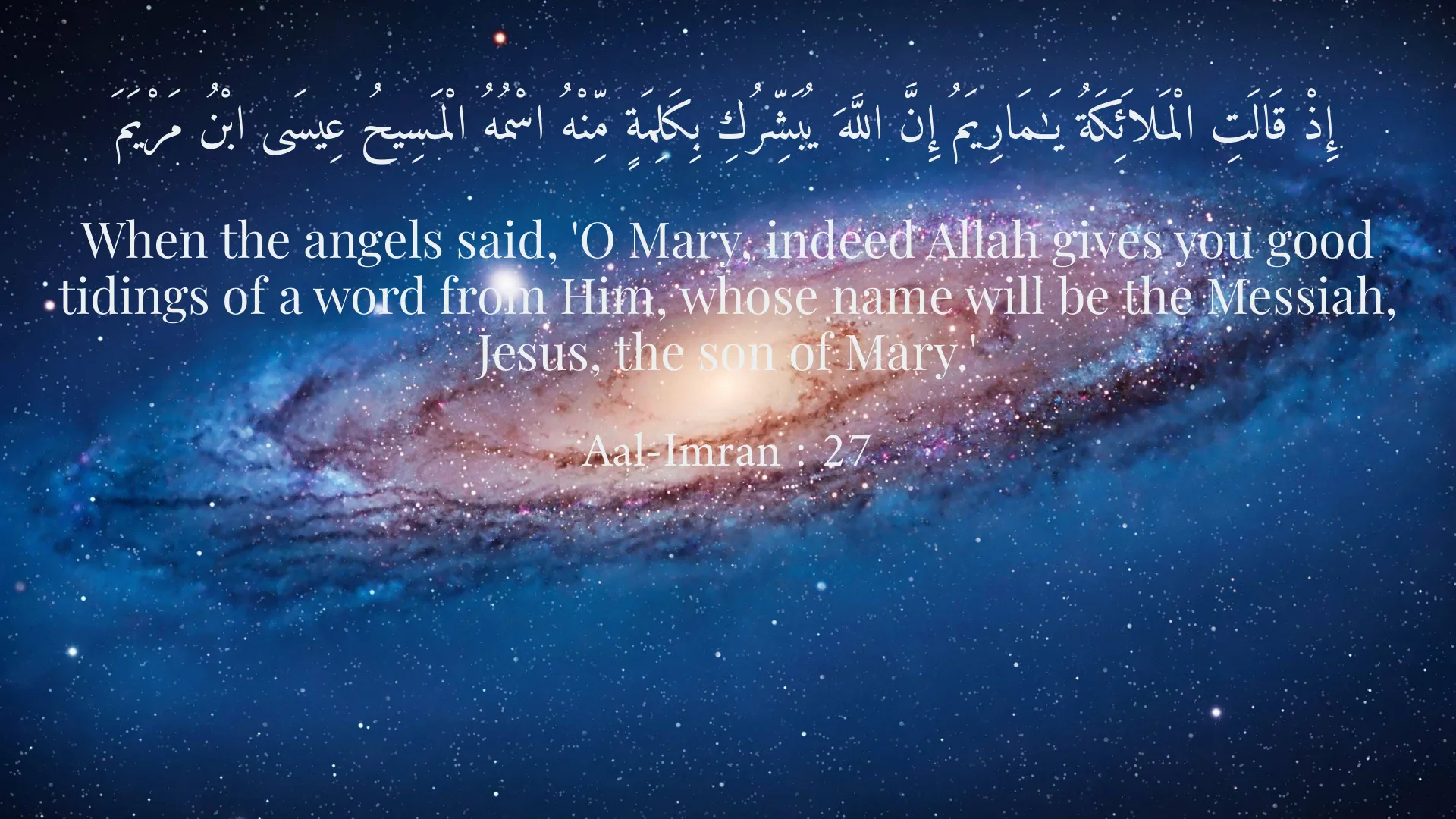
The Holy Quran, regarded as the verbatim word of God in Islam, emphasizes the utmost importance of studying history and learning from past events. This directive is not merely an encouragement; it is a profound call to action embedded within its verses. One particularly notable verse that introduces this theme is verse 27 of Surah Aal-Imran. It mentions the moment when the angels proclaimed to Mary, saying: 'O Mary, indeed Allah gives you good tidings of a word from Him, whose name will be the Messiah, Jesus, the son of Mary.' This succinct yet powerful statement not only reflects a significant historical event — the announcement of the birth of Jesus (AS) — but also serves as a trigger for deeper contemplation on the broader historical context surrounding his life and message. In this narrative, we observe a divine intervention where history is marked by extraordinary events, signaling a critical juncture in mankind's spiritual evolution. The Quran, through such verses, encourages believers to look into the past and consider how the actions and decisions of individuals, society, and nations have shaped the present world. This call to historically informed faith is pivotal, especially in a time where misinformation and distortion of historical facts can lead to misguided judgments and actions. Moreover, in Surah Yusuf, Allah recounts the story of Joseph (AS), sharing a rich narrative filled with trials, tribulations, and divine providence. Surah Yusuf, verse 111 states: 'Indeed, in their stories, there is a lesson for those of understanding.' This assertion underscores the pedagogical purpose of history — to serve as a source of lessons for the wise. Every narrative holds within it the capacity to teach valuable virtues like patience, resilience, and trust in God. Through Joseph’s story, we learn about the importance of maintaining faith amidst adversity, making wise choices, and recognizing the overarching plan of God in our lives. This method of recounting histories serves multiple functions. Firstly, it provides a framework for understanding human behavior and societal dynamics. By analyzing how past civilizations rose and fell, how they responded to moral dilemmas, and how they interacted with divine commandments, we can glean insights applicable to our contemporary lives. The tales of previous nations — their triumphs and failures — can act as cautionary tales, alerting us to the repercussions of straying from righteous conduct. Secondly, history functions as a lantern, illuminating the path forward for individuals and communities alike. When we engage with historical narratives, we begin to see patterns and trends that persist throughout time. These patterns inform our understanding of current events, enabling us to better navigate the present. For instance, the injustices witnessed in history — be it through wars, colonization, or societal upheaval — should instill in us a sense of duty to strive toward a more just and equitable world. By applying divine teachings to our lives, as the Quran advocates, we become more equipped to avoid the mistakes that plagued previous generations and to foster a future rooted in compassion, justice, and accountability. The Quran does not merely recite history; it actively invites us to engage with it critically. This engagement necessitates not just a passive reading of events, but a reflective analysis that connects past actions to present realities and future aspirations. By doing so, we cultivate a comprehensive understanding of life's complexities and an adherence to the core principles of Islam — a religion that calls upon believers to be intellectually engaged and morally responsible. In addition to spiritual insights, studying history provides practical knowledge that can nurture societal progress. Knowledge of historical injustices can fuel movements for equality and justice, while understanding past successes can inspire contemporary advancements in science, technology, and governance. Thus, the study of history becomes an essential tool for personal development and community empowerment. Conclusively, through recounting past narratives, the Quran serves as both a guide and a source of enlightenment. It encourages us to attain a deeper understanding of life, drawing from the lessons embedded in historical events and lives. It calls for adherence to the correct Islamic principles, ensuring that as we navigate through life, we do so with a consciousness shaped by the wisdom of history. Therefore, it is imperative for Muslims and humanity at large to heed the Divine counsel of studying history — not only to illuminate our individual paths but to contribute to the betterment of society as a whole. History, when approached through the lens of wisdom and understanding, allows us to grasp our identities, assess our values, and chart a course that reflects our highest ideals.
Related Verses
إِذْ قَالَتِ الْمَلاَئِكَةُ يَٰمَارِيَمُ إِنَّ اللَّهَ يُبَشِّرُكِ بِكَلِمَةٍ مِّنْهُ اسْمُهُ الْمَسِيحُ عِيسَى ابْنُ مَرْيَمَ
When the angels said, 'O Mary, indeed Allah gives you good tidings of a word from Him, whose name will be the Messiah, Jesus, the son of Mary.'
Aal-Imran : 27
لَقَدْ كَانَ فِي قَصَصِهِمْ عِبْرَةٌ لِّأُولِي الْأَلْبَابِ
Indeed, in their stories, there is a lesson for those of understanding.
Yusuf : 111
Short Story
One day, a young man named Ali decided to travel and visit historical sites. He had read stories of the past in books and wanted to see their reality up close. On his journey, he met various people and asked them about historical events. Each story he heard prompted him to think deeply. When he returned home, he realized that this trip had not only increased his knowledge but also changed his perspective on life. He resolved to study more in this area and share new stories with his friends.