Quranic Answer
The concept of intention, or 'niyyah' in Arabic, is deeply rooted in the teachings of Islam and plays a pivotal role in the actions and lives of Muslims. The Holy Quran, as the principal text of Islam, places substantial emphasis on the essence and significance of intention, shedding light on how crucial it is for the practice of faith and morality among individuals. This article seeks to explore the ramifications of intention as presented in the Quran, emphasizing its fundamental role on human actions and spirituality. In Surah Al-Baqarah, verse 225, Allah asserts, "Allah does not burden a soul beyond that it can bear." This verse not only acknowledges the realities of human limitations but also highlights the divine consideration of an individual's intentions and efforts. The implications of this verse are profound – it suggests that Allah assesses the intentions behind acts, measuring not only the actions themselves but also the motivations driving those actions. Therefore, individuals are urged to be mindful of their intentions, as they form the crux of accountability in the eyes of Allah. The essence of this verse lies in the understanding that intentions shape a person’s moral and ethical framework, guiding how they navigate through life's challenges. Moreover, Surah Al-Imran, verse 29, further reinforces the notion of divine omniscience pertaining to human intentions. Allah states, "Say, 'Whether you conceal what is within yourselves or reveal it, Allah knows it.'" This powerful statement serves to remind believers that nothing is hidden from Allah's gaze. Even the private thoughts and motivations of an individual are fully known and understood by Allah. This capacity for divine observation has significant implications for one's actions; it suggests that hidden intentions may have a direct impact on the acceptance or rejection of deeds. In this context, it becomes evident that sincerity and purity of intention are essential prerequisites for the validity of any action. Actions performed with poor or selfish intentions may be viewed as hollow and void of true value, no matter how outwardly impressive they might appear. This principle echoes throughout various teachings in Islam, emphasizing that the heart's intentions must align with the actions performed outwardly for them to be deemed acceptable in the sight of Allah. The emphasis on good intentions is highlighted further in Surah Al-Mu'minun, verse 11, where Allah proclaims, "It is they who will inherit." This verse speaks to the reward that awaits those who harbor righteous and sincere intentions. Here, the Quran articulates a message of hope and encouragement for believers to cultivate pure intentions in their lives. By illustrating what the rewards will be for those with good intentions, the Quran incentivizes the pursuit of sincerity in one's dealings and actions, thus reinforcing the intrinsic link between intention and inheritance of rewards in the hereafter. The Quran further invites individuals to adopt pure and sincere intentions as the foundation of their actions. It stipulates that actions performed without proper intention could be seen as incomplete or lacking significance. This sentiment is captured poignantly in several Hadiths of the Prophet Muhammad (peace be upon him), notably one that states, "Actions are judged by their intentions, and every person will get what they have intended" (Sahih Bukhari). This Hadith encapsulates the very spirit of the teachings within the Quran regarding intentions and underscores the critical role that intention plays in shaping a person's spiritual journey and relationship with Allah. A careful examination of the term 'intention' reveals its multifaceted nature within Islamic doctrine. Intention is not merely about expressing a desire for an action; it encompasses a conscious recognition of one's motives and aims towards a specific goal. For instance, in acts of worship such as prayer, fasting, and charity, the intention sets the stage for the act itself. An individual may perform these acts outwardly, but unless there exists a genuine intention to seek proximity to Allah and His pleasure, the actions may lack the deeper connection and reward that they are meant to yield. Furthermore, the aspect of accountability tied to intentions is crucial in Islamic ethics. Believers are reminded that their intentions will be the basis upon which they are judged. This mechanism engenders a heightened sense of responsibility and encourages individuals to be conscious of their inner thoughts and motivations. Engaging in self-reflection to ensure that one's intentions are aligned with goodness and righteousness is promoted within Islamic teachings. It also beckons towards a form of self-examination that cultivates growth and development as both a believer and a morally upright individual. Reflecting on the implications of intentions, one can appreciate the holistic nature of Islam as a way of life that intertwines actions, ethics, and spirituality. The Quran does not merely provide a set of rules and regulations; rather, it lays a foundational framework through which believers can achieve a profound connection with their faith and with Allah. In aiming for pure intentions, one is also encouraged to develop empathy, compassion, and altruism as motives that guide their actions. Such a holistic approach underscores the importance of both internal and external endeavors in the pursuit of righteousness. In conclusion, the importance of intentions within the Islamic faith serves as a guiding principle for believers in their daily lives. The Holy Quran elucidates that intentions are pivotal to shaping actions, determining the value of deeds, and ultimately influencing one's standing before Allah. Through numerous verses and teachings, believers are reminded of the dynamic interplay between intentions and actions, reinforcing the notion that sincerity is paramount in the pursuit of a life that aligns with divine will. Striving to cultivate pure intentions is essential not only for personal growth but also in fostering a compassionate and ethical community. In the grand tapestry of faith and morality, intentions are the threads that weave together the sincerity of a believer’s heart with the divine acceptance of their actions.
Related Verses
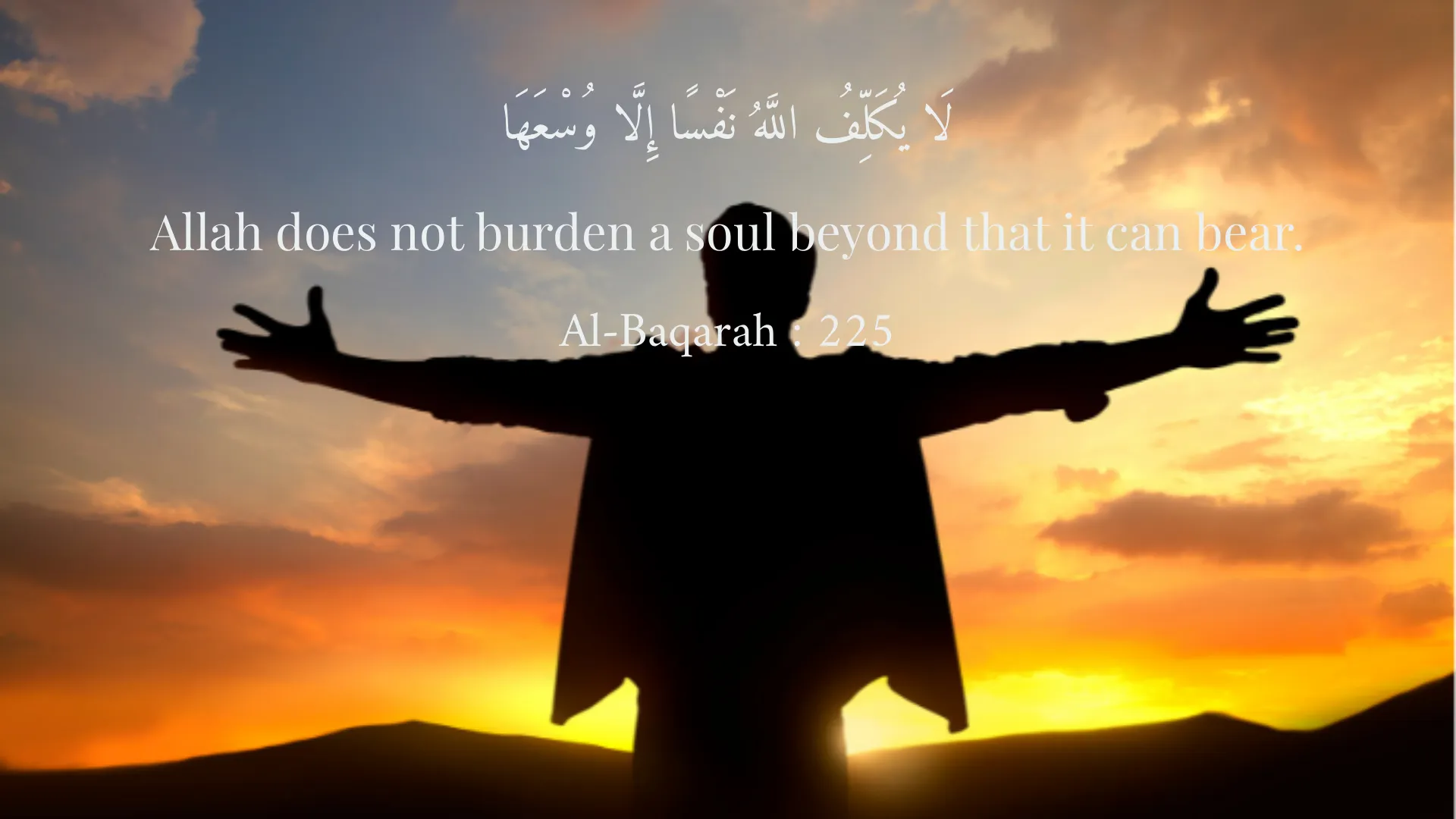
لَا يُكَلِّفُ اللَّهُ نَفْسًا إِلَّا وُسْعَهَا
Allah does not burden a soul beyond that it can bear.
Al-Baqarah : 225
قُلْ إِن تُخْفُوا مَا فِي صُدُورِكُمْ أَوْ تُبْدُوهُ يَعْلَمْهُ اللَّهُ
Say, 'Whether you conceal what is within yourselves or reveal it, Allah knows it.'
Al-Imran : 29
أُوۡلَـٰئِكَ هُمُ الْوَارِثُونَ
It is they who will inherit.
Al-Mu'minun : 11
Short Story
One day, among a group of Muslims, there was a man named Hassan who always evaluated his intentions for every action. He would always say, 'Any action without a pure intention holds no value.' One day, Hassan decided to help orphans. He told himself that his intention was solely for God's pleasure and not for being seen. After a while, those who knew him recalled his pure intention and said, 'Allah will not hide his good deeds from him.' Hassan felt a sense of happiness knowing that his intention was sincere.