Quranic Answer
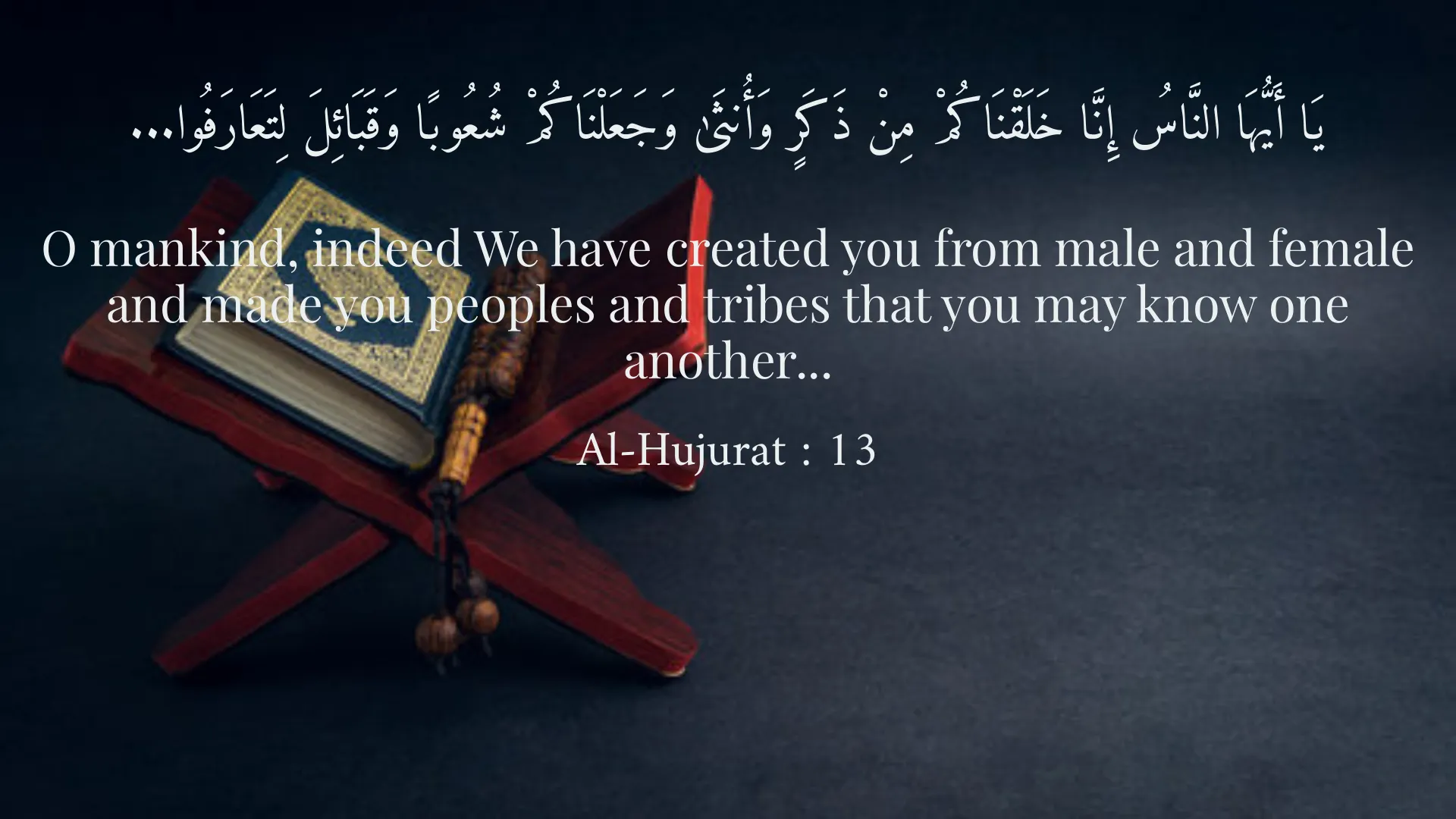
The Holy Quran, as the sacred scripture of Islam, provides profound guidelines that govern various aspects of human life, including social interactions. Although it does not explicitly discuss social skills as we understand them today, it lays down foundational principles that significantly contribute to a harmonious social existence. One of the fundamental tenets that emerge from the Quran is the essence of coexistence and good conduct with others. These principles are not merely suggestions but are paramount in fostering a sense of community and mutual respect among individuals. In Surah Al-Hujurat (Chapter 49), verse 13, Allah states: 'O mankind, indeed We have created you from male and female and made you peoples and tribes that you may know one another...' This verse holds deep implications for social cohesion. It reminds humanity that irrespective of gender, ethnicity, or tribal affiliation, we are all part of a single creation. The diversity of people is viewed not as a barrier but as an opportunity for understanding and collaboration. This principle of recognizing our common humanity lays the groundwork for effective social skills, such as communication and empathy. When individuals understand that their differences enrich human experience, they are more likely to engage positively with others, thus enhancing community relations. Moreover, the Quran employs a wealth of verses that highlight the importance of good behavior toward others. In Surah Luqman (Chapter 31), verse 19, God emphasizes the need for moderation and respect in one's speech: 'And be moderate in your pace and when you speak, be respectful...' This short but powerful directive presents key elements of effective communication. It encourages individuals to adopt a balanced approach in their interactions while reminding them that respect is essential in all conversations. The encouragement to speak with respect underpins various social skills like listening, responding appropriately, and maintaining a calm demeanor during discussions. This framework provided by the Quran can also extend to the concept of empathy—the ability to understand and share the feelings of others. Recognizing the shared experiences of joy, sorrow, struggle, and triumph is integral to developing strong social bonds. The Quran prompts believers to cultivate empathy by sharing in each other's joys and supporting one another during difficulties. Such behaviors go hand in hand with essential social skills, enabling individuals to connect deeply and authentically with those around them. Additionally, the Quran advocates for moderation and self-control, both of which are crucial social skills. Living in a society often demands individuals to regulate their impulses and reactions, especially in challenging situations. Self-restraint fosters an environment of understanding and patience, allowing communal bonds to strengthen rather than fracture in times of conflict. The importance of these qualities cannot be overstated in today’s fast-paced world, where impulsive behavior can be detrimental to social harmony. Another crucial principle articulated in the Quran that can enhance social skills is the emphasis on forgiveness and compassion. In Surah Al-Furqan (Chapter 25), Allah describes the qualities of the true servants of the Most Merciful: 'And those who do not bear witness to falsehood, and when they pass by ill speech, they pass by with dignity.' (25:72) This verse invites individuals to let go of grievances and observe a sense of dignity in their interactions. The ability to forgive and show compassion contributes positively to community dynamics, as it encourages a culture of reconciliation rather than retaliation. Hence, fostering forgiveness can be seen as a vital social skill that enhances relationships. Furthermore, the Quran elaborates on the notion of social responsibility—the duty to care for and support one another within the community. Acts of charity and support for those in need are often emphasized in various verses. For instance, in Surah Al-Baqarah (Chapter 2), verse 177, Allah states that righteousness is not merely in turning towards the east or the west, but in believing in Allah, the Last Day, the Angels, the Book, and the Prophets, and in spending one's wealth, out of love for Him, on relatives, orphans, the needy, the traveler, those who ask [for help], and for freeing slaves. This verse underlines that social skills extend beyond mere interpersonal interactions and encompass broader community engagement and support. The practical manifestation of these Quranic principles in daily life can significantly enhance individuals' social capabilities. Engaging in active listening builds trust and rapport, essential components of effective communication. Responding empathetically to others' emotions helps create a supportive network where individuals feel valued and understood. Additionally, the practice of humility and moderation in one's interactions creates an atmosphere where open dialogue and mutual respect can flourish. In conclusion, while the Holy Quran may not address social skills in the modern sense, it undeniably provides extensive guidance on how individuals should conduct themselves within society. By emphasizing coexistence, good behavior, empathy, moderation, forgiveness, and social responsibility, the Quran equips believers with the tools necessary to cultivate positive relationships. Social skills are deeply rooted in the principles outlined in this sacred text, advocating for a cohesive and harmonious community where individuals can thrive. Furthermore, these teachings continue to resonate across cultures and ages, inviting people to foster connection and compassion as essential components of human interaction. In essence, the Quran serves as a timeless guide for developing social skills that can lead to a healthier and more empathetic society.
Related Verses
يَا أَيُّهَا النَّاسُ إِنَّا خَلَقْنَاكُمْ مِنْ ذَكَرٍ وَأُنثَىٰ وَجَعَلْنَاكُمْ شُعُوبًا وَقَبَائِلَ لِتَعَارَفُوا...
O mankind, indeed We have created you from male and female and made you peoples and tribes that you may know one another...
Al-Hujurat : 13
...وَاخْفِضْ مِنْ جَنَاحِكَ لِلْمُؤْمِنِينَ
And be moderate in your pace and when you speak, be respectful...
Luqman : 19
Short Story
One day, a girl named Samira, who had poor social skills, attended a workshop. There, the teacher taught her how to communicate with others and respect their feelings. Over time, Samira realized how she could connect better with her friends and build more trust. Now, she feels happy every day and knows how much connecting with others can change her life.