Quranic Answer
The Holy Quran, revered as a divine text, holds a paramount position as a guide for humanity at large. This sacred scripture, purportedly revealed to the Prophet Muhammad (peace be upon him), encompasses teachings and principles aimed at fostering moral integrity, social justice, and spiritual enlightenment. In its verses, the Quran transcends geographical, cultural, and temporal boundaries, calling to individuals of all backgrounds to adhere to a path of righteousness and ethical conduct. One of the pivotal verses that encapsulate the essence of the Quran’s purpose is found in Surah Al-An'am, verse 19, where Allah states, "Say, 'What thing is greatest in testimony?' Say, 'Allah is Witness between me and you.'" This verse underscores the notion that the divine testimony serves as an affirmation of Allah’s singularity and as a testament to His guidance for all humanity. Notably, it emphasizes that the Quran is not merely a guide for a specific ethnic group or geographical region, but rather a universal message conveying essential principles that resonate with every human being. The idea of Allah being a witness conveys a sense of accountability and emphasizes the importance of adhering to the divine guidance provided in the Quran. Moreover, the Quran articulates fundamental concepts such as justice, kindness, and freedom, which are not confined to any singular cultural framework. These universal themes resonate deeply with the innate values shared by humanity, promoting a sense of kinship and interconnectedness among all individuals. For instance, the Quran's discourse on justice extends beyond mere legalistic interpretations, urging individuals to embody fairness and equity in their daily interactions. Such principles serve as a call to action for humanity to embrace tolerance and empathy, fostering an environment in which justice prevails. In Surah Al-Maidah, verse 48, Allah asserts, "And We sent down to you the Book in truth, confirming that which was before it of the Scripture and as a criterion over it." This affirmation elucidates that the Quran not only corroborates prior revelations but also acts as a definitive guide – a criterion that supersedes previous scriptures. Consequently, this establishes the Quran as a comprehensive framework, providing clarity and a holistic understanding of divine will. The Quran, therefore, does not merely exist as an isolated text; it is part of a continuum of divine guidance that is consistent and cohesive in its teachings across various scriptures. The universality of the Quran becomes increasingly relevant in contemporary society, where humanity grapples with multifaceted challenges ranging from social injustices to moral dilemmas. In an age marked by conflict, division, and despair, the message of the Quran stands as a beacon of hope and a source of solace. The ethical and humanistic concepts embedded within its verses are not only applicable to the era of its revelation but hold profound significance for modern dilemmas faced by individuals and communities alike. The teachings of the Quran serve as a reminder that humanity possesses the capability to overcome adversity by embracing values that promote peace, understanding, and cooperation. As individuals traverse through life’s trials, the Quran encourages seekers of truth to turn towards its teachings for guidance. The emphasis on attributes such as compassion, patience, and humility cultivates an environment conducive to healing and reconciliation. It inspires individuals to rise above personal grievances and work collectively towards a harmonious existence. Importantly, the ethical principles enshrined in the Quran advocate for the empowerment of individuals. The call for justice, equity, and respect for human dignity resonates strongly with the ongoing movements advocating for social equity and human rights across the globe. As aspiring leaders and changemakers seek guidance in their endeavors, the Quran presents a blueprint for fostering positive change—encouraging active participation in the betterment of society. Furthermore, the Quran continually urges reflection and critical thought, inspiring believers to engage with its teachings actively. A recurring theme throughout the text is the importance of knowledge and the pursuit of wisdom. The Quran invites humanity to ponder the mysteries of creation, explore the intricacies of life, and aspire to enhance one’s understanding of the world. This emphasis on intellectual engagement is vital in navigating the complexities of contemporary existence, where knowledge serves as a tool for empowerment and social progress. As humanity stands at a crossroads, the Quran provides guidance that is relevant across epochs, attesting to its enduring nature. Its teachings advocate for environmental stewardship, compassion towards animals, and the protection of those in marginalized positions—principles that align with today’s pressing global issues such as climate change and social justice. This continuity of relevance implies that the Quran is not antiquated; rather, it is a living document that provides sustainable solutions to contemporary challenges. In conclusion, the Holy Quran is a transcendent guide for humanity, echoing its profound teachings across generations and cultures. Its teachings encourage individuals to embrace ethical standards rooted in justice, kindness, and mutual respect. As we navigate an ever-changing world filled with trials, the Quran offers a guiding light, reminding us of our shared humanity and responsibility towards one another. As we delve into its wisdom, we unlock not only a deeper understanding of ourselves but also the possibility of a more just and compassionate world, where the teachings of the Quran continue to serve as a wellspring of hope and guidance for generations to come.
Related Verses
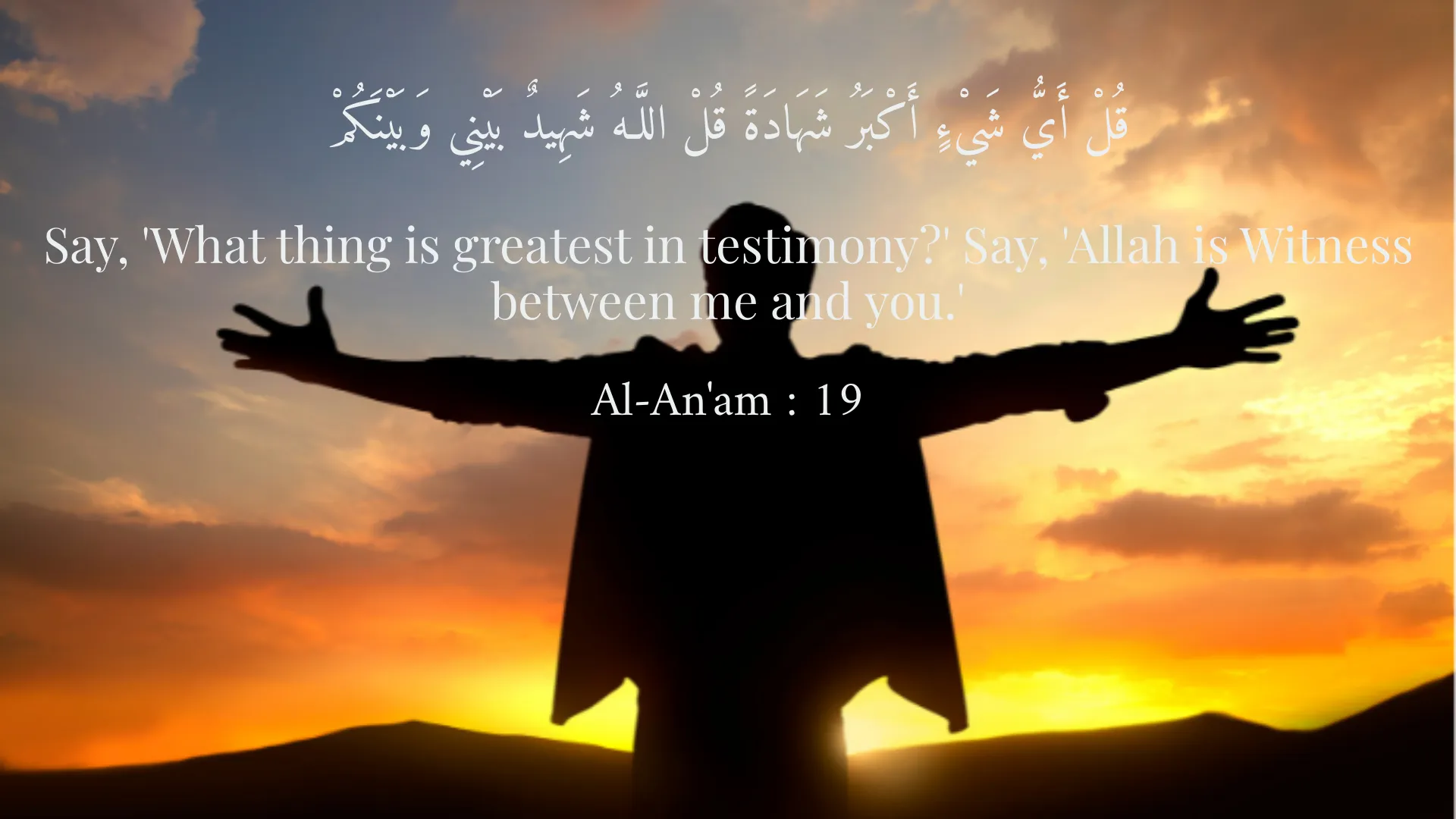
قُلْ أَيُّ شَيْءٍ أَكْبَرُ شَهَادَةً قُلْ اللَّـهُ شَهِيدٌ بَيْنِي وَبَيْنَكُمْ
Say, 'What thing is greatest in testimony?' Say, 'Allah is Witness between me and you.'
Al-An'am : 19
وَلَكِنْ أَنزَلْنَا إِلَيْكَ الْكِتَابَ بِالْحَقِّ مُصَدِّقًا لِمَا بَيْنَ يَدَيْهِ مِنَ الْكِتَابِ وَمُهَيْمِنًا عَلَيْهِ
And We sent down to you the Book in truth, confirming that which was before it of the Scripture and as a criterion over it.
Al-Maidah : 48
Short Story
Once upon a time, there was a man named Ali who was searching for answers to his questions about life. He would go to the library every day and deeply search through books. One day, he came across a book; the Quran. As he began to read it, he realized that the message of the Quran concerns principles and human values, including respecting one another, love, and justice for all humans. He understood that the Quran was not revealed just for a specific people but meant to guide all humanity. From that day on, Ali decided to align his life based on the teachings of the Quran and present himself as a better human being to society.