Quranic Answer
The Quran, regarded as the ultimate guide for humankind, offers profound insights into our relationship with the natural world. This relationship is not merely circumstantial; it is built on a foundation of moral obligation, respect, and the conscious acknowledgment of a divine presence manifested through the natural order. By reflecting on various verses within the Quran, we can explore how Islamic teachings emphasize the interconnectedness of humanity and nature, the responsibilities that come with this bond, and the spiritual significance that arises from understanding nature as a reflection of God's power and wisdom. One of the most compelling verses that highlight this relationship can be found in Surah Al-Imran, verse 190, where Allah states: "Indeed, in the creation of the heavens and the earth and the alternation of the night and the day are signs for those of understanding." This verse serves as a reminder that the cosmos and the rhythm of the natural world convey profound messages to humanity. The heavens, with their magnificent stars and galaxies, and the earth, with its diverse landscapes and ecosystems, are not mere backdrops for human activity; rather, they are living signs that encourage us to contemplate the majesty of the Creator. By engaging in this reflection, we develop a deeper understanding of our purpose and the moral imperatives that guide our interactions with nature. Moreover, the statement that there are "signs for those of understanding" signifies that the onus is on humanity to discern these signs. It challenges individuals to cultivate a mindset that seeks knowledge and wisdom from the natural world, which can, in turn, inform ethical choices related to environmental stewardship. The call for reflection serves as a moral directive, urging us to be mindful of our actions and their impact on the environment. When we recognize nature as a sign of God's wisdom, we are compelled to act in ways that honor and protect it. In Surah An-Nahl (The Bee), verse 8, Allah draws attention to the creation of animals such as horses, mules, and donkeys, which are used by humans for riding and adornment. This verse exemplifies the bond and dependency between humanity and nature, illustrating how our lives are intricately linked with the creatures we share the Earth with. These animals, in their roles as companions and laborers, remind us of our responsibility to treat them with kindness and respect. The Quran advocates for a holistic understanding of this bond: understanding that our well-being is directly tied to the well-being of all creatures and the ecosystems that support them. The Quran extends this notion of connection further by elaborating on the blessings of nature found in Surah Ar-Rahman (The Beneficent). This surah is replete with verses that enumerate the countless gifts of the natural world, from the majestic oceans to the diverse array of fruits and vegetation. By recognizing these blessings, we are encouraged to appreciate the abundance that nature provides and, in turn, foster a sense of gratitude. Such gratitude should inspire us to engage in practices that protect and sustain the environment rather than exploit it. The spiritual aspect of nature, as conveyed in the Quran, further underscores its significance. Nature is perceived not solely as a resource to be utilized but as a sacred trust (Amanah) that has been entrusted to humanity. This teaching emphasizes that our interactions with the environment should be underpinned by a deep sense of responsibility. The Quranic perspective instills a recognition that biodiversity, clean air, pure water, and fertile lands are divine blessings that should be cherished and safeguarded. The degradation of nature is not only an environmental concern but also a moral and ethical failure in light of this trust. Additionally, the Quran discusses the consequences of neglecting this responsibility. In multiple instances, it warns against corruption in the land and the earth's deterioration caused by human actions. This resonates with the contemporary challenges we face, such as climate change, deforestation, pollution, and loss of biodiversity. These issues can be viewed as manifestations of humanity's failure to uphold its sacred duty towards the environment. In light of the Quran's teachings, it becomes imperative for individuals and societies to act decisively in addressing these challenges, treating environmental preservation as a moral imperative reflective of their faith. We need to initiate conversations around sustainability that acknowledge our responsibilities towards nature, guided by Quranic principles. Moreover, the teachings of the Quran can inspire a collective action that transcends community boundaries, uniting diverse groups in the effort to protect the environment. Islamic teachings encourage collective responsibilities, cooperation, and harmony within communities to achieve preservation goals. Building a deep connection with nature, rooted in Islamic teachings, enables individuals to nurture relationships that honor and respect the environment. It promotes a sense of guardianship (Khilafah) over the Earth, reminding us that we are not mere consumers but stewards of God's creation, responsible for ensuring that the ecological integrity of our planet is maintained for future generations. In conclusion, the Quran addresses humanity's relationship with nature with profound depth, revealing a tapestry of interconnectedness, responsibility, and reverence. It encourages reflection on the signs of God's existence that manifest within the natural world, urging humanity to engage in responsible stewardship over the environment. Our relationship with nature is deemed significant and sacred, demanding not only respect but also action to protect the gifts bestowed upon us. As we navigate the challenges of a rapidly changing world, it is essential to remember that nature is a trust granted to us, requiring that we strive not only for our well-being but for the flourishing of all life on Earth. By embodying these teachings, we can foster a harmonious existence between humanity and the natural world, one that honors the divine principles of creation and sustains the planet for generations to come.
Related Verses
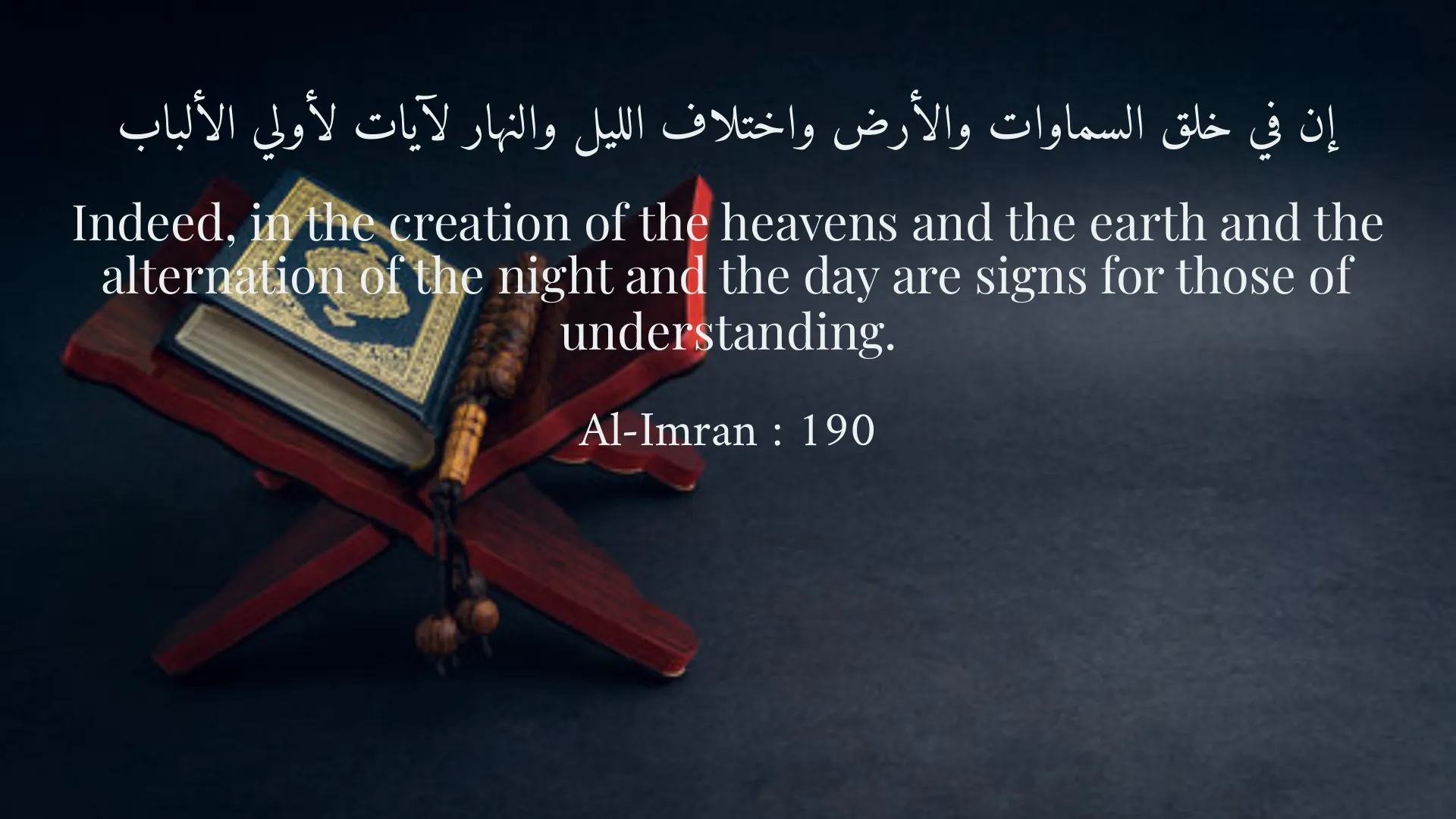
إن في خلق السماوات والأرض واختلاف الليل والنهار لآيات لأولي الألباب
Indeed, in the creation of the heavens and the earth and the alternation of the night and the day are signs for those of understanding.
Al-Imran : 190
وَالْخَيْلَ وَالْبِغَالَ وَالْحَمِيرَ لِرَكُوبٍ وَزِينَةً ۗ وَيَخْلُقُ مَا لَا تَعْلَمُونَ
And the horses, mules, and donkeys for riding and adornment, and He creates what you do not know.
An-Nahl : 8
فَبِأَيِّ آلَاءِ رَبِّكُمَا تُكَذِّبَانِ
So which of the favors of your Lord would you deny?
Ar-Rahman : 13
Short Story
One day, a man named Mehdi was sitting in the heart of the forest, conversing with nature. He paid attention to the beauty of the trees and birds, feeling that all these details were signs of God's power. He decided that from that day on, he would be kinder to nature and commit himself to its protection. One day while walking, he saw local children destroying trees. He gently spoke to them, explaining how important trees are and how God created them. His words had a profound impact, and the kids decided to protect the trees.