Quranic Answer
The Holy Quran, revered by millions around the world, serves not only as a spiritual guide but also as a profound source of wisdom for navigating life's challenges, including pain and suffering. Although the Quran does not directly mention time's role in healing pains, a deeper exploration of its verses unveils significant insights regarding patience, perseverance, and the gradual nature of overcoming adversities. These concepts are fundamental in understanding how time may intrinsically factor into the healing process. ### Understanding Pain in the Context of Faith Pain, whether physical, emotional, or spiritual, can be an inevitable part of the human experience. In many cultures and religious traditions, pain is often viewed as a test or trial meant to strengthen an individual’s character and faith. In Islam, suffering is acknowledged, yet thoughts surrounding it are deeply intertwined with Allah’s wisdom and mercy. The Quran emphasizes that life is a series of tests, challenges, and experiences that serve as opportunities for growth and enlightenment. ### Patience: A Cornerstone in Healing Patience, or 'Sabr' in Arabic, is emphasized in the Quran as one of the most crucial characteristics required to endure life’s hardships. This is eloquently illustrated in Surah Al-Baqarah, verse 153, where Allah instructs the believers, "O you who have believed, seek help through patience and prayer. Indeed, Allah is with the patient." Here, patience is not merely a passive acceptance of difficulties; rather, it embodies resilience and the conscious decision to persist in the face of adversity. Cultivating patience often transforms the experience of pain, allowing individuals to navigate their struggles with grace and strength. Furthermore, the concept of time often plays a role in this equation. As individuals practice patience, they allow themselves the space and time needed to heal. Just as a wound requires time to mend, the heart and mind also necessitate periods of reflection and solitude to process pain. Through patience, one recognizes that healing is not instantaneous; it’s a gradual journey where time becomes an ally, not an enemy. ### The Burden of the Soul The Quran also reminds believers of their intrinsic capacity to cope with challenges in Surah Al-Baqarah, verse 286. It states, "Allah does not burden a soul beyond that it can bear." This profound statement is significant, suggesting that while everyone encounters trials, these struggles are tailor-made for each individual’s resilience. This notion speaks to the concept of time—acknowledging that over time, individuals often discover strength they never thought they possessed. Thus, despite the overwhelming nature of pains at any moment, believers can find solace in the fact that their endurance is gradually increased through the experiences they undergo. ### Trials as a Means of Improvement In Surah Al-Anfal, verse 28, the Quran addresses the transient nature of worldly attachments when it states, "And know that your properties and your children are but a trial and that Allah has with Him a great reward." This verse underscores that life’s material aspects—like wealth and family—are ultimately tests designed to encourage deeper reflection on eternal truths. As individuals navigate these trials over time, they are often led towards a greater understanding of self and God. These experiences usually compel individuals to turn inward, seeking comfort and healing in their faith, thus demonstrating that time intertwined with trials is pivotal for spiritual maturation. The essence here is that each burden may lead to significant personal development, subsequently easing the pain associated with these trials. Healing, in this context, becomes a multi-faceted process that incorporates patience, perseverance, and time, all underpinned by faith. ### The Role of Reflection and Spiritual Growth Healing, both emotional and spiritual, often demands deep introspection. Time allows for this contemplation, providing individuals with the necessary distance from their suffering to gain new perspectives on their experiences. It renders insights that may not be immediate when one is grappling with pain. The Quran encourages believers to engage in self-reflection, urging them to contemplate lessons learned during moments of hardship. Such reflections can often illuminate the purpose behind the pain, further catalyzing healing. ### Finding Hope Through Time For many believers, the promise of divine support adds another critical layer to the healing process. As stated in the Quran, ‘Indeed, Allah is with the patient.’ This assurance invites believers to place their trust in Allah’s wisdom and timing. Over time, as they turn to prayer and healing practices, they come to realize that pain is not an isolated event but a part of a larger narrative, leading to deeper faith and strength. ### Community and Shared Experiences Moreover, the Islamic community plays a vital role in the healing journey. Engaging with others who share similar faith provides comfort and support. Through shared experiences, individuals can forge connections that reinforce the notion of togetherness during trials. Over time, these collective experiences can ease personal pains, highlighting the Islamic principle that every believer is a brother or sister in faith. The support from the community often serves as a reminder that healing is not a solitary journey; it can be a shared process, making the burden lighter. ### Conclusion While the Holy Quran does not explicitly delineate the role of time in healing pains, the interwoven themes of patience, endurance, and spiritual growth reveal how critical time is to the process of healing. Through Allah's guidance, believers learn that challenges are opportunities for personal development, while patience fosters resilience. As individuals experience the gradual nature of healing over time, they may find deeper insights, reinforced faith, and a connection with their community that ultimately facilitates renewal. Thus, the teachings of the Quran, when reflected upon, remind us that the journey of pain and healing, anchored in faith and patience, is indeed a timeless process.
Related Verses
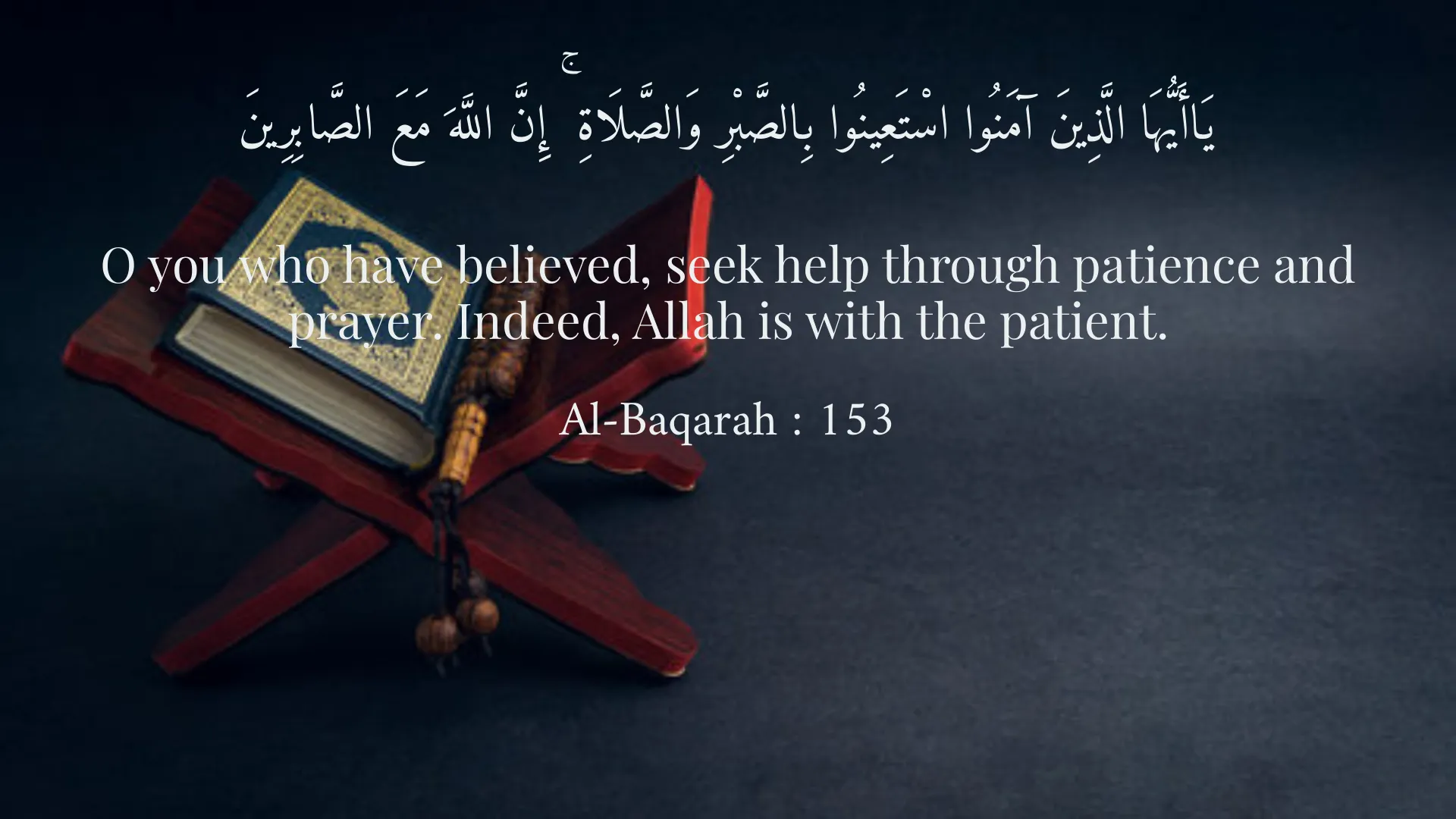
يَاأَيُّهَا الَّذِينَ آمَنُوا اسْتَعِينُوا بِالصَّبْرِ وَالصَّلَاةِ ۚ إِنَّ اللَّهَ مَعَ الصَّابِرِينَ
O you who have believed, seek help through patience and prayer. Indeed, Allah is with the patient.
Al-Baqarah : 153
لَا يُكَلِّفُ اللَّهُ نَفْسًا إِلَّا وُسْعَهَا ۚ لَهَا مَا كَسَبَتْ وَعَلَيْهَا مَا اكْتَسَبَتْ ۗ رَبَّنَا لَا تُؤَاخِذْنَا إِن نَّسِينَا أَوْ أَخْطَأْنَا ۚ رَبَّنَا وَلَا تَحْمِلْ عَلَيْنَا إِصْرًا كَمَا حَمَلْتَهُ عَلَى الَّذِينَ مِن قَبْلِنَا ۚ رَبَّنَا وَلَا تُحَمِّلْنَا مَا لَا طَاقَةَ لَنَا بِهِ ۖ وَاعْفُ عَنَّا وَاغْفِرْ لَنَا وَارْحَمْنَا ۖ أَنتَ مَوْلَانَا فَانصُرْنَا عَلَى الْقَوْمِ الْكَافِرِينَ
Allah does not burden a soul beyond its capacity. It has [the consequence of] what [good] it has gained, and it will bear [the consequence of] what it has earned. Our Lord, do not impose blame upon us if we have forgotten or made a mistake. Our Lord, and lay not upon us a burden like that which You laid upon those before us. Our Lord, and burden us not with that which we have no ability to bear. And pardon us; and forgive us; and have mercy upon us. You are our Protector, so give us victory over the disbelieving people.
Al-Baqarah : 286
وَاعْلَمُوا أَنَّمَا أَمْوَالُكُمْ وَأَولَادُكُمْ فِتْنَةٌ ۖ وَأَنَّ اللَّهَ عَندَهُ أَجْرٌ عَظِيمٌ
And know that your properties and your children are but a trial and that Allah has with Him a great reward.
Al-Anfal : 28
Short Story
One day, Adel was suffering greatly from an illness that kept him homebound. He consulted a religious scholar, who told him that he had read in the Quran that patience in the face of adversity always brings about healing. Over time, with patience, Adel began to heal completely. He realized that time can play an important role in healing pains.