Quranic Answer
The Holy Quran, the sacred text of Islam, serves as a guiding light for millions around the globe and offers profound insights into the nature of leadership. Throughout its verses, the Quran presents several models of leadership that encourage individuals to navigate life's complexities passionately and purposefully. Among these leaders, the most prominent figure is the Prophet Muhammad (peace be upon him), who exemplified characteristics that are pertinent to effective leadership. This article aims to explore the various traits and qualities of leadership as presented in the Quran, demonstrating how they can be applied to modern-day contexts. One significant characteristic of effective leadership, as illustrated in the Quran, is kindness and tranquility. In Surah Al-Imran, verse 159, it is stated: 'So by mercy from Allah, [O Muhammad], you were lenient with them. And if you had been rude in speech and harsh in heart, they would have disbanded from about you.' This verse highlights the importance of gentleness when dealing with others. A leader who exhibits mercy and kindness can cultivate an environment of trust and loyalty among followers. Rather than resorting to aggression or rudeness, the Quran advocates for a compassionate approach, which can lead to stronger bonds within a community. This quality of mercy as a leadership trait is vital in shaping opinions and encouraging unity among diverse groups. Moreover, the Quran emphasizes the necessity of wisdom and prudence in leadership positions. Effective leaders must possess insight and the ability to make well-informed decisions that ultimately benefit the group. Leadership not only involves being decisive but also requires an understanding of the broader implications of one's choices. The Quran encourages leaders to seek knowledge and implement it wisely, which reflects the qualities of responsibility and accountability. A wise leader should be able to analyze situations and challenges critically and guide others towards constructive solutions. Courage is yet another essential trait of a leader, particularly in advocating for the truth. Throughout his mission, the Prophet Muhammad demonstrated tremendous bravery in the face of adversity, standing firm in his beliefs while engaging with individuals from various backgrounds. His unwavering dedication to promoting justice and equality serves as an exemplary model of courageous leadership. In many instances, taking a stand for what is right may attract backlash or criticism; thus, leaders must cultivate resilience and bravely defend their convictions. In addition to these traits, the Quran underscores the importance of faith and piety as foundational elements of leadership. Surah Al-Ma'idah, verse 55 states: 'Your ally is none but Allah and His Messenger and those who establish prayer and give zakah, and those who bow [in worship].' This verse illustrates that genuine leadership is rooted in one's relationship with the divine and a commitment to upholding moral values. A leader who prioritizes spirituality and virtuous actions tends to inspire others to follow suit. Faith acts as a compass, guiding leaders in their decisions and actions. By embodying these principles, leaders foster a collective spirit among their followers, encouraging everyone to adhere to ethical standards. Justice and fairness are paramount qualities highlighted in the Quran regarding leadership. A true leader must ensure equitable treatment for all members of the community, irrespective of their backgrounds or beliefs. By consistently upholding justice, a leader cultivates an environment of respect and trust, laying the foundation for lasting relationships within the community. The Quran illustrates that leaders are beholden to the principles of fairness, which further solidifies their authority as righteous guides. The inherent imbalance created through unjust actions can lead to division and strife; thus, fairness in leadership remains an absolute necessity. Furthermore, consultation and consensus are critical elements of Islamic leadership models as outlined in the Quran. Engaging community members in deliberative discussions encourages a participatory approach to decision-making. This concept of shura (consultation) is vital for forging collective responsibility and gathering diverse perspectives. A leader who respects the opinions and input of others not only empowers their followers but also fosters a sense of ownership and belonging. The Quran underscores the importance of collaborative leadership, urging leaders to seek counsel from knowledgeable and experienced individuals within their communities. In conclusion, the Holy Quran provides rich insights into the characteristics and traits that define effective leadership. By examining the exemplary life of the Prophet Muhammad (peace be upon him), we observe the importance of mercy, wisdom, courage, faith, justice, and consultation in guiding communities. The Quran invites believers to reflect on these principles and to implement them in their personal lives. As contemporary leaders pursue paths that align with these teachings, they can nurture a culture that values kindness, equity, and collaboration. Ultimately, the Quran serves as an invaluable resource, guiding individuals in their quest to become principled and impactful leaders in society.
Related Verses
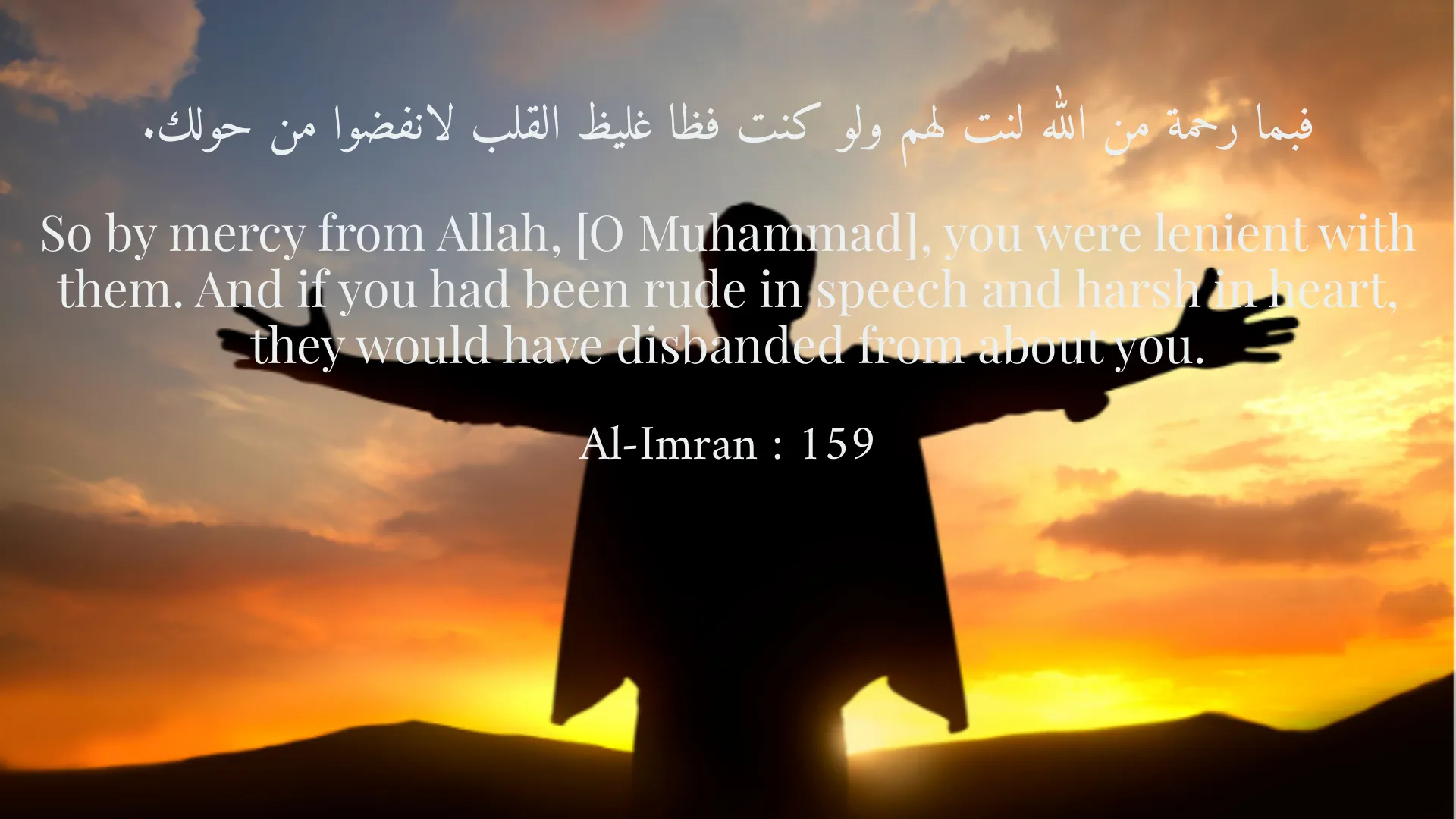
فبما رحمة من الله لنت لهم ولو كنت فظا غليظ القلب لانفضوا من حولك.
So by mercy from Allah, [O Muhammad], you were lenient with them. And if you had been rude in speech and harsh in heart, they would have disbanded from about you.
Al-Imran : 159
إنما وليكم الله ورسوله والذين آمنوا الذين يقيمون الصلاة ويقوتون الزكاة وهم راكعون.
Your ally is none but Allah and His Messenger and those who establish prayer and give zakah, and those who bow [in worship].
Al-Ma'idah : 55
Short Story
Once upon a time, there was a man named Ibrahim who was searching for good leadership qualities. He never knew how to be a good leader. One day he went to the mosque and while studying the Quran, he came across a verse from Surah Al-Imran that referred to the gentleness of the Prophet. Ibrahim thought to himself, 'If I want to be a good leader, I should have mercy like the Prophet.' From that day on, he decided to be softer and kinder in his relationships with others and to consult them in his decisions. Gradually, he transformed from an ordinary man into an effective leader.