Quranic Answer
Title: Engaging with the Quran: A Journey of Understanding Introduction The Quran, regarded as the holy book of Islam, is not merely a collection of words and verses but rather a profound guide that speaks to the hearts and minds of its readers. To truly understand the Quran, it is essential to engage thoughtfully and analytically with its teachings. Rather than skimming over the surface, a deeper exploration into its multifaceted layers of meaning is necessary. In this article, we will delve into the essential steps for understanding the Quran effectively, interpreting its verses accurately, and integrating its teachings into our daily lives. The Importance of Intentional Study To embark on the journey of understanding, the first step is to approach the Quran with intention and focus. Allah reminds us in Surah Al-Imran, verse 7, that the Quran contains both precise verses and others that are ambiguous. It is crucial to engage with the text purposefully, as this shapes our comprehension. The verse states, "It is He who has sent down to you the Book; in it are verses that are precise—they are the foundation of the Book—and others, ambiguous. As for those in whose hearts is deviation, they will follow that of it which is ambiguous, seeking discord and seeking to interpret it. But none knows its interpretation except Allah. And those who are firm in knowledge say, 'We believe in it; all is from our Lord.'" This verse serves as a reminder that interpreting the Quran requires careful contemplation and analysis. It is vital to look beyond surface meanings and to explore the context and the subtle nuances embedded within the verses. The Quran was revealed in specific historical contexts, and understanding these contexts is essential in grasping the intended meanings of the verses. The Role of Reputable Interpretations Another crucial aspect of understanding the Quran is consulting reputable interpretations, known as Tafsir, and seeking guidance from knowledgeable scholars. These interpretations provide insight into the context of revelation (Asbab al-nuzul) and elucidate the meanings behind the verses, enriching our understanding beyond what is immediately apparent. Scholars have dedicated their lives to studying the Quran and its implications, making their insights valuable resources for those seeking deeper comprehension. The diversity of interpretations across different cultures and historical periods serves as proof of the Quran's dynamic nature. Engaging with a variety of Tafsir can help clarify any ambiguities we may encounter and illuminate the profound wisdom that the Quran has to offer. It is crucial to approach this task with an open heart and mind, seeking guidance, and being willing to learn from the discussions of others. Integrating the Teachings into Daily Life Understanding the Quran is not merely about intellectual comprehension; it is also about translating that understanding into action. The teachings of the Quran should be an integral part of our personal and social lives. This integration means applying the principles and lessons derived from the Quran in our daily actions, interactions, and decisions. One effective way to ensure that we regularly engage with the Quran's teachings is to participate in Quran study groups. These groups often foster a sense of community, where individuals can come together to discuss verses, share personal reflections, and challenge one another in their understanding. The collective insights gained from these sessions can lead to a richer understanding and a more profound appreciation of the Quran's teachings. Moreover, utilizing educational resources—such as books, lectures, online courses, and podcasts—can significantly enhance our learning experience. In today’s fast-paced digital world, there is an abundance of content aimed at helping individuals engage with the Quran. Utilizing these resources can aid in building a bridge between our understanding and everyday practice, transforming knowledge into wisdom. Reflections and Contemplation Another vital practice in our journey of understanding the Quran is the regular reflection and contemplation of its verses. Daily engagement with the Quran should not be a rote exercise, but rather an opportunity for personal growth and spiritual enrichment. As we recite verses and ponder their meanings, we may find revelations that resonate with our current circumstances or challenges. Contemplating the Quran helps cultivate a deeper connection with Allah and allows us to develop a personal relationship with the text. We can ask ourselves questions about how the teachings of the Quran apply to our lives and the world around us. This kind of introspective practice invites a sense of reflection and self-improvement that elevates our spiritual development. Conclusion In conclusion, understanding the Quran is a profound journey that requires intentionality, analytical thinking, and personal application. By approaching the Quran with intention and seeking interpretations from knowledgeable sources, we can engage with its teachings at a deeper level. It is our duty to integrate these teachings into our daily lives and reflect on their meanings — ensuring that the Quran remains a source of light and guidance for us in all aspects of our lives. Ultimately, our engagement with the Quran should not be a transient experience but rather a lifelong commitment to growth, understanding, and improvement. The Quran is intended to guide us on the right path and signifies the importance of striving toward righteousness and compassion in all that we do.
Related Verses
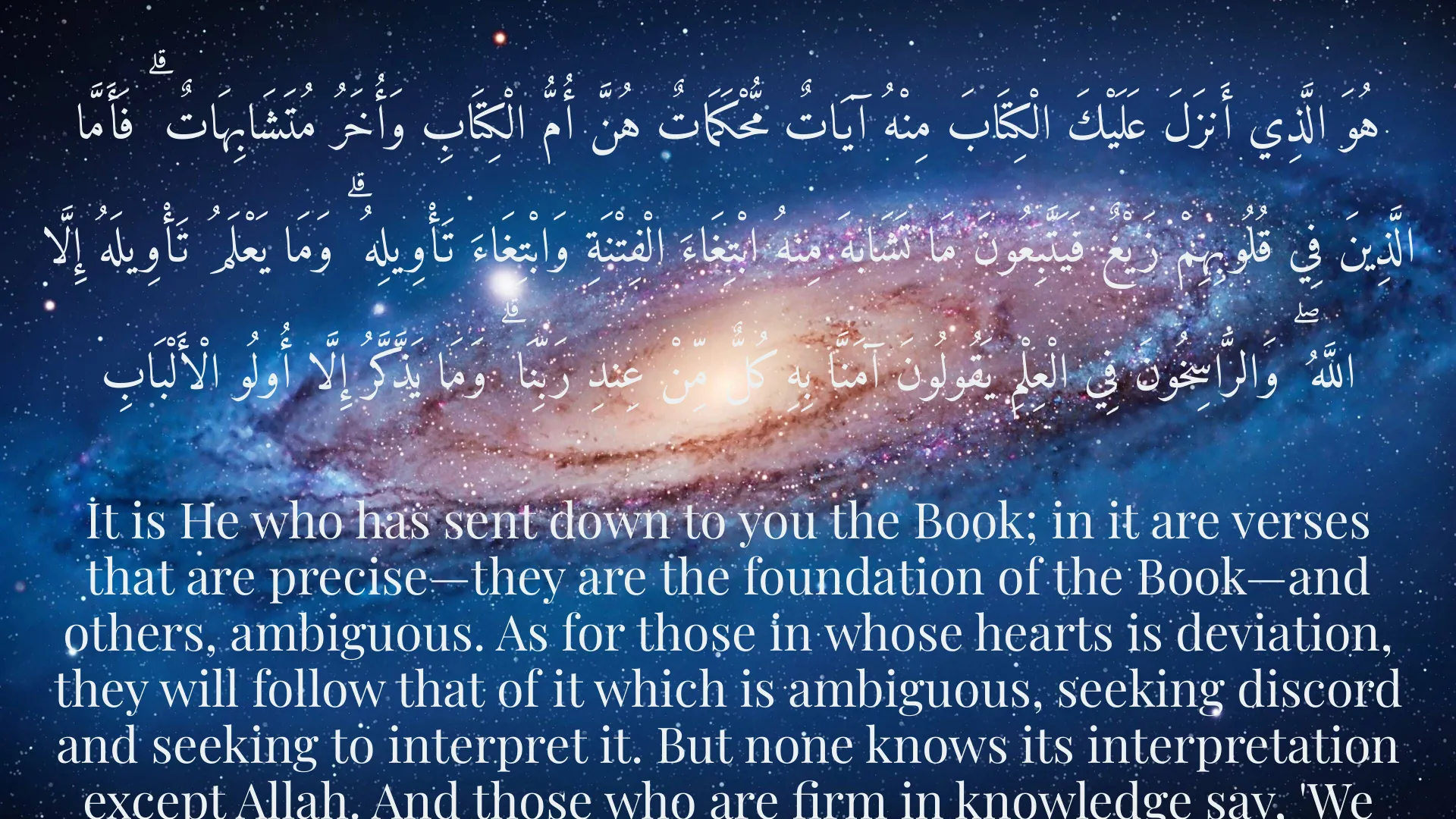
هُوَ الَّذِي أَنزَلَ عَلَيْكَ الْكِتَابَ مِنْهُ آيَاتٌ مُّحْكَمَاتٌ هُنَّ أُمُّ الْكِتَابِ وَأُخَرُ مُتَشَابِهَاتٌ ۗ فَأَمَّا الَّذِينَ فِي قُلُوبِهِمْ زَيْغٌ فَيَتَّبِعُونَ مَا تَشَابهَ مِنهُ ابْتِغَاءَ الْفِتْنَةِ وَابْتِغَاءَ تَأْوِيلِهُ ۗ وَمَا يَعْلَمُ تَأْوِيلَهُ إِلَّا اللَّهُ ۖ وَالرَّاسِخُونَ فِي الْعِلْمِ يَقُولُونَ آمَنَّا بِهِ كُلٌّ مِّنْ عِندِ رَبِّنَا ۗ وَمَا يَذَّكَّرُ إِلَّا أُولُو الْأَلْبَابِ
It is He who has sent down to you the Book; in it are verses that are precise—they are the foundation of the Book—and others, ambiguous. As for those in whose hearts is deviation, they will follow that of it which is ambiguous, seeking discord and seeking to interpret it. But none knows its interpretation except Allah. And those who are firm in knowledge say, 'We believe in it; all is from our Lord.'
Al-Imran : 7
Short Story
On a sunny day, Mohammad was sitting in the park while reading the Quran. As he read, he came across a verse that encouraged him to reflect and contemplate its meanings. He realized that understanding the Quran goes beyond merely reading it; he needed to interpret its teachings. From that day on, Mohammad decided to dedicate more time each day to ponder over the verses and seek guidance from religious scholars. His life was filled with blessings and peace.