Quranic Answer
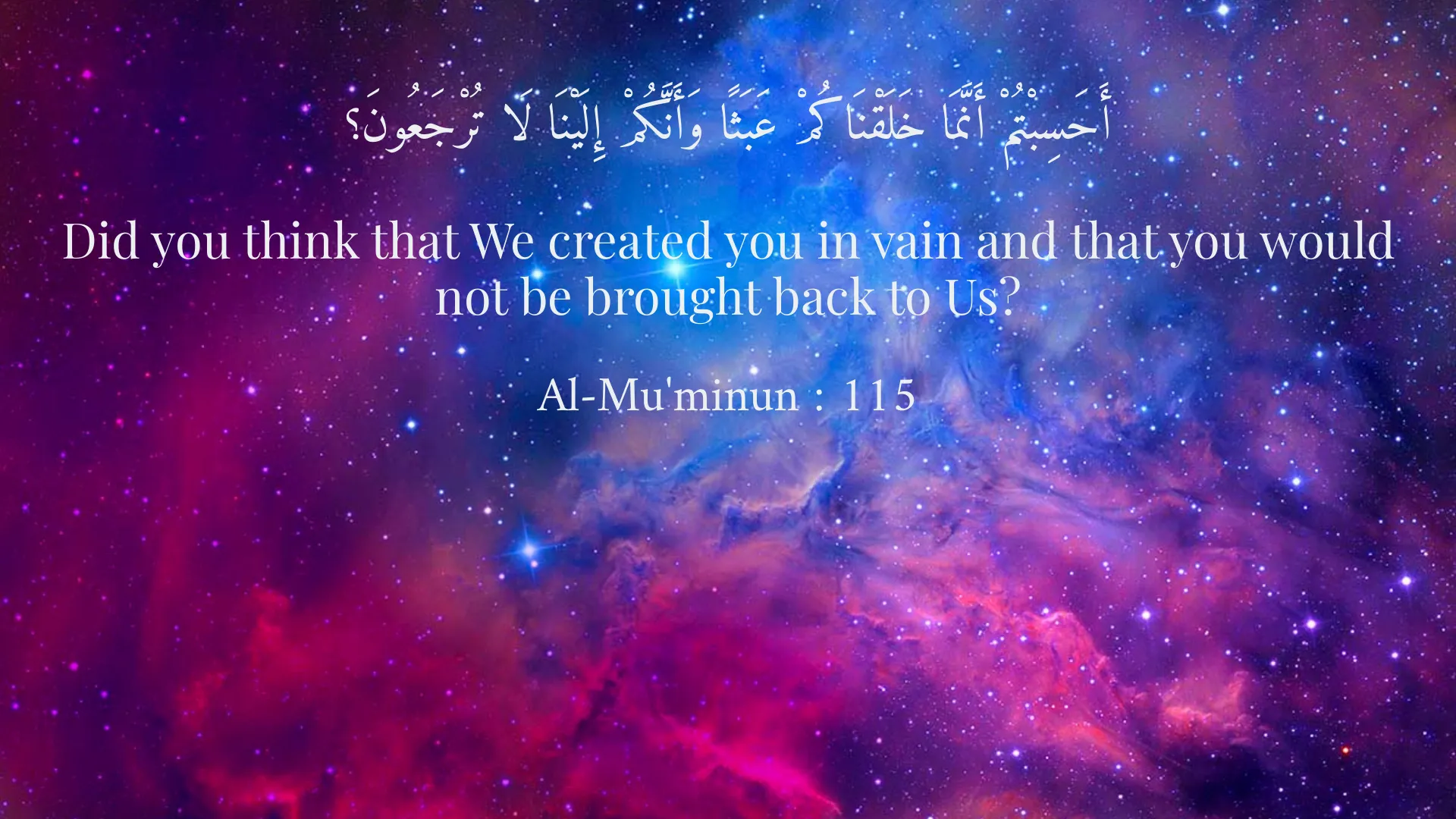
In the Holy Quran, Allah invites humans to engage in profound reflection and contemplation through a series of profound questions. This approach serves not only as an educational tool but also as a means to encourage individuals to explore their existence, purpose, and the world around them. One prominent example of this reflective questioning can be found in Surah Al-Mu'minun, verse 115, where Allah asks, 'Did you think that We created you in vain and that you would not be brought back to Us?' This question is pivotal; it compels individuals to consider their existence's significance and the ultimate destiny that awaits them after this life. The act of questioning within the Quran underlines the importance of thought and reflection in understanding one’s place in the universe. The very essence of being human lies in our ability to ponder and reflect. We, as thoughtful beings, are encouraged to investigate the meaning of life, the essence of our creation, and the ultimate purpose of our existence. This reflective inquiry leads to a deeper understanding of ourselves and our responsibilities as stewards of the earth. The instinct to seek purpose and understand our surroundings is intrinsic to the human experience, and Allah’s questions prompt us to harness that instinct for a higher understanding. In another significant instance, Surah Al-Mulk, verse 3 presents a similar invitation to reflection: 'Did We create them with no purpose?' Again, this verse sparks contemplation about the meticulousness of creation. The universe, with its intricate designs and laws, serves as a testament to God’s power and creativity. Each celestial body, every ecosystem, and all forms of life speak to a grand design that is purposeful and intentional. Through these inquiries, Allah emphasizes that the act of creation is not a random occurrence but a deliberate and meaningful process. This notion reassures believers that they are part of a larger, divine plan that extends beyond mere existence. Furthermore, in Surah Al-Baqarah, verse 2, Allah addresses various questions faced by humanity, urging individuals to reflect on the magnificence of creation, particularly the heavens and the earth. This verse prompts believers to look around them—to see the beauty and complexity of creation and to recognize that these elements hold deeper meanings and lessons about life itself. The observation of nature, the seasons, and even the human body's remarkable functions can lead one to greater awareness and appreciation of the Creator’s power and wisdom. Such reflection is a pathway to understanding not just the self but the interconnectedness of all creation. The method of questioning used by Allah is instrumental for several reasons. First, it serves as a catalyst for self-reflection. Individuals, through these inquiries, are prompted to reassess their beliefs, thoughts, and actions. They are encouraged to ponder their decisions and the ramifications of their life choices. This practice of reflection is crucial, especially in times of confusion or moral ambiguity. It enables individuals to align their actions with their values and ensures that they live lives rooted in purpose. Moreover, the questions posed by Allah challenge individuals to confront uncomfortable truths about themselves and their surroundings. It encourages a form of honesty that is often overlooked in contemporary society, where distractions abound and superficiality is prevalent. By confronting these profound questions, individuals can embark on a journey of spiritual growth that deeply impacts their lives and those around them. This approach also encourages critical thinking. The Quran does not merely provide answers but leads believers to explore and derive those answers themselves through introspection. It positions the seeker of truth in a proactive role, encouraging them to pursue knowledge and understanding actively. The very essence of faith, as depicted in the Quran, is not blind adherence but rather a conscious and informed commitment to a belief system bolstered by reason and reflection. Furthermore, the act of questioning serves to remind humanity of their dependence on Allah. It frames the human experience as one that is intertwined with divine intent. Every inquiry posed by Allah serves as a reminder of His omnipotence and the humility that humans must maintain in acknowledging their place in the universe. Understanding that life is not accidental, but a carefully orchestrated plan, helps individuals build a strong relationship with their Creator and fosters a sense of gratitude for the countless blessings bestowed upon them. In addition, Allah's questions create a bridge between the divine and the earthly plane, inviting humans to engage in dialogues that elevate their consciousness. This means that daily interactions and experiences can be viewed through a lens of spirituality and purpose, leading to richer and more meaningful lives. When one begins to see the world through this reflective lens, the mundane transforms into the extraordinary; the simple act of living becomes a profound journey towards understanding. In conclusion, the questions raised by Allah throughout the Holy Quran serve as powerful tools for reflection and introspection. They guide believers towards a deeper understanding of their existence and encourage them to explore their relationship with the Creator and the universe at large. Far from being mere rhetorical devices, these inquiries are essential for spiritual growth, critical self-assessment, and fostering a sense of purpose. They prompt individuals to contemplate their life’s trajectory, to question the status quo, and to seek out a deeper and more meaningful existence through reflection and understanding. As humanity continues to navigate an increasingly complex world, the guidance offered through reflection in the Quran remains a timeless and invaluable resource for all seeking purpose and clarity.
Related Verses
أَحَسِبْتُمْ أَنَّمَا خَلَقْنَاکُمْ عَبَثًا وَأَنَّكُمْ إِلَیْنَا لَا تُرْجَعُونَ؟
Did you think that We created you in vain and that you would not be brought back to Us?
Al-Mu'minun : 115
أَمْ خَلَقَتْهُمْ أَيْدِينَا؟
Did We create them with no purpose?
Al-Mulk : 3
الذِينَ يُؤْمِنُونَ بِالْغَيْبِ وَيُقِيمُونَ الصَّلَاةَ وَمِمَّا رَزَقْنَاهُمْ يُنفِقُونَ
Those who believe in the unseen, establish prayer, and spend out of what We have provided for them.
Al-Baqarah : 2
Short Story
One day, a young man named Reza was sitting under the shade of a tree on a hot summer day, contemplating his life. He realized that many of his activities were carried out without purpose or planning. Suddenly, he recalled the verses of the Quran and the questions posed by God to humanity came to his mind. He understood that he should not overlook the purpose of his creation. From that day on, he decided to think more deeply and strengthen his connection with God through prayer and the study of the Quran.