Quranic Answer
The Holy Quran is regarded not merely as a religious text but as a profound guide that addresses life's most intricate and essential questions. Through its verses, it elucidates themes concerning the meaning of life, the inevitability of suffering, the reality of death, and the quest for justice. These issues resonate deeply with human experience, reflecting our existential concerns and aspirations. Indeed, the Quran seeks to provide believers with insights that can enrich their lives and navigate them through the trials they face. In Surah Al-Imran, verse 185, the Quran states: "Every soul will taste death, and you will only be given your full compensation on the Day of Resurrection." This verse is paramount in its recognition of the transient nature of human existence. It compels us to contemplate the ultimate reality that every individual will encounter death, which serves as a pivotal turning point in human experience. The phrase "every soul will taste death" signifies that death is a universal experience, transcending boundaries of culture, religion, and social status. This shared fate underscores the equality of all human beings, irrespective of their earthly accomplishments. Moreover, the Quran encourages a perspective on death that goes beyond mere finality. It presents death as a necessary step in the transition to an eternal form of existence which is adjudged on the Day of Judgment. The concept of being “given your full compensation” speaks to the principle of accountability, illustrating that one's actions have consequences that extend beyond this life. In this worldview, life is characterized as a test, with each person's experiences and choices contributing to their ultimate fate in the hereafter. This understanding cultivates within individuals a sense of purpose and responsibility, urging them toward self-reflection and moral conduct. In Surah Al-Baqarah, verse 155, the Quran further elaborates on the trials of existence, stating: "And We will surely test you with something of fear and hunger and a loss of wealth and lives and fruits, but give good tidings to the patient." Here, the Quran lays foundations for understanding the inherent challenges of life. It acknowledges that fear, hunger, and loss are not merely incidental but rather integral aspects of the human condition. Through these tests, individuals discover their resilience and capacity for patience, thereby reinforcing their reliance on God. This verse acts as a powerful reminder that challenges are not arbitrary but are often tests from God designed to cultivate spiritual growth and fortitude. The exhortation to "give good tidings to the patient" teaches that patience during adversity is a virtue rewarded by God. This perspective can serve as a beacon of hope to anyone facing hardships, instilling a sense of purpose and understanding that trials can serve a greater purpose. The Quran emphasizes that perseverance in the face of life's tribulations can result in spiritual elevation and divine favor. Beyond addressing suffering and the reality of death, the Quran delves into profound discussions concerning justice, good, and evil. In Surah Muhammad, verse 22, it asserts: "Did not the messengers come to you from among yourselves, reciting to you the signs of your Lord and warning you of the meeting of this Day of yours?" This verse underscores the continuous presence of divine guidance through prophets who have historically provided humanity with the necessary tools to discern right from wrong. This notion of guidance through prophets signifies the enduring relevance of divine instruction in navigating life's complexities. The Quran posits that such messengers serve as embodiments of truth, directing followers toward ethical conduct and social justice. By noting the phrase "warning you of the meeting of this Day of yours," the verse serves as a poignant reminder of accountability, as it speaks to the significant day when all individuals will be held responsible for their actions. The Quran effectively teaches that justice is not merely a sociopolitical issue but a fundamentally spiritual one. It implores us to consider our ethical decisions, to be vigilant about the ramifications of our actions, and to seek justice in our interactions with others. In a world often mired in moral ambiguity, the Quran’s call for righteousness resonates powerfully, encouraging individuals and communities to strive relentlessly for fairness and compassion. In conclusion, the Holy Quran serves as a comprehensive guide for humanity, addressing fundamental questions that have perplexed individuals throughout history. Its verses remind us of the realities of life, death, and justice, offering frameworks for understanding our existence and encouraging patience in the face of challenges. It prompts us to reflect deeply upon our purposes in life and the impact of our actions on ourselves and those around us. Through its timeless wisdom, the Quran seeks not only to provide answers but to provoke contemplation and elevate the human spirit, steering us toward a life imbued with meaning, reflection, and ultimately, righteousness.
Related Verses
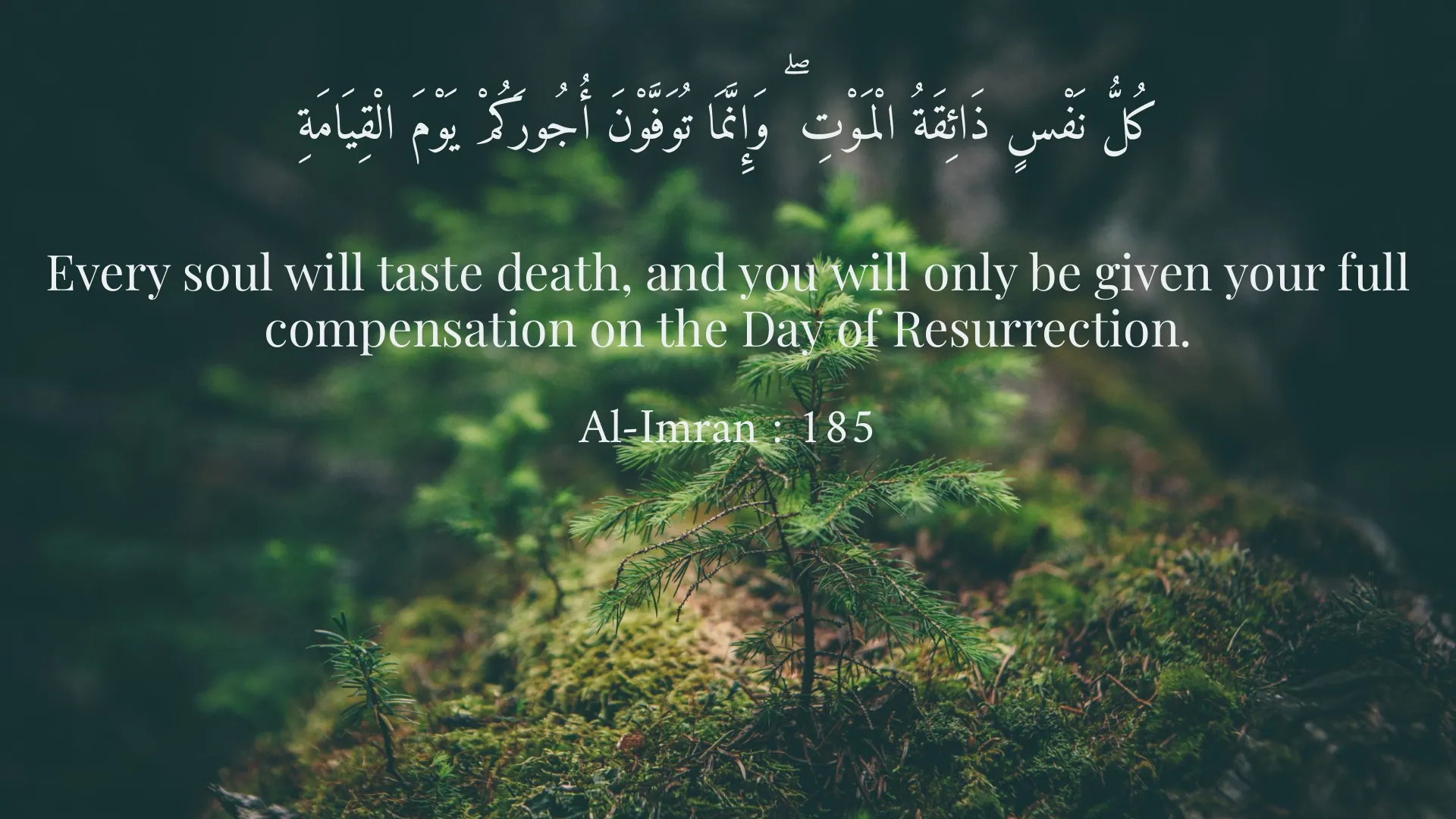
كُلُّ نَفْسٍ ذَائِقَةُ الْمَوْتِ ۖ وَإِنَّمَا تُوَفَّوْنَ أُجُورَكُمْ يَوْمَ الْقِيَامَةِ
Every soul will taste death, and you will only be given your full compensation on the Day of Resurrection.
Al-Imran : 185
وَلَنَبْلُوَنَّكُم بِشَيْءٍ مِّنَ الْخَوْفِ وَالْجُوعِ وَنَقْصٍ مِّنَ الْأَمْوَالِ وَالْأَنفُسِ وَالثَّمَرَاتِ ۗ وَبَشِّرِ الصَّابِرِينَ
And We will surely test you with something of fear and hunger, and a loss of wealth and lives and fruits. But give good tidings to the patient.
Al-Baqarah : 155
أَلَمْ يَأْتِكُمْ رُسُلٌ مِّنكُمْ يَقُصُّونَ عَلَيْكُمْ آيَاتِ رَبِّكُمْ وَيُنذِرُونَكُمْ لِقَاءَ يَوْمِكُمْ هَذاَ.
Did not the messengers come to you from among yourselves, reciting to you the signs of your Lord and warning you of the meeting of this Day of yours?
Muhammad : 22
Short Story
On a beautiful day, Mehdi went to the city square to have a discussion with his friends. They were discussing what truly matters in life. Mehdi recalled the verses of the Quran that mentioned life as a test and an opportunity to earn rewards in the afterlife. So he decided to set clear priorities in his life, placing love for God and others at the forefront. After this decision, he began a new life, and a smile often lit up his face.