Quranic Answer
The Holy Quran, as the sacred scripture of Islam, is often regarded as a comprehensive guide for humanity. Among its many themes and teachings, a significant focus is placed on the distinction between truth and falsehood. This delineation informs the beliefs and actions of Muslims worldwide and fosters a framework within which individuals can pursue a path of righteousness. At the heart of this discourse lies Surah Al-Baqarah, verse 256, which asserts: "There is no compulsion in religion. The right course has become clear from the wrong." This profound declaration establishes a fundamental principle in Islam that highlights the importance of free will in matters of faith. It teaches that belief should stem from genuine conviction rather than coercion, allowing individuals to embrace their spiritual journey authentically. The verse emphasizes the clarity of truth – it is evident and distinguishable from falsehood. This clarity is crucial as it places the onus of responsibility on individuals to seek out the truth actively. Religious faith, in this context, is not a matter to be imposed upon others but rather a personal journey towards enlightenment. Furthermore, in Surah Al-Ma'idah, verse 3, Allah states, "This day I have perfected for you your religion." This assertion signifies the completeness and comprehensiveness of the divine message revealed to humanity. It indicates that God has laid down a framework of guidance encompassing moral, ethical, social, and spiritual dimensions. The perfection of religion as mentioned in this verse implies that Islam is intended to be a complete way of life; therefore, adherents are encouraged to recognize the truth it presents while steering clear from false beliefs. In Surah Al-Imran, verse 19, it is further reinforced that "Indeed, the religion in the sight of Allah is Islam." This critical statement underscores the monotheistic foundation of Islam, asserting that it is the only path acknowledged by God. It implies a rejection of other religious practices that conflict with this tenet, classifying them as falsehood. Such declarations instill a sense of purpose and align Islamic followers in their pursuit of truth, urging them to reject ideologies that oppose the teachings of the Quran. Moreover, the Quran provides a detailed depiction of the characteristics of truth and falsehood. Truth is associated with attributes such as honesty, justice, integrity, and righteousness. A person who embodies these qualities is deemed to align with the divine principles laid out in the Holy Quran. In contrast, falsehood is characterized by deceit, injustice, corruption, and wickedness. Recognizing these attributes enables believers to identify true faith and discern misleading ideologies that may arise in society. In Surah Al-Ghashiyah, verses 2 to 7, Allah delineates the striking differences between the characteristics of the believers and disbelievers. These verses elucidate how the behavior and mindset of individuals can act as markers for their inclination toward either truth or falsehood. The believers are often described with esteemed qualities that reflect their faith, while disbelievers are portrayed in a more negative light, suggesting that their deviation from the truth is rooted in moral and ethical failures. Importantly, the Quran serves as a pivotal guide for humanity, directing them towards truth as long as they are committed to seeking it earnestly and choosing to overcome the pitfalls of falsehood. The Quran acts as a constant reminder for individuals to engage critically with their beliefs and to undertake a journey of self-discovery that seeks validation through evidence and insight. In a world teeming with misinformation and various ideologies, the teachings of the Quran serve as a compass to navigate the complexities of existence. The role of the Quran becomes evident as a source of inspiration, encouragement, and enlightenment. It instills in individuals the necessity to be vigilant in their pursuit of truth as well as to ensure that their actions are aligned with the ethical standards prescribed by divine guidance. This intrinsic relationship between truth and moral integrity underscores the importance of seeking knowledge, understanding, and wisdom in achieving a profound connection with the divine. Ultimately, the overarching message of the Quran is one of empowerment. By asserting that there is no compulsion in religion and that the truth is accessible, it encourages individuals to embrace their faith sincerely. The call to recognize the truth is not merely about personal belief; it extends to a collective responsibility in upholding justice and integrity within the community. In conclusion, the Quran's teachings on the boundaries of truth and falsehood establish an essential framework for humanity. By delineating these boundaries, the scripture guides individuals towards a righteous path, urging them to seek out the light of truth while avoiding the shadows of falsehood. With each verse, the Quran serves to enlighten the hearts and minds of believers, enabling them to strive for a life of honesty, justice, and a profound connection with their creator. It is through the continuous exploration of these truths that individuals can hope to foster a compassionate, just, and enlightened society.
Related Verses
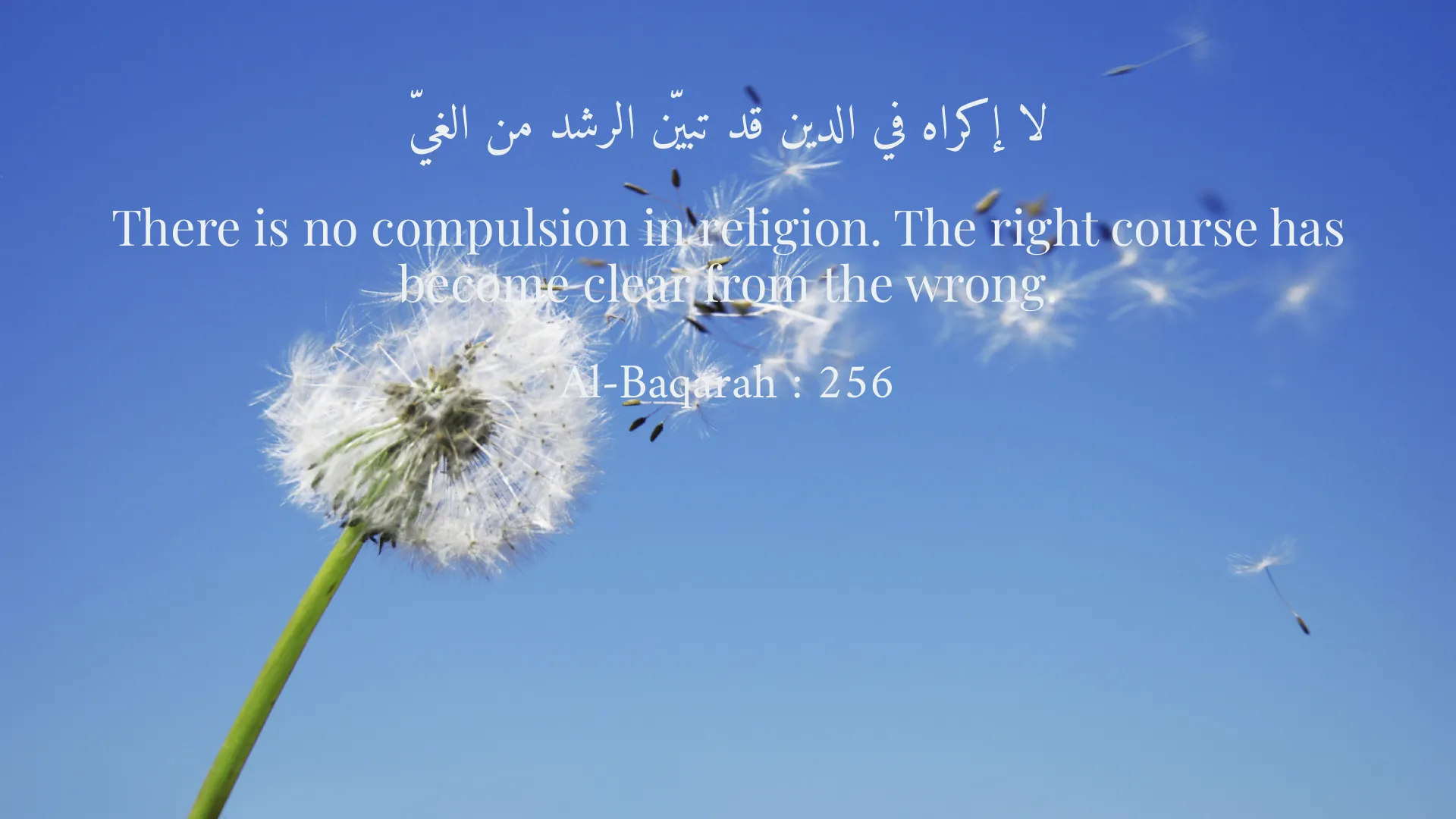
لا إكراه في الدين قد تبيّن الرشد من الغيّ
There is no compulsion in religion. The right course has become clear from the wrong.
Al-Baqarah : 256
اليوم أَكْمَلْتُ لَكُمْ دِينَكُمْ
This day I have perfected for you your religion.
Al-Ma'idah : 3
إن الدين عند الله الإسلام
Indeed, the religion in the sight of Allah is Islam.
Al-Imran : 19
Short Story
One day, a man in the marketplace was listening to the words of a religious scholar. The scholar had said that truth and falsehood are like light and darkness. While truth is bright and clear, falsehood tries to disguise itself in the garments of truth. The man pondered to himself, where am I heading in my life? From that day on, he made a continuous effort to distinguish truth from falsehood by studying the Quran and becoming familiar with the meanings of its verses, committing himself to that which is truly right.