Quranic Answer
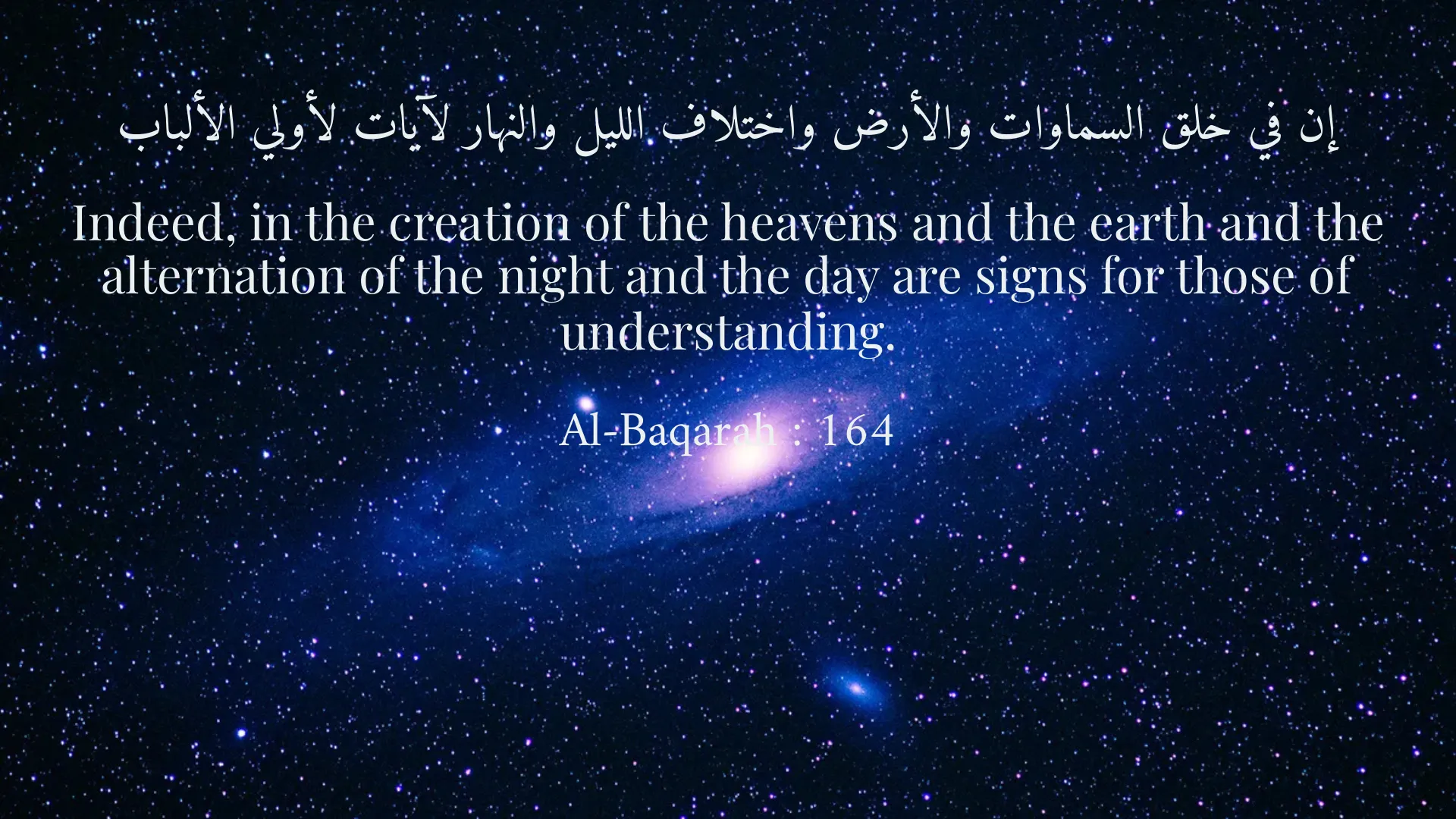
The Holy Quran provides a profound and comprehensive perspective on nature and the relationship between humans and their environment, offering timeless wisdom for sustainable living and coexistence. The relationship between humanity and nature is a recurring theme in the Quran, highlighting the diverse manifestations of God's signs within the natural world. This intricate connection necessitates a closer examination, as our understanding can lead to a more harmonious existence with all living beings. The Quran invites believers to engage deeply with creation, urging them to observe the beauty, order, and complexity inherent in the natural world. In Surah Al-Baqarah, verse 164, it states: 'Indeed, in the creation of the heavens and the earth and the alternation of the night and the day are signs for those of understanding.' This verse serves as an invitation for reflection, encouraging individuals to contemplate the majesty of creation and appreciate the lessons that nature can impart. By engaging in this mindful observation, humans can cultivate an attitude of gratitude and understanding towards the Creator and His creations. Moreover, the Quran underscores the moral and spiritual responsibilities that humans bear as vicegerents (khalifah) of Allah on Earth. This concept is beautifully articulated in Surah Al-An'am, verse 38, which proclaims: 'There is no creature on earth, nor a bird that flies with its two wings, but they are communities like you.' This verse symbolizes the interconnectedness of all living beings within the ecosystem, stressing the importance of respecting and honoring all forms of life. By acknowledging that every creature has its unique role and contribution to the planet’s well-being, humanity is prompted to foster an ethic of coexistence rather than dominance. The Quran's environmental teachings go beyond mere awareness; they advocate for the protection and sustainable management of the resources bestowed upon humanity. As caretakers of the Earth, humans are encouraged to utilize these resources responsibly, ensuring that they do not exploit or squander them. The Quran repeatedly reiterates that natural resources such as water, land, and wildlife are blessings from Allah, meant to be preserved rather than depleted. This responsible stewardship is crucial for maintaining ecological balance and ensuring that future generations inherit a viable and thriving planet. Furthermore, the spiritual implications of disregarding the sanctity of nature can be dire, leading to significant ecological disasters. Recognizing this, the Quran emphasizes the delicate balance that must be maintained in our interactions with the environment. It warns against wastefulness and excess, as seen in Surah Al-A'raf, verse 31, which advises, 'And eat and drink, but be not excessive. Indeed, He likes not those who commit excess.' This verse serves as a profound reminder that sustainability is not only a matter of physical preservation but also an ethical pathway intrinsic to faith. The Quran's message regarding nature also resonates with contemporary discussions about environmental ethics and sustainability. In a world grappling with climate change, pollution, and loss of biodiversity, the Quran's teachings on justice, compassion, and accountability offer a valuable framework for addressing these pressing challenges. The verses regarding the protection of nature can inspire individuals and communities to advocate for environmental stewardship in a manner that is both faith-driven and action-oriented. Additionally, the Quran teaches that the impact of human actions on nature extends beyond the immediate environment, influencing future generations. In Surah Al-Isra, verse 31, it is mentioned: 'And do not kill your children for fear of poverty. We provide for them and for you.' This verse emphasizes the responsibility to ensure that the choices made today do not compromise the ability of future generations to thrive. It reinforces the notion that protecting the environment is an ethical imperative, rooted in the understanding that we are accountable not only for our actions but also for their consequences on those who come after us. Moreover, the Quran establishes a sense of solidarity among all beings, calling for mutual cooperation and understanding. The richness of life lies in its diversity, and the Quran’s assertion that every species is part of its unique community fosters a sense of kinship with nature. By promoting a worldview that values all forms of life, the Quran encourages humanity to embrace compassion and empathy, essential elements for nurturing a healthy relationship with the environment. In conclusion, the Quran’s teachings regarding nature emphasize the significance of respect, care, and wisdom in our interactions with the environment. It calls upon believers to acknowledge their role as guardians of the Earth, to utilize resources judiciously, and to foster a spirit of coexistence with all creatures. The messages contained within the Holy Quran are not just religious directives; they represent a holistic approach to living that encourages mindfulness, sustainability, and ethical responsibility towards nature. Ignoring this sacred relationship can lead to marked consequences, not only for the current generation but also for future generations. Embracing the Quran’s guidance regarding the protection of nature is essential for achieving a balanced, harmonious existence with our surroundings, thus ensuring that we honor the divine gift of creation and preserve it for generations to come.
Related Verses
إن في خلق السماوات والأرض واختلاف الليل والنهار لآيات لأولي الألباب
Indeed, in the creation of the heavens and the earth and the alternation of the night and the day are signs for those of understanding.
Al-Baqarah : 164
وما من دابة في الأرض ولا طائر يطير بجناحيه إلا أمم أمثالكم
And there is no creature on earth, nor a bird that flies with its two wings, but they are communities like you.
Al-An'am : 38
Short Story
One day, a man sat in the mountains, gazing at the beauty of nature. He recalled the verses of the Quran that highlight how Allah created every being with wisdom. He decided to spend some time each day in nature and work towards its protection. After some time, he felt that his life had become more meaningful, and his connection with God and nature had deepened.