Quranic Answer
The Holy Quran, regarded as the ultimate source of guidance for millions of Muslims around the world, lays great emphasis on the importance of righteous deeds throughout various verses. The concept of righteous deeds is not only a fundamental principle of faith but also a cornerstone of the lives of believers. As Muslims seek to navigate their spiritual journeys, they are continually reminded of the significance of good actions and ethical behavior. This article explores the Quranic perspective on righteous deeds, demonstrating how these actions intertwine with the very essence of individual and communal well-being. In Surah Al-Baqarah, verse 82, Allah states, 'And those who believe and do righteous deeds are the companions of Paradise; they will abide therein eternally.' This verse encapsulates a profound truth: the intersection of belief and action is crucial for attaining salvation. It underlines the idea that simply holding faith in one's heart is insufficient; one must manifest that faith through righteous deeds. The companions of Paradise, as highlighted in this verse, are those whose lives exemplify this tenant of Islam—living authentically, with hearts aligned to their actions. Furthermore, in Surah Al-An'am, verse 160, it is articulated, 'And whoever does a good deed will have a better reward than it; and whoever does a bad deed will not be recompensed except like it.' This significant statement illustrates the law of consequences, promoting the notion that every action, whether good or bad, carries specific effects on the individual. Recognizing the potential repercussions of one's choices encourages believers to remain vigilant and prudent in their actions. The Quran serves as a guide, urging believers to choose wisely, reinforcing the importance of good conduct in their daily lives. The Quran also highlights that the impact of righteous deeds extends beyond the individual, as these actions generate positive effects on society as a whole. In Surah Al-Imran, verse 134, Allah reminds the believers: 'And those who spend in the cause of Allah during ease and hardship and who restrain anger and who pardon the people...' This verse emphasizes the importance of charitable acts that uplift and empower communities, especially in times of difficulty. It showcases the beauty of selflessness, as believers are encouraged to contribute to the welfare of those around them, irrespective of their own circumstances. Acts of charity and righteousness embody a unique value in personal and collective life. They serve to strengthen the social fabric and foster a sense of unity among individuals. When believers engage in righteous deeds, they create ripples of positivity, inspiring others to follow suit, thus cultivating an environment of kindness and support. This collective pursuit of goodness transforms communities, resulting in environments that nurture compassion, understanding, and cooperation. Moreover, the concept of restraining one's anger and forgiving others, as mentioned in the aforementioned verse, is a crucial facet of righteous deeds. Such actions encourage peaceful interactions and promote harmony within communities. The ability to control one's emotions and extend forgiveness is a noble trait emphasized in Islamic teachings, demonstrating how personal character development aligns with societal well-being. Additionally, the Quran discusses the significance of righteous deeds in the context of accountability in the Hereafter. Throughout several verses, believers are reminded that they will be held accountable for their actions, both good and bad. This notion instills a sense of responsibility within individuals, motivating them to act ethically, for their conduct would ultimately determine their fate in the afterlife. It reflects the principle that the choices we make influence our eternal destination, thereby emphasizing the value of righteous deeds. The emphasis on righteous deeds extends to the spiritual growth of individuals. When believers engage in acts of kindness, charity, and ethical behavior, they not only cultivate positive relationships with others but also strengthen their connection with Allah. These acts serve as expressions of gratitude and devotion, reinforcing the bond between the believer and their Creator. Consequently, righteous deeds become a means of spiritual elevation, enabling individuals to achieve higher levels of faith and awareness. In conclusion, it is evident from the aforementioned verses that righteous deeds hold immense significance in both individual lives and the broader community. The Quran consistently encourages believers to strive towards performing good and righteous actions while providing clear guidance on the consequences of one's behavior. Righteous deeds are not merely actions; they are a reflection of faith, character, and devotion. As believers navigate their journeys through life, it is essential for them to recognize the profound impact their actions can have on themselves, their communities, and their ultimate destinies. Upholding the principles of righteousness is not just an ideal but a way of life that fosters health, happiness, and harmony, thus embodying the very essence of Islamic teachings.
Related Verses
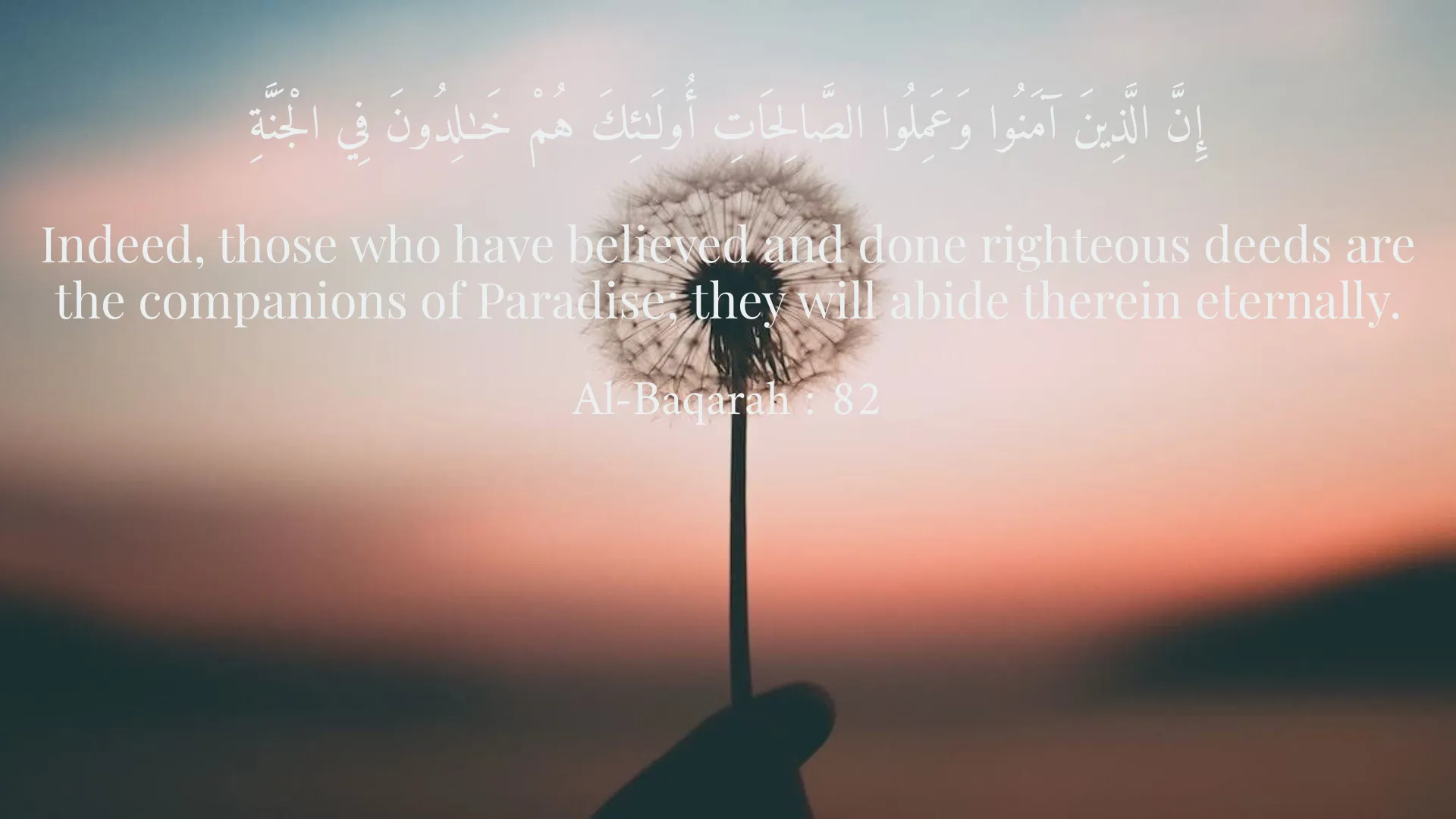
إِنَّ الَّذِينَ آمَنُوا وَعَمِلُوا الصَّالِحَاتِ أُولَـٰئِكَ هُمْ خَـٰلِدُونَ فِي الْجَنَّةِ
Indeed, those who have believed and done righteous deeds are the companions of Paradise; they will abide therein eternally.
Al-Baqarah : 82
وَمَن يَأْتِ بِسَيِّئَةٍ فَلَا يُجْزَى إِلَّا مِثْلَهَا
And whoever does a bad deed will not be recompensed except like it.
Al-An'am : 160
وَالَّذِينَ يُنفِقُونَ فِي السَّرَّاء وَالضَّرَّاء وَالْكَاظِمِينَ الْغَيْظَ وَالْعَافِينَ عَنِ النَّاسِ
And those who spend in the cause of Allah during ease and hardship and who restrain anger and who pardon the people...
Al-Imran : 134
Short Story
A story from Saadi: Once, there was a man with a heart full of kindness in a village. He always helped the needy and never neglected to perform good deeds. He focused on the present, not worrying about yesterday or tomorrow. One cold snowy day, while people were trying to save themselves, he went to help those in need. People praised him and prayed for him, and he felt a sense of goodness in his heart.