Quranic Answer
The Holy Quran, the sacred text of Islam, provides profound guidance to its followers across various aspects of life, emphasizing the importance of order and structure. Order, a concept that encapsulates arrangement, discipline, and the prioritization of actions and obligations, serves as a fundamental principle in both spiritual and worldly engagements. This article explores the vital role of order as depicted in the Holy Quran, illustrating how it is interwoven into the fabric of daily living and spiritual adherence. To understand the significance of order as emphasized in the Quran, one can refer to Surah Al-An'am (Chapter 6), verse 161, where Allah commands His Messenger, saying, 'Say, my Lord has guided me to a straight path, a path that is orderly.' This directive does not merely highlight a physical journey; rather, it showcases a philosophical perspective on life itself. The 'straight path' symbolizes not only the correct way of worshipping Allah, but also achieving personal and social harmony through structured and orderly living. The mention of an 'orderly path' points to the importance of having a well-organized life. Living without order can often lead to chaos, confusion, and a lack of direction—conditions that can hamper personal and communal growth. Furthermore, the Quran reassures its readers through Surah Taha (Chapter 20), verse 82: 'And whoever adheres to orderliness in their life will achieve their purpose.' Here, order is framed not just as a beneficial quality, but as a vital precursor to success in any endeavor. This verse profoundly implies a universal truth; whether in personal goals, professional aspirations, or spiritual fulfilment, the element of order is non-negotiable. On a deeper level, the laws and commands outlined in the Quran serve as further exemplifications of the principle of order. The meticulous detailing of rituals, ethical imperatives, and social regulations reflects a divine blueprint for maintaining order in both individual lives and the broader community. For example, the command to pray five times a day is not merely a ritualistic practice but a structure that brings discipline and rhythm to a believer's day. Each prayer serves as a reminder of the importance of pausing, reflecting, and returning to a sense of order amidst the hustle of life. Moreover, the Quran illustrates the need for order within familial structures as fundamental to a healthy society. In Surah Maryam (Chapter 19), verse 14, it is stated, 'And be good to parents.' This command underlines the significance of maintaining order within the family unit, signifying respect and obligation towards one's parents. The familial structure forms the first place where individuals learn about responsibility and care, reflecting the larger principles of order in societal interactions. By emphasizing the necessity to honor parents, the Quran implies that a well-ordered family life contributes fundamentally to a well-ordered community. The idea of order is not only essential for interactions within a family, but it also extends to communal and social interests. When individuals in a society adhere to the principles of order as outlined in the Quran, the entire community experiences harmony and peace. These Quranic exhortations teach that order can lead to personal growth, which subsequently results in societal progress. It encourages individuals to reflect on their actions, ensure they align with greater communal values, and contribute positively towards the welfare of society. In our increasingly chaotic world, the wisdom within the Quran teaches that embracing order can lead to peace and fulfillment. Given the distractions and difficulties that modern life presents, turning to the structured guidance offered in the Quran can provide a roadmap for individuals seeking solace amidst turmoil. Adhering to divine instructions not only leads to order in spiritual matters but also positively influences social life, nurturing both personal and communal development. In conclusion, the Quran's emphasis on order is indispensable for anyone striving to live a balanced and meaningful life. The verses cited illustrate that a structured approach enhances both personal growth and community prosperity. By understanding order as a divine principle, followers of Islam can implement these teachings in their daily lives, bringing about a sense of peace, discipline, and harmony not only within themselves but also in the broader social context. Ultimately, by adhering to the divine call for order, one can transform their existence into a manifestation of purpose, creating a ripple effect that influences both personal paths and communal interactions.
Related Verses
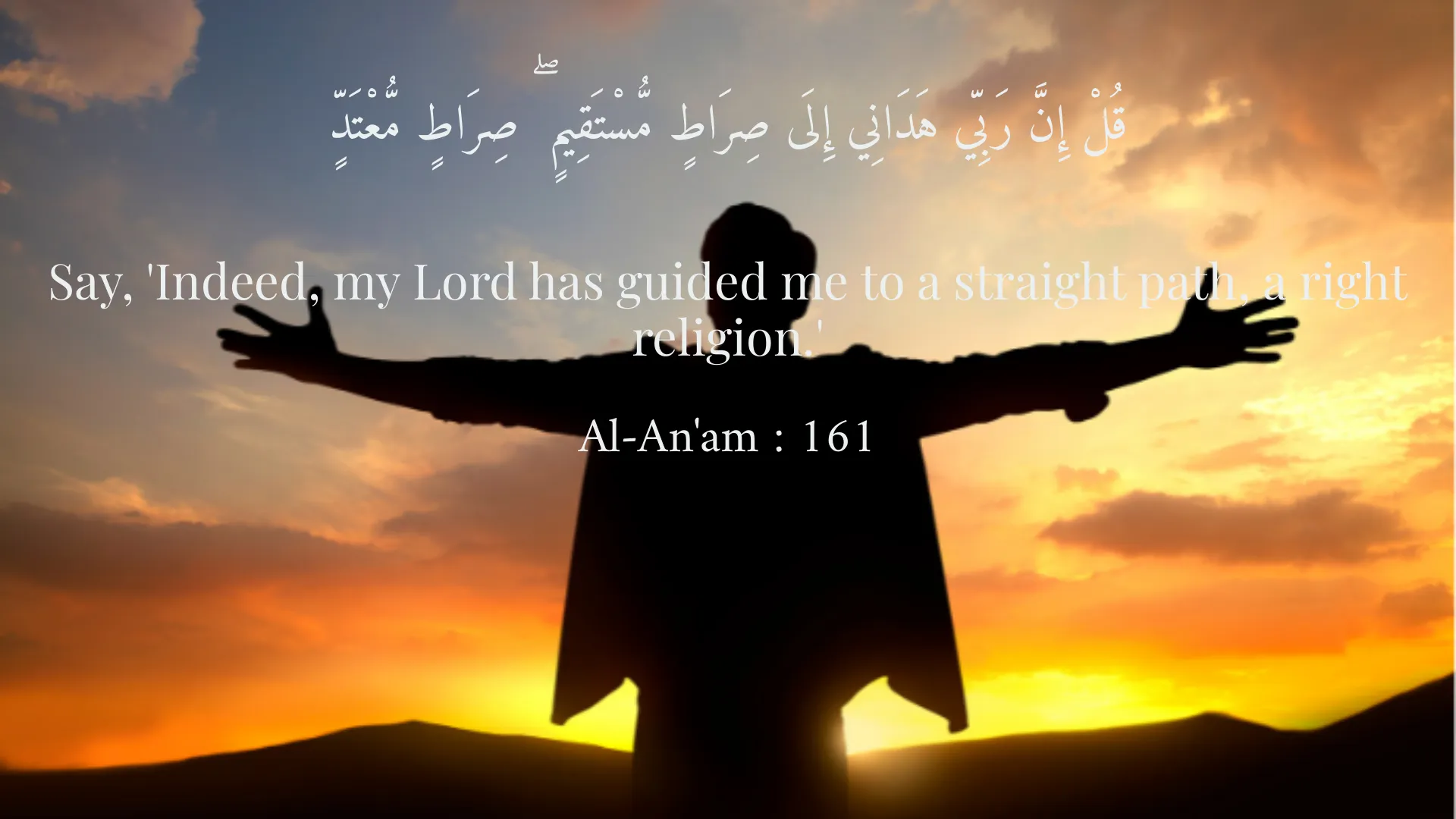
قُلْ إِنَّ رَبِّي هَدَانِي إِلَى صِرَاطٍ مُّسْتَقِيمٍ ۖ صِرَاطٍ مُّعْتَدٍّ
Say, 'Indeed, my Lord has guided me to a straight path, a right religion.'
Al-An'am : 161
وَمَن يُقْسِطْ فِي حَيَاتِهِ فَإِنَّهُ يَحْصُلُ عَلَى مَا يُرِيدُ
And whoever adheres to orderliness in their life will achieve their goal.
Taha : 82
وَبَرًّۭا بِوَالِدَيْهِ وَلَمْ يَكُنْ جَبَّارًۭا عَصِيًّا
And he was dutiful to his parents, and he was not a disobedient tyrant.
Maryam : 14
Short Story
One day, Adel, a vibrant and innovative young man, pondered how order could benefit his life. After some studying and reflection, he stumbled upon a Quranic verse that strongly articulated the importance of discipline and order. Upon understanding this concept, he decided to have a set daily plan for his activities. From that day on, he approached his tasks and goals with greater organization. This order not only brought a sense of peace in his life but also led him to achieve his dream job.