Quranic Answer
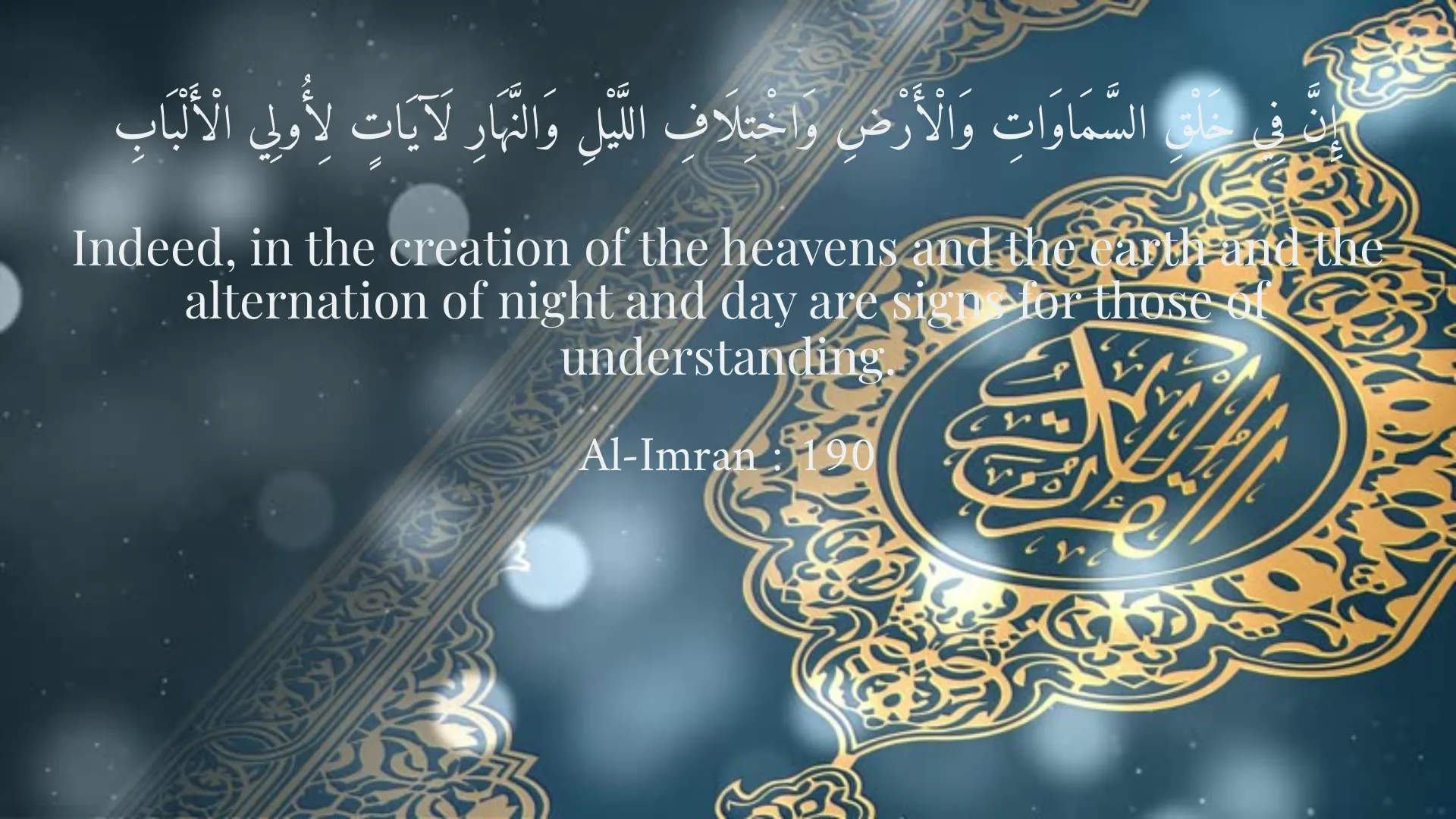
Title: The Role of Reason in Understanding the Divine: A Deep Dive into the Quran Introduction The Holy Quran, as the central religious text of Islam, offers profound insights into the nature of human existence, the universe, and the divine. One of its most notable aspects is the Quran's consistent call for individuals to use their reason and intellect. This emphasis on rationality underlines the text's approach to understanding religious matters and truths. From the creation of the heavens and the earth to the very nature of knowledge, the Quran invites humankind to engage in critical thinking and reasoning. In this article, we will explore several Quranic verses that highlight the significance of reason and intellect in relation to faith and understanding. The Divine Invitation to Reason The Quran opens a dialogue with humanity, urging individuals to reflect upon the signs presented in nature and their implications for belief. Surah Al-Imran, verse 190, states, "Indeed, in the creation of the heavens and the earth and the alternation of night and day are signs for those of understanding" (Al-Imran: 190). This verse serves as an invitation for individuals to contemplate the universe's creation and the cyclical nature of time. The stars, planets, and natural changes present in our environment are not merely to be observed, but understood. The Quran's exhortation to reason emphasizes that an analysis of these phenomena can lead individuals to a stronger comprehension of God and His attributes. It underscores the idea that exploring the universe can foster a sense of reverence and awe towards the Creator, thereby deepening one's faith. When the Quran encourages reflection and reasoning, it does not imply that individuals should disregard faith. Instead, it suggests that faith and reason go hand in hand. This leads to the conclusion that genuine understanding stems from both belief and the application of intellect in seeking knowledge. The Link Between Knowledge and Elevation In Surah Al-Mujadila, verse 11, it is mentioned, "Allah will raise those who have believed among you and those who were given knowledge by degrees" (Mujadila: 11). This command underscores the intrinsic connection between faith and the pursuit of knowledge. The more one seeks to understand, the higher one's spiritual and intellectual elevation. Knowledge, according to the Quran, is a pathway to better comprehend the intricacies of faith and the principles governing human conduct. It is not limited to religious knowledge; rather, it encompasses all fields of inquiry that promote understanding of the world around us. Whether it's science, philosophy, or ethics, each domain of knowledge contributes to our overall comprehension and connection with the divine. Furthermore, the elevation described in the verse pertains to both spiritual and temporal realms. A well-rounded individual, equipped with knowledge, has the potential to lead and serve humanity in ways that a less knowledgeable person cannot. This aspect emphasizes that the pursuit of knowledge is not solely a personal journey; it has broader implications for society and the community at large. Reasoning Against Ignorance The Quran positions reason as an essential tool against ignorance. In various instances, it casts ignorance as a significant barrier to understanding divine truth. Ignorance fosters misconceptions and hinders individuals from recognizing the signs of God present in the universe. The significance of reason is further illuminated in numerous traditions of the Prophet Muhammad (peace be upon him). He is reported to have said, "Seeking knowledge is an obligation upon every Muslim." This command implies that the exercise of reason, through the quest for knowledge, plays a crucial role in overcoming the darkness of ignorance. In this context, reason acts not only as an intellectual exercise but as a moral imperative. By utilizing our intellect, we challenge the status quo and seek to dispel myths and falsehoods that may impede our understanding of God and the world. Hence, the act of reasoning is both a personal journey and a societal responsibility. The Relationship Between Reason and Faith In the Quran, reason is portrayed as a means to achieve a closer connection with God. The text encourages believers to use their intellect to explore and interpret divine commandments. Verses such as "Do they not reflect upon the Quran, or are there locks upon their hearts?" (Muhammad: 24) further elucidate this point. The metaphor of locked hearts suggests that an unwillingness to engage with reason prevents individuals from grasping spiritual truths. Furthermore, the Quran elucidates that a robust intellect leads to a deeper appreciation of faith. Knowledge enables believers to engage with their faith meaningfully, promoting a personal connection with God that transcends blind belief. This underlines the Quran's message: that faith is to be understood, not merely accepted. The Importance of Using Reason Correctly Despite the emphasis on reason within the Quran, it is also important to recognize that reasoning must be conducted within the bounds of divine guidance. The Quran encourages individuals to seek knowledge but warns against erroneous conclusions that may arise from flawed reasoning or misinterpretations. This protective lens emphasizes that while reason is pivotal, it must align with established divine principles. Intellectual freedom comes with the responsibility of ensuring that conclusions drawn do not contradict or undermine the essence of Islamic teachings. Thus, the Quran advocates for a balanced approach where reason is exercised alongside ethical and spiritual considerations. Conclusion In summation, the Holy Quran profoundly emphasizes the importance of reason as an essential tool for understanding the divine and navigating the complexities of life. The verses discussed in this article illustrate that reason leads to knowledge, a vital element for the elevation of faith. The interplay between reason, faith, and knowledge not only enhances individual understanding but also fosters a community anchored in enlightenment and intellectual pursuit. Ultimately, the Quran encourages every individual to engage their intellect in establishing a meaningful relationship with God, asserting that reason is not just an abstract concept but a vital force to comprehend the divine and live a life aligned with its commandments.
Related Verses
إِنَّ فِي خَلْقِ السَّمَاوَاتِ وَالْأَرْضِ وَاخْتِلَافِ اللَّيْلِ وَالنَّهَارِ لَآيَاتٍ لِأُولِي الْأَلْبَابِ
Indeed, in the creation of the heavens and the earth and the alternation of night and day are signs for those of understanding.
Al-Imran : 190
يَرْفَعِ اللَّهُ الَّذِينَ آمَنُوا مِنكُمْ وَالَّذِينَ أُوتُوا الْعِلْمَ دَرَجَاتٍ
Allah will raise those who have believed among you and those who were given knowledge by degrees.
Al-Mujadila : 11
Short Story
One day a person named Hasan was sitting under the shade of a tree, contemplating his life. He was always in search of the truth, striving for a better understanding of his faith and existence. While gazing at the sky one day, he said to himself, 'God has placed signs in the creation of this universe.' From that day on, Hasan decided to make better use of his reason and pay special attention to the verses of the Quran. He realized that through contemplation, he could attain a deeper understanding of faith and life.