Quranic Answer
The Holy Quran speaks repeatedly about the Straight Path, an essential concept in the Islamic faith that serves as a guide for humanity towards everlasting happiness and goodness. This path, outlined by Allah, is not merely a spiritual journey but also encompasses moral and social dimensions that are integral to leading a fulfilled life. The significance of the Straight Path is prominently featured in the very first chapter of the Quran, Surah Al-Fatiha, which every Muslim recites during their prayers, underscoring its importance. In verses 6 and 7 of Surah Al-Fatiha, believers implore Allah, saying: 'Guide us to the Straight Path, the path of those upon whom You have bestowed favor, not of those who have evoked [Your] anger or of those who are astray.' These verses encapsulate the essence of seeking divine direction towards righteousness, favor, and away from error and punishment. To delve deeper into the concept of the Straight Path, it is vital to understand its multifaceted nature. As human beings navigate life's complexities, they encounter myriad choices and decisions that could steer them in various directions. The Straight Path serves as an unwavering reference point, presenting a clear trajectory to follow—all grounded in the teachings of Allah and exemplified by the life of the beloved Prophet Muhammad (peace be upon him) and his family, Ahlul Bayt (peace be upon them). The Quran repeatedly emphasizes the importance of adherence to this path, which is characterized not only by faith but also by ethical conduct and social responsibility. In Surah Al-Imran (verse 103), Allah instructs, 'And hold firmly to the rope of Allah all together and do not become divided.' This particular verse highlights the collective aspect of faith. It emphasizes the importance of unity among believers, cautioning against division. Holding on to the 'rope of Allah' signifies a deep commitment to the principles laid out in the Quran and the teachings of the Prophet. The Straight Path is a call to communal solidarity where Muslims are encouraged to support one another in their spiritual journeys, ensuring that social harmony and cooperation flourish within the community. The Straight Path is not merely a guideline for personal behavior; it lays the foundation for societal wellbeing. The moral framework provided by the Quran mandates qualities such as honesty, fairness, compassion, and justice—essential traits that contribute to a harmonious society. By promoting these values, the Straight Path encourages individuals to be active participants in their communities, working towards the common good and alleviating the suffering of others. In this way, individuals become agents of change, promoting a culture of empathy and kindness that aligns with Islamic principles. Furthermore, the ultimate realization of the Straight Path can be found in the actions and character of the Prophet Muhammad (peace be upon him) and the Ahlul Bayt. Their integrity, compassion, and unwavering faith present a perfect model for Muslims striving to embody the principles of the Straight Path in their daily lives. These exemplary figures dedicated their lives to serving humanity, advocating for justice, and nurturing communities marked by mutual support and respect. Their teachings and character are woven into the fabric of the Straight Path, offering believers tangible examples of how to navigate the complexities of life with grace, dignity, and faith. Moreover, the concept of the Straight Path transcends religious boundaries. It resonates with people from diverse backgrounds, as the principles of honesty, integrity, compassion, and social responsibility are universally recognized as virtues essential for a peaceful and prosperous society. This universality enhances the appeal of the Straight Path, making it relevant not only to Muslims but also to anyone seeking a moral compass in a world often fraught with challenges and distractions. The journey on the Straight Path is filled with tests and trials, as it is a path that requires perseverance, patience, and steadfastness. The Quran acknowledges this reality, urging believers to remain resilient in the face of adversity. In Surah Al-Baqarah (verse 153), it states: 'O you who have believed, seek help through patience and prayer. Indeed, Allah is with the patient.' This verse serves as a reminder that while the journey may be fraught with difficulties, divine support is accessible to those who remain committed to their faith and who seek guidance through prayer and perseverance. In conclusion, the Straight Path symbolizes a holistic approach to life that encompasses faith, morality, and social responsibility. It challenges individuals to cultivate virtues that not only benefit themselves but also uplift their communities. By following the teachings of the Quran and the exemplary lives of the Prophet Muhammad (peace be upon him) and the Ahlul Bayt, Muslims can gain deeper insights into the principles of the Straight Path. This understanding can empower them to lead lives marked by righteousness and service to others, ultimately achieving the happiness and salvation promised by Allah. In a world that often points towards misguidance and moral ambiguity, the Straight Path provides a beacon of hope, guiding humanity toward a life defined by purpose, fulfillment, and connection with the divine.
Related Verses
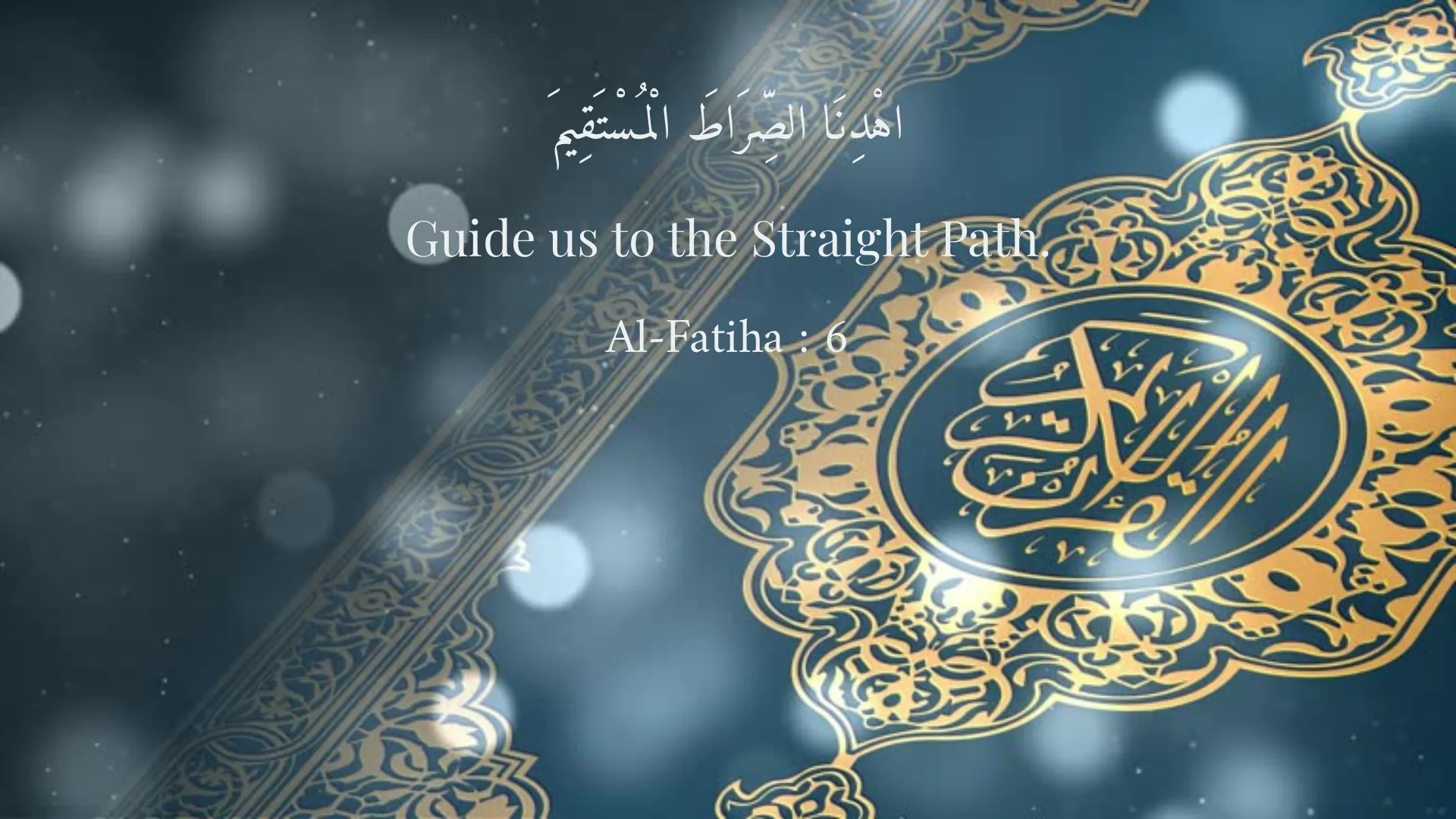
اهْدِنَا الصِّرَاطَ الْمُسْتَقِيمَ
Guide us to the Straight Path.
Al-Fatiha : 6
وَاعْتَصِمُوا بِحَبْلِ اللَّهِ جَمِيعًا وَلَا تَفَرَّقُوا
And hold firmly to the rope of Allah all together and do not become divided.
Al-Imran : 103
وَمَن يُطِعِ اللَّهَ وَالرَّسُولَ فَأُو۟لَـٰئِكَ مَعَ الَّذِينَ أَنْعَمَ اللَّهُ عَلَيْهِمْ
And whoever obeys Allah and the Messenger, then they will be with those upon whom Allah has bestowed favor.
An-Nisa : 69
Short Story
One day, Mehdi was walking in the park when he unexpectedly met an old friend. They spoke for hours about life and the right ways to navigate it. Mehdi expressed that he was searching for the Straight Path and wanted to make the right decisions in his life. His friend suggested that he refer to the Quran and its verses, as he too had a similar experience and ultimately found peace and purpose through reading the Quran. This conversation inspired Mehdi, and he decided to dedicate more time to studying the Quran.