Quranic Answer
In the Holy Quran, divine punishments are depicted through a myriad of narratives and descriptions, illustrating profound lessons of morality, obedience, and accountability. These narrations serve as a reminder that divine punishments are often direct consequences of human actions and defiance toward divine commandments. Through various verses, the Quran elucidates how heedlessness and rebellion against divine guidance can lead to dire consequences, urging readers and believers to reflect on their behaviors and beliefs. The concept of divine punishment in the Quran emphasizes the correlation between human actions and their repercussions. In Surah Al-Ankabut, verse 40, Allah recounts the fate of past nations that rejected their prophets and ignored the righteous path laid before them. The verse states, "We seized each of them for their sins, and among them were those upon whom We sent a storm of stones, and some We caused to be swallowed by the earth, and some We drowned." This vivid depiction underscores that divine punishments are not confined to abstract spiritual realms but manifest tangibly in this world through various forms of retribution. Such consequences are meant not only as punishment but also as educational experiences for humanity—illustrating the dire ramifications of straying from divine guidance. Further, in Surah Al-Baqarah, verse 61, Allah references a moment when the people expressed a desire for divine retribution: "And when you said, 'O Allah, send down upon us a punishment!'" This plea for punishment can be seen as a poignant reminder of the human tendency to seek a wake-up call—a desperate recognition of the consequences of ongoing disobedience and moral decay. The imagery used in this verse signifies the intricate relationship between the divine and human actions, where punishment serves a dual purpose: it acts both as a deterrent and a pathway toward recognition and repentance. The Quran continually emphasizes the importance of learning from past communities that have faced divine punishment due to their sins and refusal to heed divine messages. Each narrative serves as a cautionary tale, providing believers with insights into the dynamics of divine justice. These tales of ancient civilizations, such as the people of Thamud and the inhabitants of Noah's time, exemplify how neglecting divine commandments can lead to societal downfall. Therefore, the chronological recounting of these stories in the Quran serves a greater purpose, allowing readers to digest the lessons encoded within the past and apply them to contemporary circumstances. Moreover, the Quran posits that divine punishment is not merely about retribution but is also interwoven with mercy and the opportunity for redemption. Allah, in His infinite wisdom, provides people with chances to reflect, repent, and return to the right path. The punishment, rather than being an end, can become a means of transformation for individuals and communities willing to learn from their missteps. This compassionate perspective underscores the balance between justice and mercy that is characteristic of the divine nature as portrayed in Islamic teachings. Considering the ethical implications of divine punishment, the Quran encourages believers to introspect regarding their actions and beliefs. The frequent reminders of past calamities serve as a clarion call for humanity to uphold righteousness, virtue, and faithfulness to divine commandments. Reflecting on the fates of the disobedient urges communities to foster unity, support social justice, and cultivate a collective relationship with God. The punishment narrative hence becomes a foundational element not only for individual morality but also for the broader societal fabric. The Quran thus frames divine punishment as an educational reality for humanity; it is a mechanism through which people are urged to internalize the importance of obedience to God. The repeated exhortations in the Quran to remain steadfast in faith and morality serve both as warnings and as guides to navigate through the moral dilemmas of life. Misconduct is met with consequences, but those consequences are laced with opportunities for reconciling with divine will. This perspective positions the Quran as a timeless guide, rich with lessons intended for every generation. In conclusion, the theme of divine punishment in the Holy Quran proliferates through various narratives and verses, constructing a multi-faceted understanding of retribution that embodies both justice and mercy. The stories of past nations serve as potent reminders of the repercussions of disobedience, while simultaneously providing pathways for reflection, repentance, and return to righteousness. Ultimately, the Quran encourages humanity not only to learn from historical occurrences but to acknowledge the presence of divine wisdom in life’s trials and tribulations. As believers navigate their spiritual journey, they are called upon to internalize these lessons, uphold piety, and earnestly seek the mercy and guidance of Allah, ensuring their lives resonate with the ultimate values of love, compassion, and faith.
Related Verses
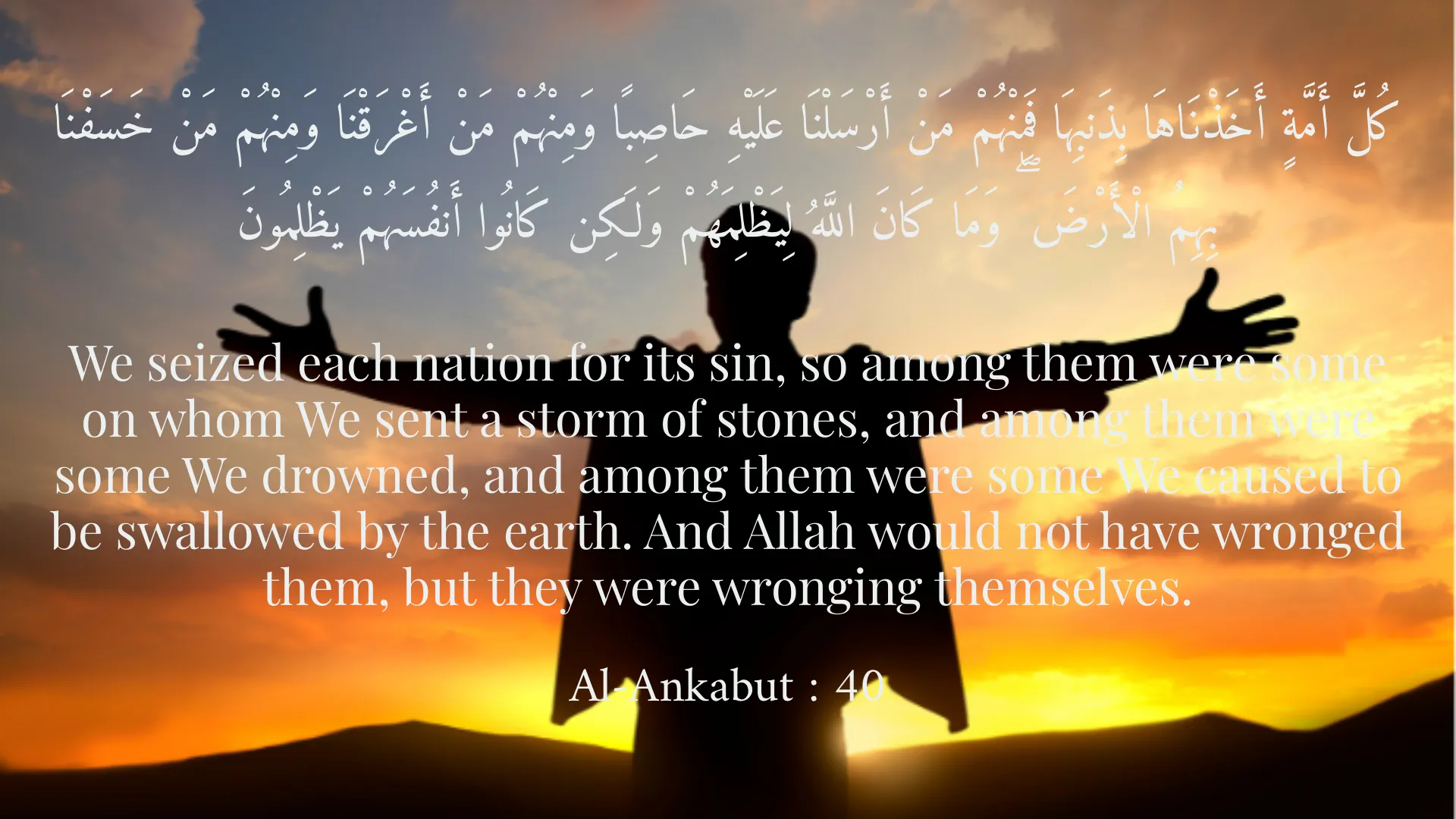
كُلَّ أَمَّةٍ أَخَذْنَاهَا بِذَنبِهَا فَمِنْهُمْ مَنْ أَرْسَلْنَا عَلَيْهِ حَاصِبًا وَمِنْهُمْ مَنْ أَغْرَقْنَا وَمِنْهُمْ مَنْ خَسَفْنَا بِهِمُ الْأَرْضَ ۖ وَمَا كَانَ اللَّهُ لِيَظْلِمَهُمْ وَلَكِن كَانُوا أَنفُسَهُمْ يَظْلِمُونَ
We seized each nation for its sin, so among them were some on whom We sent a storm of stones, and among them were some We drowned, and among them were some We caused to be swallowed by the earth. And Allah would not have wronged them, but they were wronging themselves.
Al-Ankabut : 40
وَإِذْ قَالَ مُوسَى لِقَوْمِهِ إِنَّ اللَّهَ أَمَرَكُمْ أَنْ تَذْبَحُوا بَقَرَةً ۖ قَالُوا أَتَتَّخِذُنا هُزُوًا ۚ قَالَ أَعُوذُ بِاللَّهِ أَنْ أَكُونَ مِنَ الْجَاهِلِينَ
And when Moses said to his people, 'Indeed, Allah commands you to slaughter a cow.' They said, 'Do you take us in ridicule?' He said, 'I seek refuge in Allah from being among the ignorant.'
Al-Baqarah : 61
Short Story
One day, a man visited a religious scholar and asked why divine punishments befall people. The scholar replied, 'Whenever people forget Allah and indulge in sins, divine punishment envelops them. In history, we have seen how communities like the people of Lot and Pharaoh fell into divine punishment. Therefore, it is essential to learn from mistakes and return to Allah.' The man listened carefully and decided to pay more attention to God.