Quranic Answer
Time is one of the most valuable assets that humans possess. In the Holy Quran, the significance and value of time are emphasized repeatedly, guiding believers to utilize it in the pursuit of good and righteousness. The Quran, as a comprehensive guide for those who seek to lead a life according to divine principles, highlights that the manner in which one spends time profoundly affects their spiritual, moral, and even practical outcomes in life. It illustrates how mankind can often find themselves in a state of loss if they fail to recognize the importance of their actions within their limited time on earth. One of the well-known verses addressing the essence of time is verse 103 of Surah Al-Asr: "And the soul has come to them with news of prohibited matters and good occurrences." This verse poignantly states, "Indeed, mankind is in loss, except for those who have faith and do righteous deeds and recommend one another to truth and patience." The wisdom contained in these lines is profound; it essentially posits that the essence of human existence is intertwined with faith and the articulation of righteous deeds within the span of time allotted to each individual. The Quran makes it unequivocally clear that time can lead individuals toward either spiritual fulfillment or regret, depending on how it is utilized. The classification of those truly successful—those who have faith, act righteously, and encourage each other—indicates that veritable success in life is a collective endeavor that extends beyond the self. Working towards the truth and supporting each other in patience illustrates the interplay between personal growth and communal responsibility, showcasing time as a vehicle for both individual and collective empowerment. Moreover, in Surah Al-Fajr, verse 15 highlights the uncertainty that lies within the passage of time: "And when the day comes, what will happen to them? What will become of their matters?" This rhetorical questioning serves as a reminder to reflect on one's actions and choices. The implicit caution in this verse is that as time progresses, the consequences of our actions become apparent, and it becomes essential for individuals to manage their time wisely. It emphasizes an existential reflection on accountability in both this life and the hereafter. In daily life, the implications of these verses can be witnessed in various aspects such as education, work, and worship. The pursuit of knowledge, for example, is quintessential to the Islamic faith, where education is considered vital to both individual development and community welfare. Education requires time—time to learn, reflect, and implement knowledge into practice. The Quran encourages Muslims to seek knowledge earnestly, thereby underscoring the significance of organizing their time to accommodate this pursuit. Similarly, in the realm of work, the Quran encourages fairness, diligence, and integrity. Engaging in fair work ensures that the time spent contributing to society is fruitful and gratifying, not only for the individual but for the community at large. When individuals approach their work with intention and awareness of their time, they are more likely to act justly and responsibly, thus honoring the time that Allah has granted them. Furthermore, worship is a key area where the understanding of time management can be deeply appreciated within an Islamic context. Muslims are obliged to pray five times a day, a structure that integrates moments of reflection and worship throughout their daily lives. This regular engagement fosters a constant awareness of God's presence—encouraging believers to measure time not merely in hours and minutes but through spiritual enrichment and growth. The ritualistic nature of these prayers embodies the essence of making time sacred and purposeful, emphasizing that time spent connecting with Allah is invaluable. In a broader context, the Islamic teachings also extend this understanding of time's preciousness when it comes to social interactions. Muslims are encouraged to use their time beneficially by maintaining relationships, promoting kindness, engaging in charitable actions, and supporting one another in times of difficulty. This communal interaction is crucial; it builds a society that nurtures growth, cooperation, and trust, illustrating how, through collective efforts, time can be transformed into a powerful tool for positive change. The Quran further elucidates the theme of time in conjunction with the impermanence of life. Humans experience life in stages—youth, adulthood, and old age—each presenting unique challenges and opportunities. The passage of time is a cycle that serves to remind believers to make the most of their current stage, seeking forgiveness for past actions while striving towards righteousness in the present. It calls for an awakening to the realization that life is transient, and hence every moment should be treasured and utilized effectively. In conclusion, the Holy Quran assigns immense importance to the management of time. It serves as a poignant reminder that true success is found not only in the actions of the individual but also in the essence of collective effort towards faith and righteousness. Time, as underscored in various Quranic verses, is a fleeting resource that must be administered with wisdom and intention. As Muslims reflect on their lives, the teachings of the Quran implore them to approach each moment with the understanding that their time is a gift from Allah, and they must endeavor to use it in the way that pleases Him. In this endeavor, not only do individuals grow spiritually, but they also cultivate a community that thrives on shared values and mutual respect—transforming time from a mere chronological measure into a sacred path towards eternal fulfillment.
Related Verses
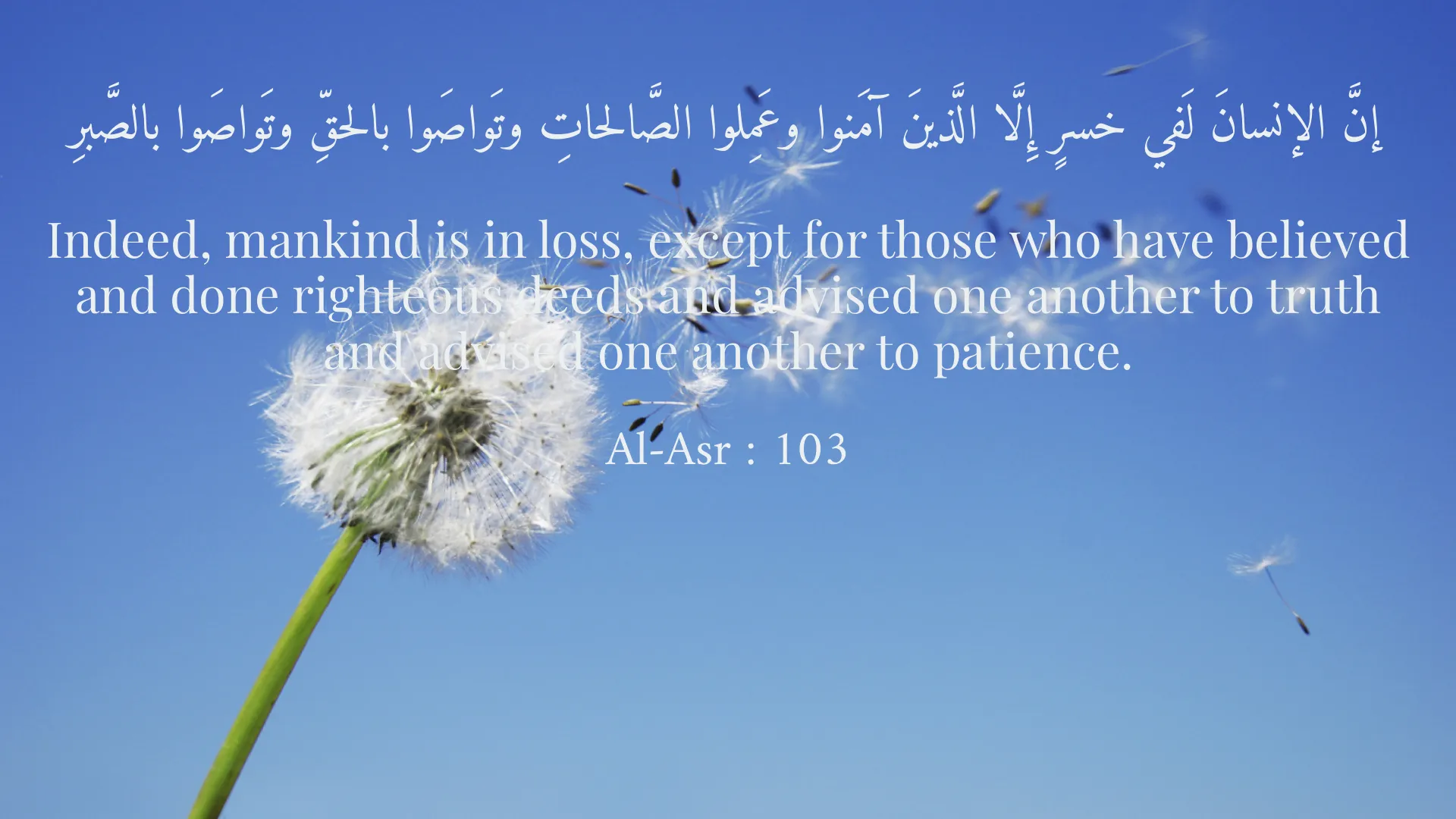
إنَّ الإنسانَ لَفي خسرٍ إِلَّا الَّذينَ آمَنوا وعَمِلوا الصَّالحاتِ وتَواصَوا بالحقِّ وتَواصَوا بالصَّبرِ
Indeed, mankind is in loss, except for those who have believed and done righteous deeds and advised one another to truth and advised one another to patience.
Al-Asr : 103
فَأَمَّا إِذا مَبِتَ وَمَتْنَا أُمَّةً أُولَىٰ تَقَلَّ
If the day of resurrection comes, what will happen?
Al-Fajr : 15
Short Story
A story from Saadi recounts that an elder advises a young man not to waste his time and to utilize his life wisely. He exemplifies this with a tree that cannot bear fruit in its old age, reminding the young man that youth is the best time to bring joy to others and achieve his goals.