Quranic Answer
### The Blessings of Knowledge and Wisdom: A Divine Perspective Knowledge and wisdom are among the most profound blessings bestowed upon humanity, frequently underscored in religious texts, particularly in the Quran. The pursuit of knowledge is not merely an academic endeavor; rather, it encompasses moral, spiritual, and societal dimensions that have a far-reaching impact. In Surah Al-Mujadila, verse 11, Allah proclaims, 'Allah will raise those who have believed among you and those who were given knowledge, by degrees.' This verse serves as a powerful reminder that knowledge is a divine gift, intended not only for individual enrichment but also for collective upliftment. #### The Role of Knowledge in Serving God and Society The Quran emphasizes that knowledge should be channeled in the service of God and others. This notion implies that individuals blessed with knowledge bear a responsibility to share it, thereby enabling community growth and spiritual elevation. Teaching is one of the most significant avenues through which knowledge can be disseminated. Education is a powerful tool that transforms lives, arming individuals with the understanding and skills to fulfill their divine obligations. When one shares their knowledge, they not only empower others but also help them navigate the complexities of life in accordance with divine laws. For instance, within the domain of Islamic jurisprudence, scholars play a vital role in educating the community about religious laws and ethical conduct. The teaching of these principles ensures that individuals understand their responsibilities towards God and fellow human beings, fostering a society built on justice, respect, and compassion. Thus, the act of teaching becomes a sacred duty, one that is rewarded both in this life and the hereafter. #### Applying Knowledge to Address Community Issues Knowledge must also be applied pragmatically to solve the pressing problems and needs of society. Surah Al-Anfal, verse 60, instructs Muslims to prepare their strength and resources to confront challenges, indicating that knowledge, coupled with wisdom, is crucial for the security and protection of communities. This call to action emphasizes the necessity of understanding the world around us and utilizing that knowledge to devise strategies that enhance community resilience. In today's fast-paced world, communities face numerous issues, ranging from socio-economic disparities to environmental challenges. Addressing these problems requires not just academic knowledge but also practical insights and innovative thinking. For example, social scientists can study and propose solutions to inequality and injustice, while environmental scientists can develop strategies for sustainable living. Ultimately, the application of knowledge contributes not only to immediate problem-solving but also to the long-term stability and prosperity of society. #### Research and Innovation: The Frontiers of Knowledge Using knowledge in the way of God also extends to engaging in research across various scientific disciplines and fostering innovations that benefit humanity. This pursuit reflects a commitment to harnessing knowledge for the greater good and aligns with the Quranic directive to seek understanding and insight. Scientific research can lead to breakthroughs in health, technology, and environment, significantly improving quality of life and enabling progress. Moreover, advancements in fields such as medicine can alleviate suffering and save lives, while technological innovations can enhance communication and connection among people. Each of these scientific endeavors holds spiritual value, as they embody the principles of stewardship and responsibility, reflecting God's mercy and care for His creation. The act of contributing to human progress is thus not just a secular activity; it is a form of worship that fulfills the divine objective of promoting goodness and harmony in society. #### Pure Intentions: The Heart of Knowledge Application Ultimately, the application of knowledge must be rooted in pure intentions and directed towards pleasing God. The Quran teaches that actions are judged by their intentions, indicating that knowledge utilized for selfish gains or destructive purposes is contrary to its divine purpose. Therefore, those endowed with knowledge must always seek to align their actions with moral and spiritual teachings and ensure that their knowledge serves to uplift the community rather than detract from it. The importance of ethical conduct in the application of knowledge cannot be overstated. Knowledge should be utilized to foster understanding, tolerance, and respect among diverse groups. By reinforcing moral values and encouraging ethical behavior, knowledgeable individuals can help bridge gaps, reduce conflict, and promote peace within society. This underscores the belief that true wisdom lies not just in the accumulation of knowledge, but in its compassionate application in everyday life. #### Conclusion: Embracing Knowledge for the Divine Cause In conclusion, knowledge and wisdom, as emphasized in the Quran, are invaluable gifts that serve numerous purposes in the lives of individuals and communities. Through teaching, problem-solving, research, and ethical applications, knowledge can significantly contribute to the betterment of society for the pleasure of God. It is incumbent upon those blessed with knowledge to share it generously, ensuring that it becomes a force for good, fortifying spiritual and moral foundations within their communities. As we navigate the complexities of the modern world, let us hold steadfast to the divine principles that guide us, remembering that the pursuit of knowledge is ultimately a means of fulfilling our obligations to God and humanity. By doing so, we not only enrich our own lives but also uplift those around us, creating a legacy of wisdom and enlightenment for generations to come.
Related Verses
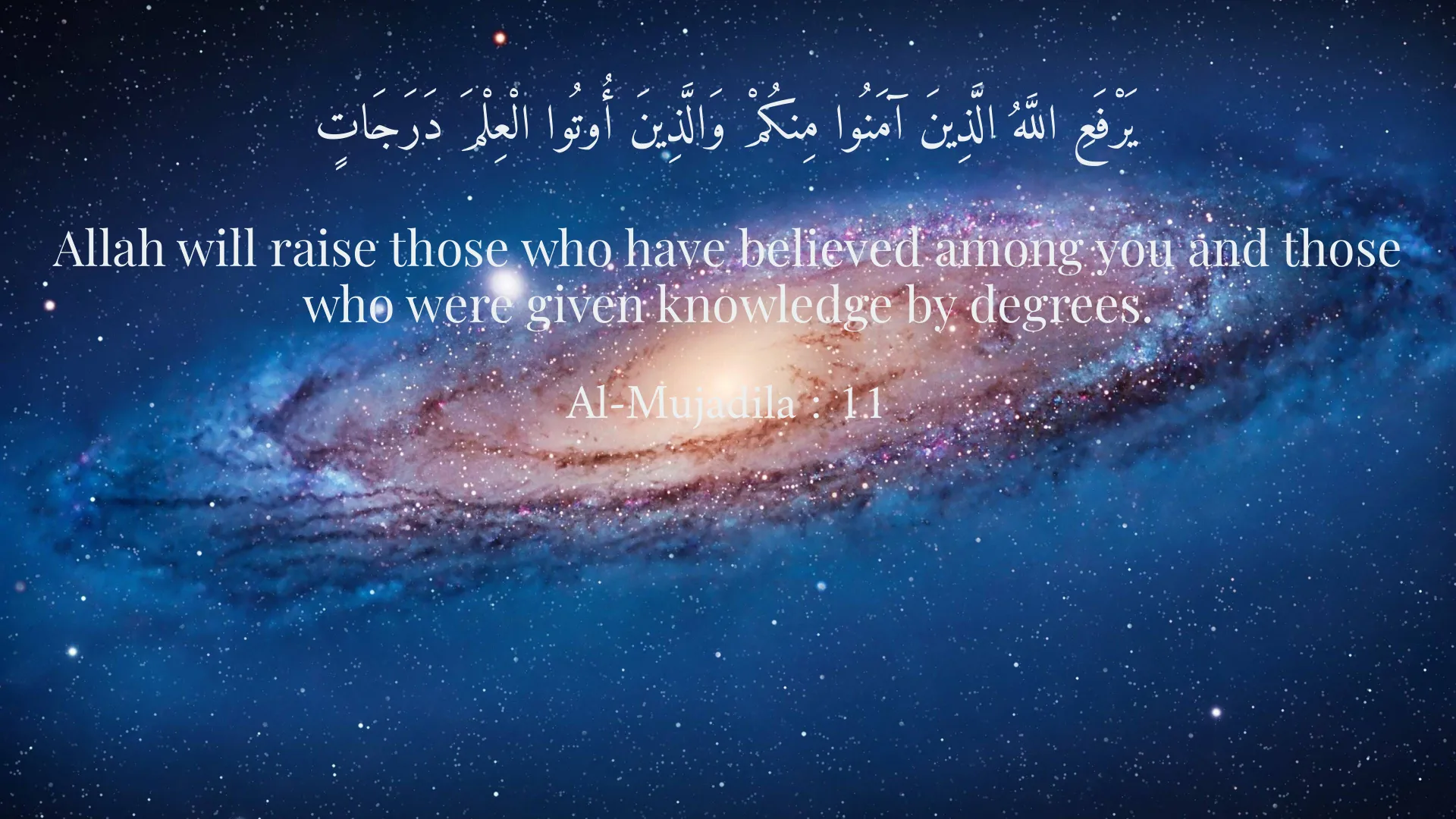
يَرْفَعِ اللَّهُ الَّذِينَ آمَنُوا مِنكُمْ وَالَّذِينَ أُوتُوا الْعِلْمَ دَرَجَاتٍ
Allah will raise those who have believed among you and those who were given knowledge by degrees.
Al-Mujadila : 11
وَأَعِدُّوا لَهُم مَّا اسْتَطَعْتُم مِّن قُوَّةٍ وَمِن رِبَاطِ الْخَيْلِ
And prepare against them whatever you are able of power and of steeds of war.
Al-Anfal : 60
Short Story
Once upon a time, there was a learned man named Hassan who believed that knowledge was not just for learning but must be applied. One day, he decided to utilize his knowledge in educating the youth. He began teaching in his village, encouraging young people to learn both religious and worldly sciences. Gradually, his village became a center of knowledge, and all the villagers benefited from the illumination of his knowledge.