Quranic Answer
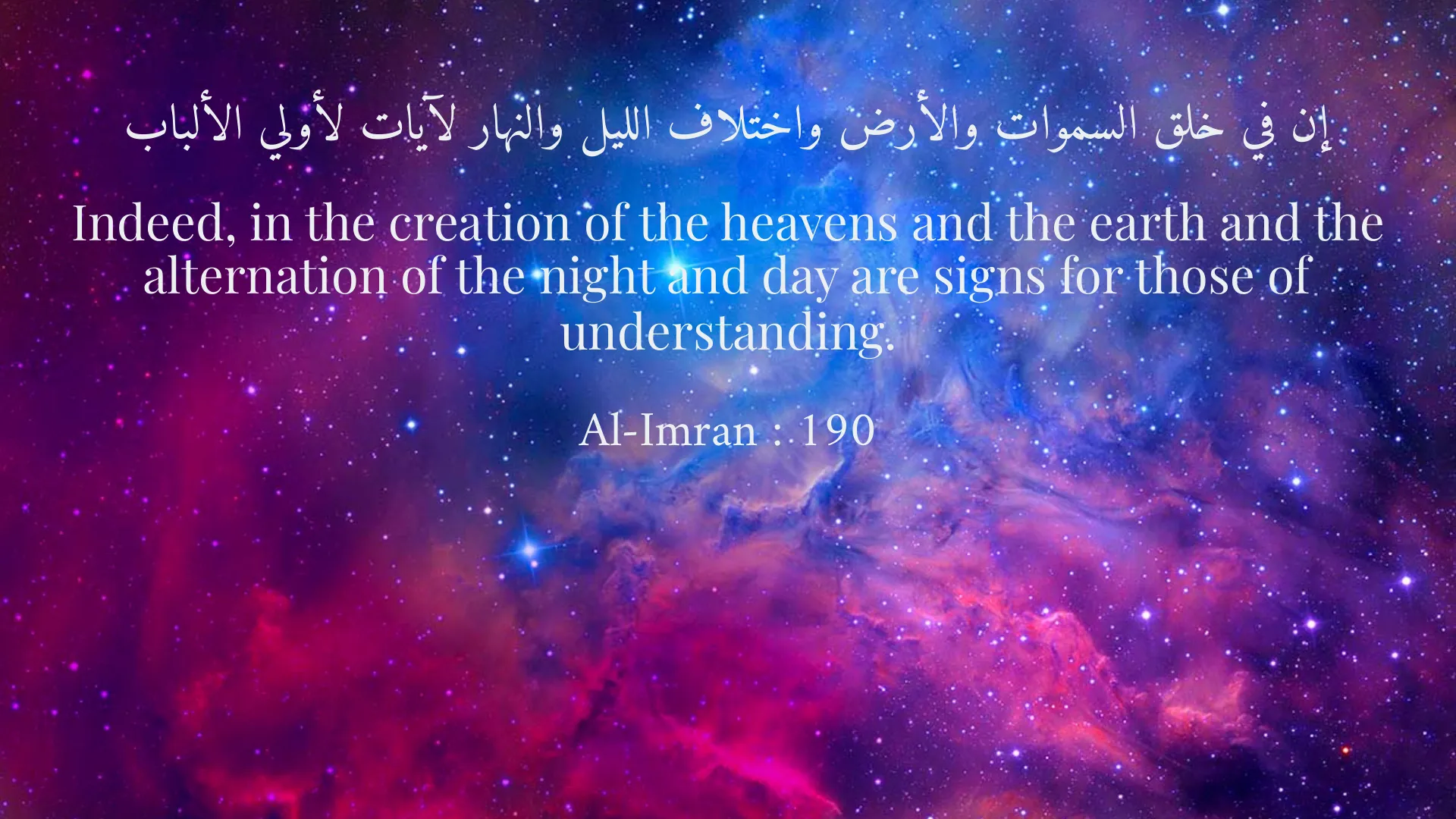
The Holy Quran, the sacred text of Islam, serves not only as a guide for worship and morality but also as a profound source for intellectual engagement and reflection. Throughout its verses, the Quran emphasizes the importance of reflection, reasoning, and contemplation as essential practices for attaining wisdom and understanding. This intrinsic call to ponder and reflect is a recurring theme, urging believers to connect deeply with the signs of God manifested throughout creation. One crucial aspect mentioned in the Quran is that individuals should exercise their faculties of thought to consider the divine signs and verses present in their surroundings. For instance, in Surah Al-Imran, verse 190, Allah states, 'Indeed, in the creation of the heavens and the earth and the alternation of the night and day are signs for those of understanding.' This verse serves as a powerful reminder that the meticulous order and grandeur of the universe serve as a testament to God's omnipotence. The consistent patterns observed in nature, the vastness of the cosmos, and the delicate balance of life all invite contemplation. Believers are encouraged to observe these phenomena not merely as physical aspects of existence but as spiritual signs that provoke reflection on the Creator’s nature and attributes. Moreover, the Quran also emphasizes the importance of knowledge in this journey of reflection. Surah Al-Jathiya, verse 13 states, 'And He has subjected to you whatever is in the heavens and whatever is in the earth, all together.' This verse implies that every entity in the universe is a sign and a tool for human beings to utilize for their benefit, as well as a source of knowledge. Recognizing and appreciating these divine favors prompts believers to develop a deeper understanding of their purpose in life and their relationship with Allah. Reflecting on the natural world enables individuals to recognize their place within it. The Quran encourages a mindset that seeks knowledge and understanding, which is pivotal in the journey of personal and spiritual growth. Engaging in deep thought provides a platform for self-assessment, helping individuals confront their realities, aspirations, and even their shortcomings. By analyzing their experiences in light of Allah's guidance, believers can make informed decisions that align with their spiritual and ethical values. Furthermore, reflection is not merely an abstract exercise; it is an active engagement with the environment and an introspective journey into one’s soul. Allah’s signs are everywhere, from the intricate design of a flower to the vastness of the stars, prompting individuals to contemplate their significance. For example, the seasonal changes can lead to reflections on the impermanence of life and the need for gratitude for the blessings one has. By integrating such reflections into daily life, individuals cultivate a mindset of awareness and gratitude that can transform their spiritual journey. The importance of dedicating time to reflect on one’s life and surroundings cannot be overstated. It is in these moments of contemplation that deeper insights emerge about oneself and one’s relationship with the divine. The Quran presents various situations where reflection played a pivotal role in guiding the actions of prophets and followers alike. For instance, the Prophet Muhammad (peace be upon him) is known for his profound moments of reflection, which led to greater understanding and revelation. Moreover, the Quranic exhortation to think and reflect nurtures critical thinking as a valuable skill for personal development. In an age where information abounds, being able to critically analyze the world around us is crucial. The Quran invites its followers to hold discussions, to ask questions, and to seek clarity. This is illustrated well in Surah Al-Nahl, verse 125, which says, 'Invite to the way of your Lord with wisdom and good instruction, and argue with them in a way that is best.' The approach advocated here emphasizes the necessity of reasoning as a powerful tool for guidance and enlightenment. This analytical approach to Quranic teachings encourages believers to engage in meaningful dialogue, not only with others but also with their inner selves. By reflecting on their beliefs, practices, and the broader implications of their faith, Muslims can develop a robust personal and communal identity. This commitment to reasoning fosters unity and encourages believers to strive toward understanding rather than division. Furthermore, the implications of thoughtful reflection extend beyond personal spiritual growth; they influence interpersonal relationships and societal structures. A reflective individual, whose thought processes are guided by divine teachings, tends to embody characteristics such as patience, empathy, and wisdom. This, in turn, cultivates an environment where compassion and understanding thrive. When believers act in accordance with their reflections, the potential for positive change within communities increases exponentially. In conclusion, the Quran underscores the necessity of reflection, reasoning, and contemplation as vital aspects of a believer's life. The verses presented urge individuals to engage deeply with the world around them, to seek knowledge, and to cultivate a mindful awareness of their relationship with Allah. By dedicating time to reflect on one's life, surroundings, and the divine signs in nature, individuals can foster personal and spiritual growth that ultimately leads to a more profound understanding of their faith. Such reflection not only brings one closer to God but also paves the way for significant decision-making that aligns with personal values and the betterment of society. Engaging in this process can guide individuals toward a purposeful life enriched by the wisdom gleaned from the Quran and the signs of Allah manifested in creation.
Related Verses
إن في خلق السموات والأرض واختلاف الليل والنهار لآيات لأولي الألباب
Indeed, in the creation of the heavens and the earth and the alternation of the night and day are signs for those of understanding.
Al-Imran : 190
وسخر لكم ما في السموات وما في الأرض جميعا منه
And He has subjected to you whatever is in the heavens and whatever is in the earth, all together.
Al-Jathiya : 13
قُلْ انظُرُوا مَا فِي السَّمَاوَاتِ وَالْأَرْضِ ۚ وَمَا تُغْنِي الْآيَاتُ وَالْمُذَكِّرَاتُ عَنْ قَوْمٍ لَّا يُؤْمِنُونَ
Say, 'Look at what is in the heavens and the earth.' But signs and warnings will not avail a people who do not believe.
Yunus : 101
Short Story
One day, a man named Salim was sitting by the sea, contemplating the beauty of the sky and the ocean. He reflected on the verses of the Quran and how God had crafted so much beauty in creation. Through contemplating the divine verses, Salim realized that to draw closer to God, he needed to think more about his life and appreciate what God had provided him. He decided to dedicate time every day to reflection, which helped him find inner peace.