Quranic Answer
In the Holy Quran, wealth and money are described as a means of trial and examination, a concept that resonates deeply within the Islamic faith. Wealth is a tool, a double-edged sword that can either uplift or degrade an individual's spiritual journey. This article seeks to delve into how wealth can be interpreted not merely as a material possession but as a significant aspect of divine testing, as reflected in various verses of the Quran. In Surah Al-Baqarah, verse 155, Allah states: 'And We will surely test you with something of fear and hunger and a loss of wealth and lives and fruits, and give good tidings to the patient.' This verse explicitly illustrates that Allah tests humans through various hardships, including the loss of wealth. Wealth, in this context, becomes a formidable instrument of trial. When we consider the implications of this verse, it becomes evident that the wealth we accumulate is not a simple reflection of our hard work or intellect; rather, it is a responsibility bestowed upon us. The trials associated with wealth can manifest in fear, where one may fear losing what they have amassed, hunger, which can provide context for the struggle of poverty, and the stark reality of losing not only wealth but also lives and fruits—symbolizing the unpredictability of life. A semblance of humility emerges from this test. If the wealth we possess leads us to arrogance or self-indulgence, we are misusing our blessing. Allah reminds us that wealth, like any other resource, should not entrap us in a web of pride. Instead, it should inspire us to assist others, contributing positively to the social fabric. The Quran emphasizes the idea that genuine wealth is measured not merely by what one possesses but by how that wealth can enable positive actions. This insight is reiterated in Surah Al-Imran, verse 185, which states: 'Every soul will taste death, and you will only be given your full compensation on the Day of Resurrection. So whoever is removed from the Fire and admitted to Paradise has certainly succeeded. And what is the worldly life except the enjoyment of delusion.' Here, wealth and the materialistic lifestyle it often engenders are depicted as fleeting, ultimately leading to distractions from the divine path. The transient nature of wealth is an essential component in understanding its role in the life of a believer. While it is natural and sometimes necessary to seek prosperity, the Quran guides us to recognize that our existence transcends our material possessions. Focusing solely on wealth accumulation can lead one to lose sight of their spiritual purpose. The allure of riches may deceive people into believing that worldly success equates to a fulfilled life, whereas, in reality, such an outlook may lead to spiritual emptiness and regret. Moreover, the Quran encourages us to use our wealth wisely. It is a reminder that true success lies in our ability to navigate life's trials with patience and gratitude. The positive use of wealth should be directed towards fostering community and compassion—be it through philanthropy, supporting the underprivileged, or investing in initiatives that aim to uplift society as a whole. The Quran addresses wealth as a means to enact social justice, where the affluent are urged to assist the needy, thereby creating a harmonious balance that serves Allah’s purpose. In the financial context of today’s world, where consumerism often overshadows spiritual values, the teachings of the Quran on wealth and life serve as a powerful reminder of the broader picture. As believers, the understanding is that our output should not be limited to material gain but should venture beyond to contribute to the common good. This encompasses sharing wealth through charitable deeds, engaging in community service, and lifting others as we climb the social ladder. Furthermore, a clear distinction must be made between the ownership of wealth and the love of money. The Quran discourages preventable greed and attachment to wealth. Instead, believers are called to view wealth as a means to fulfill their responsibilities to society, family, and, most importantly, to Allah. The emphasis on charity (Zakat) in Islam is pivotal here. Zakat is not merely a financial obligation; it is a spiritual cleansing that removes the arrogance often associated with wealth. By giving a portion of one’s wealth to those in need, individuals reinforce their faith and acknowledge that ultimately, all that they have is a gift from Allah. It is also crucial to point out the rich narratives found in Islamic tradition that illustrate the moral conduct of wealth. The Prophet Muhammad (peace be upon him), despite facing immense trials, exemplified humility and generosity. His lifestyle serves as a guiding light for Muslims around the world, indicating that true wealth lies not in the abundance of material resources but in the abundance of good character. The Prophet’s companions, known for their wealth, similarly displayed selflessness, often dedicating their time and resources for the sake of others. In conclusion, the Quran intricately weaves the theme of wealth through its verses, inviting believers to reflect on their relationship with material possessions. Wealth should be seen as a means to grow closer to Allah, facilitating acts of kindness and demonstrating solidarity within society. Rather than a source of pride or separation from Allah, wealth must become a means by which believers cultivate a community filled with peace, love, and support. The Quranic teachings remind us that true fulfillment lies not in what we possess but in how we choose to share and use our blessings in service of the greater good. In this light, the responsibility of wealth extends beyond the individual, influencing the collective growth of humanity, steering us towards a future where materialism is balanced with spirituality, and compassion reigns supreme.
Related Verses
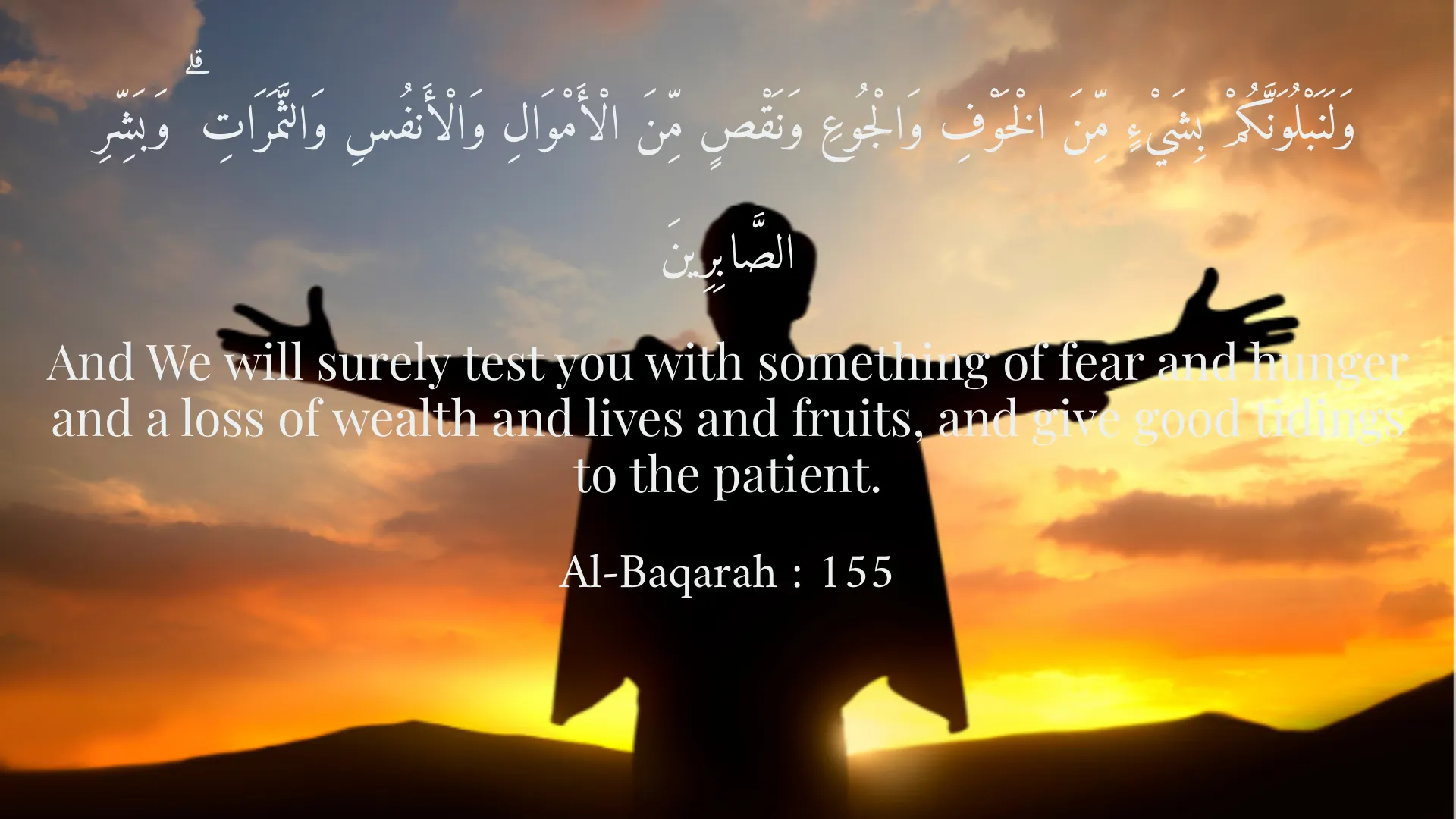
وَلَنَبْلُوَنَّكُمْ بِشَيْءٍ مِّنَ الْخَوْفِ وَالْجُوعِ وَنَقْصٍ مِّنَ الْأَمْوَالِ وَالْأَنفُسِ وَالثَّمَرَاتِ ۗ وَبَشِّرِ الصَّابِرِينَ
And We will surely test you with something of fear and hunger and a loss of wealth and lives and fruits, and give good tidings to the patient.
Al-Baqarah : 155
كُلُّ نَفْسٍ ذَائِقَةُ الْمَوْتِ ۖ وَإِنَّمَا تُوَفَّوْنَ أُجُورَكُمْ يَوْمَ الْقِيَامَةِ ۚ فَمَن زُحْزِحَ عَنِ النَّارِ وَأُدْخِلَ الْجَنَّةَ فَقَدْ فَازَ ۚ وَمَا الْحَيَاةُ الدُّنْيَا إِلَّا مَتَاعُ الْغُرُورِ
Every soul will taste death, and you will only be given your full compensation on the Day of Resurrection. So whoever is removed from the Fire and admitted to Paradise has certainly succeeded. And what is the worldly life except the enjoyment of delusion.
Al-Imran : 185
Short Story
One day, a wealthy man was walking down a street and noticed a hungry child. He said to himself, 'I’m too rich to help a child!' But suddenly, he recalled the verses of the Quran and decided to use his wealth to assist others. Not only did he provide food for the child, but he also started a charity organization to help the needy. From that day forward, he felt greater happiness and used his wealth in the best way to help others.