Quranic Answer
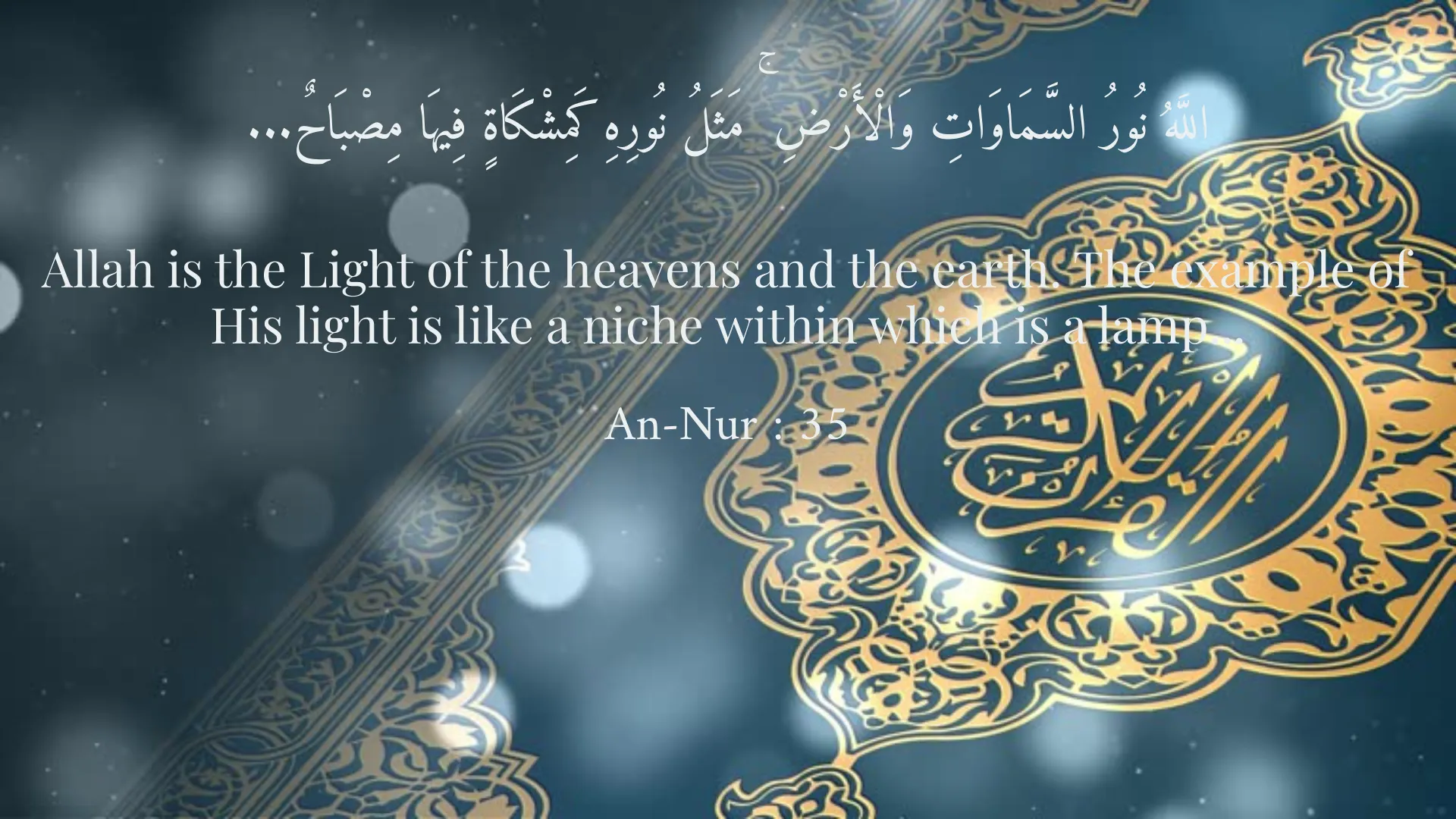
Distinguishing between truth and falsehood is a fundamental aspect of the human experience. Throughout history, humans have grappled with the challenge of discerning what is genuine from what is deceptive. In the quest for understanding, the Holy Quran stands as a beacon of divine guidance, providing us with insights into the characteristics and qualities of both truth and falsehood. This article delves into the Quranic perspectives on recognizing truth, the importance of reflection, and the role of sincerity in our search for authenticity. The Quran asserts that Allah, the Creator, has outlined clear characteristics that differentiate truth from falsehood. To recognize the truth, we need to turn to the divine guidance encapsulated in the Quran. One of the noteworthy verses in this regard is found in Surah An-Nur, verse 35. The verse states, 'Allah is the Light of the heavens and the earth; the examples of His light is like a niche within which is a lamp; the lamp is within glass; the glass, as if it were a pearly white star, lit from the blessed tree, an olive, neither of the east nor of the west…' This verse beautifully encapsulates the notion that the light of God, which translates into His revelations and teachings, illuminates our path to discern truth from falsehood. Just as light dispels darkness, divine guidance helps us navigate through the complexities of life. The multifaceted nature of truth is further reinforced in another significant verse from the Quran, Surah Al-Imran, verse 7, which reads, 'He it is who has sent down to you the Book. In it are verses that are precise — they are the foundation of the Book — and others that are ambiguous. As for those in whose hearts is deviation, they will follow that of it which is ambiguous, seeking discord and seeking an interpretation suitable to them. But no one knows its interpretation except Allah. And those who are firmly rooted in knowledge say, "We believe in it; all of it is from our Lord..."' This verse emphasizes two essential points: the importance of acknowledging the clarity of certain verses while also recognizing the complexity that others may hold. In our pursuit of understanding, it is vital to engage with the divine verses, reflect upon their meanings, and seek precise interpretations. Engaging with scripture is not a solitary endeavor. We find great merit in consulting with faithful individuals and knowledgeable scholars who can provide deeper insights or guidance in our understanding of the Quran. The value of community and shared learning is integral to our journey in recognizing the truth. Scholars, with their profound understanding and dedication to the study of the Quran, can shed light on ambiguities and help clear misconceptions that can cloud our discernment. Ultimately, our journey toward truth demands a sincere heart. Surah Ash-Shura, verse 13, states, 'Allah has not made for any man two hearts in his breast…' This profound statement urges us to seek the truth with sincerity and conviction. In essence, to recognize the truth, one must approach the pursuit without biases and preconceived notions. Insincerity or the tendency to hold onto false beliefs can obstruct our quest for understanding. Therefore, a heart that is free of prejudice, ready to embrace sincerity, becomes critical in acknowledging divine truth. In this modern age, where opinions are abundant and information is readily available, navigating through various narratives can be overwhelming. The media landscape can often blur the lines between truth and fabrication, requiring individuals to engage in critical thinking and discernment. The teachings of the Quran can provide a sturdy foundation for individuals seeking truth amidst the chaos. By imploring God’s guidance through prayer and reflection, we can find clarity in our thoughts and actions, thereby engaging more authentically with the world around us. Another vital aspect of discerning truth is recognizing one’s intention. The search for truth is not merely an intellectual exercise but rather a moral endeavor. The intention behind our pursuit plays a pivotal role in shaping our understanding. If our goal is to uncover truth for personal growth, compassion, or justice, we are more likely to align ourselves with divine will and the principles espoused in the Quran. Contrarily, if our intention is rooted in self-interest or harm, our discernment may easily lead us astray. Moreover, the concept of truth extends beyond mere facts; it is also interwoven with values and ethics. The Quran teaches that truth is fundamental to justice and fairness. In Surah Al-Ma'idah, verse 8, Allah commands, 'O you who have believed, be persistently standing firm in justice, witnesses in justice, even if it be against yourselves or parents and relatives. Whether one is rich or poor, Allah is more worthy of both…' This verse highlights that truth is intimately connected with our responsibilities toward one another. Upholding the truth, even in challenging circumstances, reflects one’s integrity and commitment to justice. In conclusion, the distinction between truth and falsehood is a nuanced yet crucial journey in our lives. The Holy Quran serves as a guiding light, illuminating the path to discernment through its divine teachings and reflections on the nature of truth. To navigate this journey effectively, we must engage with the Quran, fostering the spirit of reflection and understanding, while maintaining sincerity in our hearts. By seeking the truth not only through scripture but also through consultation with knowledgeable individuals and by aligning our intentions with moral principles, we can arrive at a rightful understanding of truth. This divine guidance encourages us to tread through life with piety and honesty, contributing positively to our communities and the world at large.
Related Verses
اللَّهُ نُورُ السَّمَاوَاتِ وَالْأَرْضِ ۚ مَثَلُ نُورِهِ كَمِشْكَاةٍ فِيهَا مِصْبَاحٌ...
Allah is the Light of the heavens and the earth. The example of His light is like a niche within which is a lamp...
An-Nur : 35
هو الذي أنزل عليك الكتابَ منه آياتٌ محكماتٌ هنّ أمّ الكتاب وأُخر متشابهات...
He it is Who has sent down to you the Book. In it are verses that are precise – they are the foundation of the Book – and others that are ambiguous...
Al-Imran : 7
شرع لكم من الدين ما وصى به نوحًا والذي أوحينا إليك وما وصينا به إبراهيم وموسى وعيسى أن أقيموا الدين ولا تتفرقوا فيه...
He has ordained for you in religion that which He enjoined upon Noah and that which We have revealed to you, and that which We enjoined upon Abraham, Moses, and Jesus, to establish the religion and not be divided therein...
Ash-Shura : 13
Short Story
One day, a man was sitting in a mosque, pondering the verses of the Quran. He sought a clear understanding of truth and falsehood. Suddenly, someone approached him and said, 'We find it unclear what is true and what is false.' The man, recalling a verse from the Quran, replied, 'If we draw close to the light of God and benefit from the knowledge of the faithful, we can distinguish.' The individual reflected on this point and realized he needed to consult his heart and knowledge to find the right path.