Quranic Answer
The period of the absence of Imam al-Mahdi (may Allah hasten his return) is one of the most pivotal epochs in Islamic history, particularly for Shia Muslims. It is a time laden with responsibilities, challenges, and a profound sense of anticipation for the eventual return of the Imam. While the Quran does not explicitly discuss the absence of an infallible Imam, it offers guiding principles that can be applied to navigate this significant phase in our faith journey. ### Understanding the Absence of Imam al-Mahdi Imam al-Mahdi, regarded as the twelfth Imam in Shia Islam, is believed to be in occultation since the age of five, beginning in the year 941 CE. His absence has led to a unique set of expectations for believers and a framework of duties that must be fulfilled in his absence. This period, known as the Ghaybah, requires a robust commitment to faith, patience, and the active practice of Islamic values. ### The Importance of Faith and Community In Surah Al-Imran, verse 103, Allah commands believers to "hold on firmly to the faith they have been given." This exhortation is especially important during the Ghaybah, where the visibility of divine guidance is obscured. Believers must deepen their iman (faith) and adhere to the teachings of Islam, both as individual practitioners and as a collective community. This holds particularly true when societal challenges threaten to weaken one's resolve. During this period, it is crucial for Muslims to unite and support each other in faith. The strength of the Ummah (Muslim community) is vital in facing adversities, especially when the Imam is not physically present to lead and guide. Through mutual support and shared experiences, believers can foster a stronger connection with one another and with their Creator. ### Cultivating Patience and Reliance on Allah Further emphasizing the significance of patience, Surah Al-Anbiya, verse 105 reminds believers, "And what We desired was that We would elevate them through Our supplication, and We sometimes grant them what they desire." This verse highlights that divine elevation comes through patience, supplication, and steadfastness in faith. During Imam al-Mahdi's absence, believers are called to exercise patience and rely on Allah’s wisdom and timing. Life’s challenges can test one’s faith; however, this period of waiting is a spiritual exercise. The act of patient waiting cultivates resilience and allows believers to grow in their spiritual journey. Through prayers, reflection, and gratitude, one can strengthen their connection to Allah and remain hopeful for the fulfillment of divine promises. ### A Connection with Ahl al-Bayt The love and respect for Ahl al-Bayt (the family of the Prophet Muhammad) is a fundamental aspect of Shia belief. Maintaining a connection with Ahl al-Bayt during Imam al-Mahdi's absence is crucial for personal and communal growth. Engaging with their teachings, reflecting on their lives, and drawing inspiration from their sacrifices serve as a model for Muslims today. Ahl al-Bayt represents the highest moral and ethical standards in Islam. By embodying their virtues, believers can strive to create a harmonious society reflective of Islamic principles. This connection not only provides spiritual nourishment during the Ghaybah but also fortifies the Ummah’s resolve in the face of external challenges. ### Pursuing Knowledge and Promoting Islamic Culture The absence of an infallible Imam places an additional responsibility on believers to seek knowledge and promote Islamic culture. Enhancing one’s understanding of the faith is an imperative duty, especially during this period of uncertainty. Knowledge serves as a source of guidance, enabling believers to navigate the complexities of modern life while remaining steadfast in their beliefs. Islamic teachings encourage seeking knowledge, as stated in many hadiths. This pursuit of knowledge can take various forms, including studying religious texts, attending lectures, engaging in discussions, and actively participating in community activities. By promoting Islamic culture, believers can also enhance communal ties and foster an environment of mutual respect and understanding. ### Acting Within Our Means An important reminder comes from Surah Al-Baqarah, verse 286, where Allah declares, "Allah does not burden a soul beyond that it can bear." This verse serves as a comforting assurance that while challenges may arise during the absence of Imam al-Mahdi, believers are given the strength to handle their circumstances. It urges us to act within our limits and recognize that hope is never lost, even during trying times. Believers are encouraged to cultivate a mindset that emphasizes resilience and resourcefulness. The assurance that Allah knows each individual's capabilities helps combat despair and motivates believers to take actionable steps in their spiritual and worldly lives, regardless of their circumstances. ### Conclusion In summary, the period of Imam al-Mahdi's absence is filled with immense significance for Muslims. It is imbued with responsibilities that require a steadfast commitment to faith, patience, knowledge, and community. The Quran provides a framework through which believers can navigate this notable period, reminding us of the importance of holding onto our faith, being patient, maintaining strong ties to Ahl al-Bayt, and utilizing our resources wisely. As we await the return of Imam al-Mahdi, it is crucial to focus on self-improvement through education and active involvement in our communities. By embodying these principles, believers can achieve spiritual growth, strengthen their faith, and prepare themselves for the glorious era of justice and peace that will prevail with the Imam’s return. Thus, the absence of Imam al-Mahdi is not merely a period of waiting but rather an opportunity for transformation and elevation in one’s spiritual journey.
Related Verses
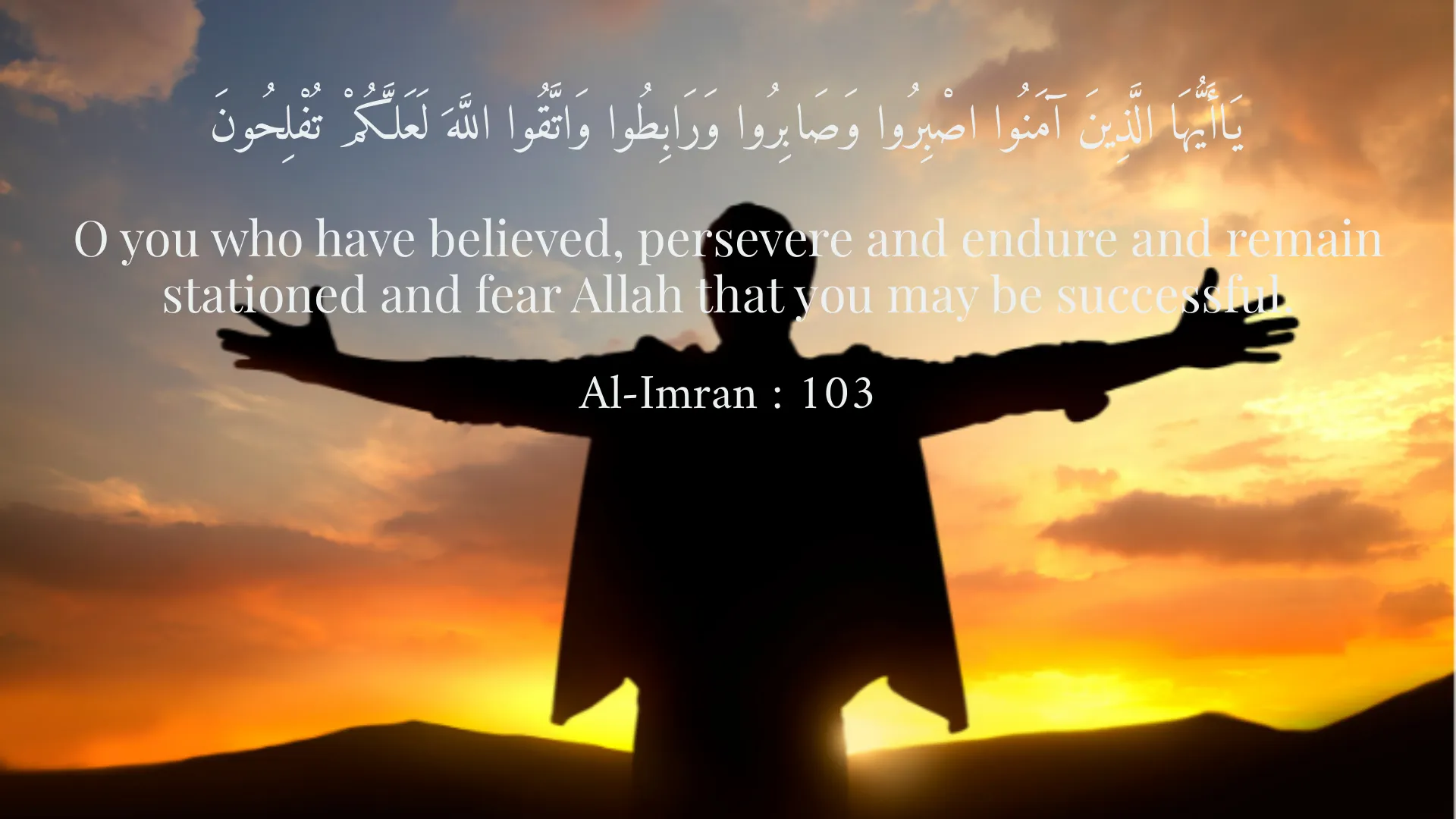
يَاأَيُّهَا الَّذِينَ آمَنُوا اصْبِرُوا وَصَابِرُوا وَرَابِطُوا وَاتَّقُوا اللَّهَ لَعَلَّكُمْ تُفْلِحُونَ
O you who have believed, persevere and endure and remain stationed and fear Allah that you may be successful.
Al-Imran : 103
وَلَقَدْ كَتَبْنَا فِي الزَّبُورِ مِن بَعْدِ الذِّكْرِ أَنَّ الْأَرْضَ يَرِثُهَا عِبَادِيَ الصَّالِحُونَ
And We have indeed written in the Scripture after the mention that the earth will be inherited by My righteous servants.
Al-Anbiya : 105
لَا يُكَلِّفُ اللَّهُ نَفْسًا إِلَّا وُسْعَهَا ۚ لَهَا مَا كَسَبَتْ وَعَلَيْهَا مَا اكْتَسَبَتْ ۗ رَبَّنَا لَا تُؤَاخِذْنَا إِن نَّسِينَا أَوْ أَخْطَأْنَا ۚ رَبَّنَا وَلَا تَحْمِلْ عَلَيْنَا إِصْرًا كَمَا حَمَلْتَهُ عَلَى الَّذِينَ مِن قَبْلِنَا ۚ رَبَّنَا وَلَا تُحَمِّلْنَا مَا لَا طَاقَةَ لَنَا بِهِ ۖ وَاعْفُ عَنَّا وَاغْفِرْ لَنَا وَارْحَمْنَا ۚ أَنتَ مَوْلَانَا فَانصُرْنَا عَلَى الْقَوْمِ الْكَافِرِينَ
Allah does not burden a soul beyond that it can bear. For it is what it has gained, and against it is what it has earned. Our Lord, do not impose blame upon us if we have forgotten or made a mistake. Our Lord, and lay not upon us a burden like that which You laid upon those before us. Our Lord, and burden us not with that which we have no ability to bear. And pardon us; and forgive us; and have mercy upon us. You are our protector, so give us victory over the disbelieving people.
Al-Baqarah : 286
Short Story
One day in a small village, a young man named Reza was talking to a wise mystic. He expressed his despair about the absence of Imam al-Mahdi (may Allah hasten his return) and the current situation. The mystic smiled and said, 'Reza, during this time, we must keep the light of faith alive in our hearts and always have hope in Allah. Whoever strives to support the believers and aims to act upon their ethics and religion is, in truth, alongside Imam al-Mahdi (may Allah hasten his return).' These words made Reza reflect, and he decided to put in more effort toward helping others and strengthening his faith.