Quranic Answer
The Holy Quran serves as a timeless source of wisdom, providing guidance on various aspects of life, including decision-making processes. In a world saturated with an overwhelming amount of information and choices, the need for a moral compass and strategic framework to navigate through life’s complexities becomes paramount. The Quran’s teachings facilitate young and mature minds alike in their quest for clarity and purpose. In this article, we will explore several verses of the Quran that offer strategies for effective decision-making. By understanding these divine directives, we can cultivate a more profound awareness of our choices and pave a path toward fulfillment in both our worldly and spiritual lives. Consultation and Open Dialogue In Surah Al-Imran, verse 159, Allah commands the Prophet Muhammad (peace be upon him): "So by mercy from Allah, [O Muhammad], you were lenient with them. And if you had been rude in speech or harsh in heart, they would have disbanded from about you." This verse underscores the importance of being gentle and considerate when interacting with others. Decision-making is often complex, with layers of emotions and perspectives to consider. Consulting with others can shed light on aspects we may not have considered on our own. It encourages a culture of openness, fostering environments where different opinions can be explored. Furthermore, discussions can lead to alternate interpretations and innovative solutions. For leaders, whether in a community, workplace, or family, this verse emphasizes that good communication can enhance relations and facilitate collective decision-making. Consulting others not only enriches our understanding but also fosters a sense of community and collective responsibility. When we take the time to engage sincerely with others, we tap into the collective wisdom that exists within our social circles. Recognizing Divine Guidance An essential aspect of making sound decisions is recognizing the divine presence in our lives. Surah Al-Baqarah, verse 186 states: "And when My servants ask you concerning Me, indeed I am near." This verse reminds us that, during difficult times, we can seek divine guidance through prayer and supplication. Allah's nearness signifies that we are never alone; we can always turn to Him in critical moments when uncertainty looms over our decision-making process. The act of seeking guidance through prayer not only brings about solace but also encourages a reflective state of mind. In our quiet moments of supplication, we can gain insights and clarity regarding our choices. Making it a habit to consult Allah—before making decisions, whether trivial or monumental—life’s outcomes can indeed take a more favorable course. Practicing this guidance fosters spiritual growth and promotes a sense of peace amid life’s various challenges. Choosing What is Lawful and Pure In Surah Al-Mu’minun, verse 51, the Quran mentions: "O you who have believed, eat from the good things which We have provided for you." This verse does not solely pertain to food; it extends to all aspects of life, including our choices and decisions. This divine counsel reminds us to aspire for what is lawful, pure, and beneficial, serving as a critical reminder that our choices should align with ethical and moral considerations. When we are faced with choices that may seem tempting yet are not grounded in goodness, we must pause and reflect. The Quran urges believers to seek out the wholesome options, which reflects a broader spiritual principle governing our everyday actions. This guidance encourages self-discipline, inviting us to resist shortcuts that may deviate us from righteousness. Additionally, by abiding by the principles of justice and goodness, we elevate our existence, contributing positively to ourselves and society. Identifying Inner Whispers Another powerful verse that offers decision-making assistance is found in Surah Al-Insan, verse 3: "And We have certainly created man and We know what his soul whispers to him." This verse indicates that as humans, we possess an innate sense of intuition and morality—the 'whispers' of our souls that guide our choices. Recognizing these whispers requires introspection and self-awareness. In times of decision-making, it is essential to listen carefully to these inner nudges, as they often derive from our upbringing, experiences, and spiritual awareness. Cultivating self-awareness enables individuals to discern between desires that may lead to harm and values that align with personal integrity and faith. Moreover, by developing mindfulness practices, such as meditation and reflection, we can strengthen our ability to recognize and understand these subtle influences more clearly. Combining Strategies for Effective Decisions In summary, the Quran provides various strategies to aid believers in making sound decisions. By consulting with others, seeking divine guidance through prayer, aiming for what is lawful and pure, and recognizing our inner whispers, individuals can navigate life more effectively. These principles guide not only personal decision-making but also extend to leadership, relationships, and community-building. In our striving for better decision-making, we must remember these Quranic teachings allow us to align our choices with higher moral standards and spiritual aspirations. As we embark on our paths, we are reminded to approach each decision with a heart full of faith, consideration, and responsibility. Thus, employing these divine strategies enables believers to embrace the fullness of life with wisdom, integrity, and purpose. In times of uncertainty, turning to the Quran can reaffirm our direction and offer much-needed perspective in the intricate tapestry of decisions we must face. The richness of these teachings fosters deeper connections with our purpose, our community, and ultimately, with Allah. In conclusion, the Quran's wisdom sets a profound blueprint for decision-making that encourages us to consult, reflect, invoke Divine blessings, and strive for righteous actions. By adopting these elements into our lives, we walk the path illuminated by faith, guided by the radiant light of divine wisdom.
Related Verses
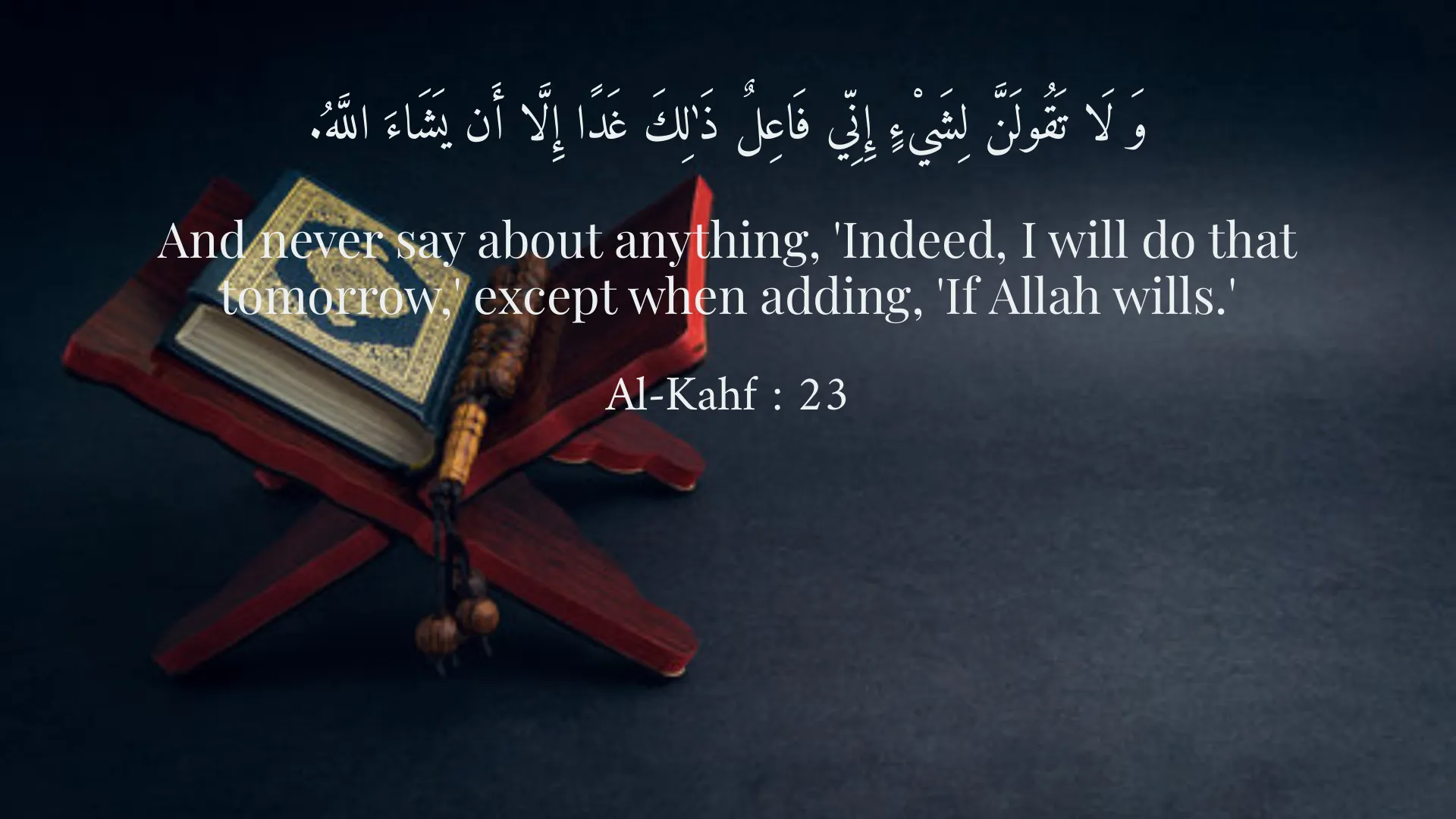
وَ لَا تَقُولَنَّ لِشَيْءٍ إِنِّي فَاعِلٌ ذَٰلِكَ غَدًا إِلَّا أَن يَشَاءَ اللَّهُ.
And never say about anything, 'Indeed, I will do that tomorrow,' except when adding, 'If Allah wills.'
Al-Kahf : 23
فَأَعْفُ عَنْهُمْ وَاسْتَغْفِرْ لَهُمْ وَشَاوِرْهُمْ فِي الْأَمْرِ.
So by mercy from Allah, [O Muhammad], you were lenient with them. And if you had been rude in speech or harsh in heart, they would have disbanded from about you; so pardon them and ask forgiveness for them and consult them in the matter.
Ali Imran : 159
وَ إِذَا سَأَلَكَ عِبَادِي عَنِّي فَإِنِّي قَرِيبٌ.
And when My servants ask you concerning Me, indeed I am near.
Al-Baqarah : 186
Short Story
One day, a friend of mine named Ali spoke to me about how he was always in doubt regarding his choices. I reminded him to study the Quran and pay attention to its verses. After some time, Ali decided to focus on prayer and consulting his family before making any decisions. This change brought positive effects in his life, and he experienced a greater sense of inner peace.