Quranic Answer
The Holy Quran, regarded as the final revelation to humanity, serves not only as a religious text but also as a guiding book that informs the moral, ethical, and spiritual conduct of believers. It offers various avenues for individuals to seek counsel and assistance from Allah, the Almighty. In this article, we will explore some key principles found within the Quran that illustrate how believers can establish a meaningful connection with God and seek His guidance through different avenues. One significant verse that highlights this concept is found in Surah Al-Anfal, verse 24, where Allah invites the listener to remember Him and emphasizes the importance of responding to His call. This verse acts as a pivotal reminder of the necessity of drawing nearer to Allah through remembrance (dhikr) and understanding His divine guidance. The essence of this verse encourages us to integrate the practice of remembrance of God into our daily routines and interactions. This remembrance lays the foundation of faith, which prepares us to consult with Him through prayer and supplication. The Quran encourages believers to establish a personal relationship with Allah, fostering a sense of closeness and reliance on Him. By adhering to the divine guidelines and principles laid out in the Quran, individuals can navigate the complexities of life with a sense of purpose and direction. This foundational aspect of seeking guidance from the Quran entails engaging with its teachings, reflecting on its messages, and internalizing the lessons found within. Moreover, in Surah Al-Imran, verse 159, Allah instructs the Prophet Muhammad (peace be upon him) to consult with others in matters of significance. "So by mercy from Allah, [O Muhammad], you were lenient with them. And if you had been rude in speech or harsh in heart, they would have disbanded from about you. So pardon them and ask forgiveness for them and consult them in the matter." This verse reinforces the idea that, alongside prayers and personal supplications to Allah, it is equally vital to seek counsel and draw upon the experiences and wisdom of others in important decision-making processes. This not only promotes a sense of community but also acknowledges that Allah's guidance can manifest through the insights and perspectives of others who may have encountered similar challenges. In everyday life, the Quran serves as a reliable source of guidance, inspiring individuals to seek answers to their questions and solutions to their problems through introspection and reflection on the sacred text. Many people turn to the Quran during moments of uncertainty, distress, or hardship. Whether facing personal dilemmas or seeking clarity in complex situations, reading and reflecting on the Quranic verses can lead to deeper understanding and enlightenment. The verses may provide comfort, challenge one's beliefs, or inspire action, ultimately offering a sense of hope and assurance. Additionally, the practice of supplication (dua) is a vital element of seeking guidance from Allah. Believers are encouraged to supplicate to God with sincerity and humility, asking for help and clarification in their affairs. The Quran beautifully outlines the significance of dua in multiple instances, emphasizing that Allah is always near and responds to the calls of His servants. This intimate dialogue we cultivate with Allah through our supplications creates a profound spiritual connection that transforms our challenges into opportunities for growth and learning. Moreover, the importance of considering prophetic traditions (Hadith) and the teachings of religious leaders cannot be overstated. These teachings provide invaluable insights into how the Quran has been interpreted and applied throughout history. Learning from the lives and experiences of the prophets and the early Muslim community can offer contemporary believers practical frameworks for consulting and navigating their own lives. The way the Prophet Muhammad (peace be upon him) engaged with his companions, encouraging them to seek counsel and support one another, serves as an enduring model of collaborative decision-making. It is essential to recognize that seeking counsel from the Quran entails more than just reading its verses. It requires active engagement—reflection upon one’s own actions and thoughts, understanding the historical and contextual background of the verses, and implementing the lessons learned into daily practices. Furthermore, individual interpretations may vary; hence, it's important to seek knowledge, guidance, and clarity from qualified scholars and sources to ensure authenticity in understanding. In conclusion, the Quran serves as a multifaceted guide that provides believers with various methods to seek counsel and assistance from Allah. Through remembrance, prayer, supplication, consultation with others, and reflection on the lives of prophets and religious leaders, individuals can cultivate a deeper understanding of their challenges and responsibilities in life. The teachings of the Quran invite believers to engage actively with their faith, seeking divine guidance at every turn, particularly during moments of uncertainty. Ultimately, seeking counsel from the Quran and its teachings is a lifelong journey—a commitment to continuous reflection, personal growth, and a pursuit of knowledge. By following these divine guidelines and exemplifying the lessons learned, individuals can navigate the complexities of life with the assurance of divine support, grace, and guidance.
Related Verses
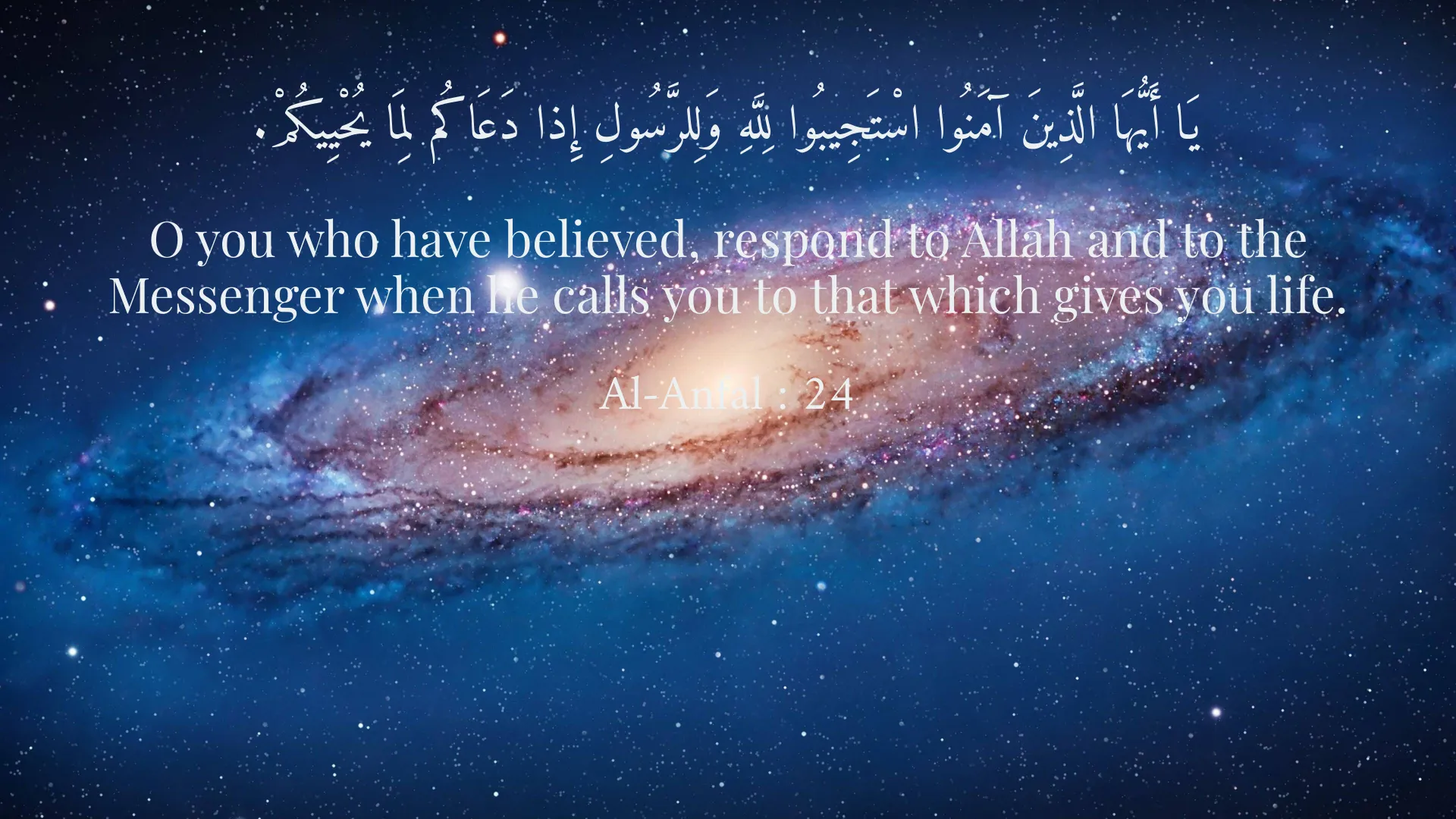
يَا أَيُّهَا الَّذِينَ آمَنُوا اسْتَجِيبُوا لِلَّهِ وَلِلرَّسُولِ إِذا دَعَاكُم لِمَا يُحْيِيكُمْ.
O you who have believed, respond to Allah and to the Messenger when he calls you to that which gives you life.
Al-Anfal : 24
فَبِمَا رَحْمَةٍ مِّنَ اللَّهِ لِنتَ لَهُمْ ۖ وَلَو كُنتَ فَظًّا غَلِيظَ الْقَلْبِ لَانفَضُّوا مِن حَوْلِكَ ۖ فَاعْفُ عَنْهُمْ وَاسْتَغْفِرْ لَهُمْ وَشَاوِرْهُمْ فِي الْأَمْرِ.
So by mercy from Allah, [O Muhammad], you were lenient with them. And if you had been rude in speech, hard-hearted, they would have disbanded from about you. So pardon them and ask forgiveness for them and consult them in the matter.
Al-Imran : 159
Short Story
One day, a young man named Ahmad faced many challenges in his life. He was unsure how to make the right decisions. One day, he reflected on a verse of the Quran that said, 'Respond to Allah and the Messenger.' After that, he decided to rely more on the Quran and his prayers. Over time, he felt more at peace and was able to overcome his challenges.