Quranic Answer
In today's world, the concept of love and friendship is often intertwined with material wealth and social standing. However, the Holy Quran sheds light on a much deeper understanding of these concepts, emphasizing that true worth and value lie not in one's financial status but in their connection and relationship with Allah (SWT). Central to this understanding is the reassurance that Allah loves His servants unconditionally, an important message particularly for those who find themselves facing hardships, such as poverty. In Surah Al-Baqarah, verse 286, Allah states: 'And whoever relies upon Allah – then He is sufficient for him.' This powerful verse encapsulates the principle that reliance on Allah is key to overcoming difficulties. It reassures believers that Allah is always with them, paying attention to their circumstances and providing them with the support they need during their trials. In a society that often equates success with material gain, this verse reminds us that even in the depths of poverty, we are not alone; Allah's presence offers an immense source of comfort and strength. Within the Quran, poverty is viewed through a lens of faith and piety rather than financial quantification. This concept is crucial to grasp, especially when one faces life's challenges. The Quran teaches that those who endure trials with faith often find themselves closer to Allah (SWT). This proximity to the divine is not limited by social class or wealth; rather, it is defined by one’s level of faith and submission to Allah's will. In Surah Al-An’am, verse 38, Allah promises that the struggles faced by the faithful hold significant value. Those who strive for righteousness and who endure hardships for His sake are promised respect and recognition in the eyes of Allah. In an era where despair can seep into the hearts of those who are struggling, the Quran offers an invitation to maintain hope. Surah Maryam, verse 37, points out that patience and resilience are not only virtues but prerequisites for attaining Allah's love. The promise of Allah for those who remain steadfast through their struggles underscores a profound truth: trials can serve to elevate one's spiritual state and strengthen one's relationship with the Divine. Resilience becomes not just a way to cope but a pathway to spiritual elevation and divine closeness. For individuals enduring poverty, this message is especially vital. Their physical circumstances do not define their worth; rather, their faith, deeds, and character hold the true measure of their significance. Allah loves His servants, especially those who turn to Him in times of need. Riches of the heart, cultivated by faith and trust in Allah, far exceed any material wealth. Indeed, many might argue that true richness lies in spiritual fulfillment and in the quality of one's relationship with the Almighty. The Quran does not dismiss the challenges of poverty, but it provides a framework to navigate such hardships with faith and strength. For instance, the story of Job (Ayyub) is a powerful reminder of how patience during adversity is rewarded by Allah. Job was a prophet who experienced extreme hardship and loss but remained steadfast in his faith and trust in Allah. His story illustrates that suffering can pave the way to greater internal strength and reward. Such narratives inspire believers to see challenges as opportunities for growth rather than as ends in themselves. Moreover, Allah's promises and assurances serve as constants in the lives of those who experience fluctuations in their socio-economic status. The knowledge that Allah is always present, that He supports and loves those who suffer, allows believers to carry on with hope. It is in these moments of suffering that the bonds of faith strengthen, illuminating the truth that the greatest companion one can rely on during hardship is Allah Himself. The simple yet profound truth is that Allah’s love is limitless. He does not measure His affection based on worldly standards of wealth, success, or social status; instead, His mercy encompasses everyone, especially those who are humble and patient. Across various Quranic verses, it is evident that Allah sees beyond the physical realm, valuing intrinsic qualities such as patience, resilience, faith, and piety. These qualities are adored by Allah and exalt His servants among those who are honored. Furthermore, the Quran stresses the importance of community and compassion, urging wealthier individuals to aid those facing adversities. Such acts of charity not only lift the burdens of those in need but serve as a reminder of our shared humanity and responsibility. The interactions between rich and poor can foster empathy and understanding, contributing towards a society that values justice and support. In conclusion, the discussions within the Holy Quran illustrate a profound understanding of the relationship between Allah and His servants, particularly concerning those facing poverty. By relying on Allah, individuals can overcome challenges, find strength in faith, and recognize their inherent worth beyond material possessions. It is through faith, patience, and resilience that they can transform their suffering into pathways for spiritual elevation and closeness to Allah. This mix of compassion, faith, and patience creates a hopeful narrative, inviting everyone, regardless of wealth, to experience the boundless love of Allah. As believers, it is crucial to understand that material wealth is fleeting, but a strong relationship with Allah is eternal and serves as the cornerstone of true value and dignity.
Related Verses
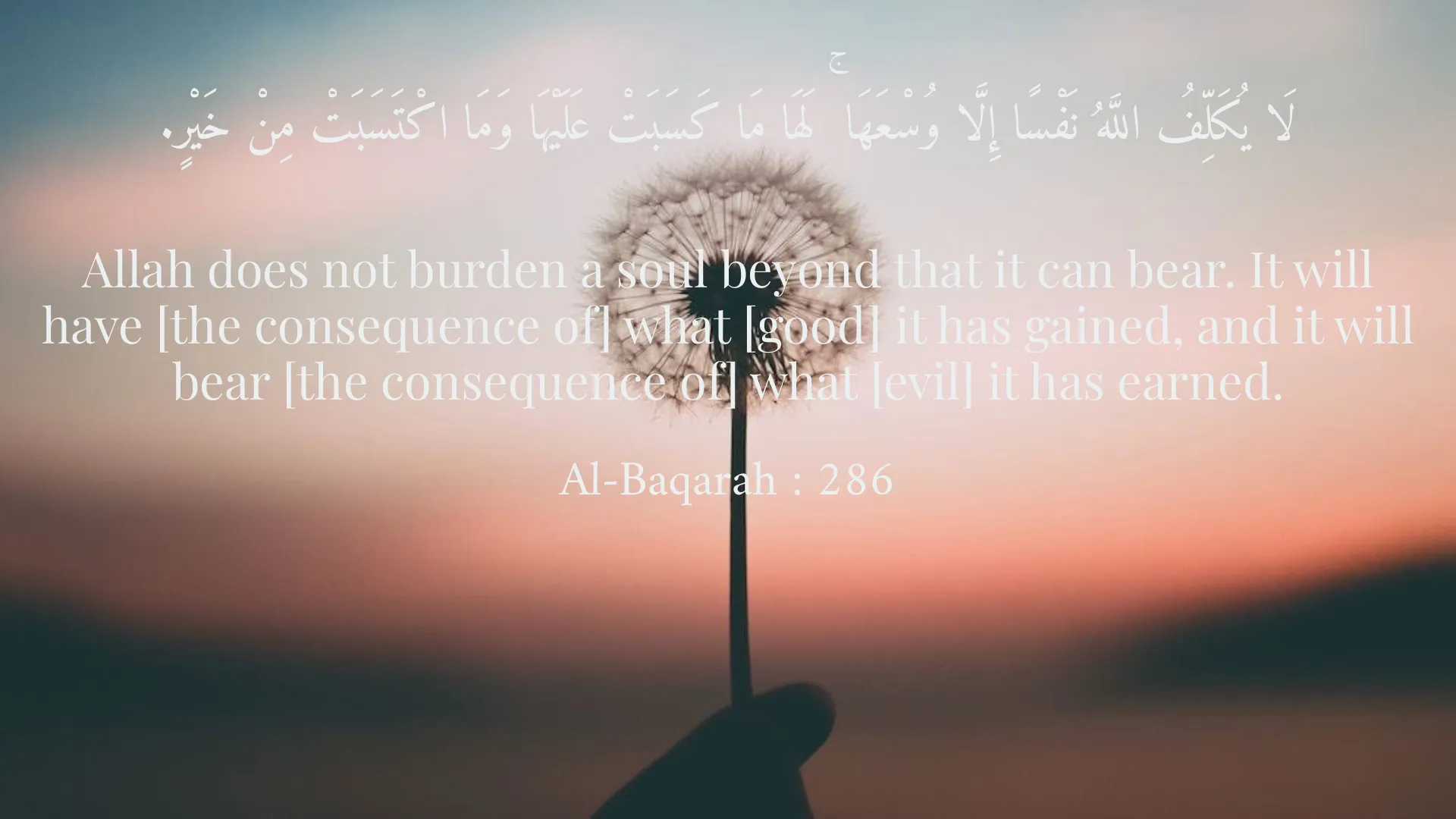
لَا يُكَلِّفُ اللَّهُ نَفْسًا إِلَّا وُسْعَهَا ۚ لَهَا مَا كَسَبَتْ عَلَيْهَا وَمَا اكْتَسَبَتْ مِنْ خَيْرٍ.
Allah does not burden a soul beyond that it can bear. It will have [the consequence of] what [good] it has gained, and it will bear [the consequence of] what [evil] it has earned.
Al-Baqarah : 286
وَلَقَدْ أَرْسَلْنَا إِلَى أُمَمٍ مِّن قَبْلِكَ فَأَخَذْنَاهُمْ بِالْبَأْسَاءِ وَالْضَّرَّاءِ لَعَلَّهُمْ يَتَضَرَّعُونَ.
And We sent [messengers] to nations before you, and We seized them with poverty and hardship that perhaps they might humble themselves [to Us].
Al-An’am : 38
إِنَّمَا يُوَفَّى الصَّابِرُونَ أَجْرَهُمْ بِغَيْرِ حِسَابٍ.
Indeed, the patient will be given their reward without account.
Maryam : 37
Short Story
On a rainy day, a poor man named Hassan sat under a roof, looking up at the sky. He wished he had wealth too. But suddenly, a small child came to him and hugged him. Hassan realized that God's love and affection exist in every heart and that the most important thing in life is friendship and kindness.