Quranic Answer
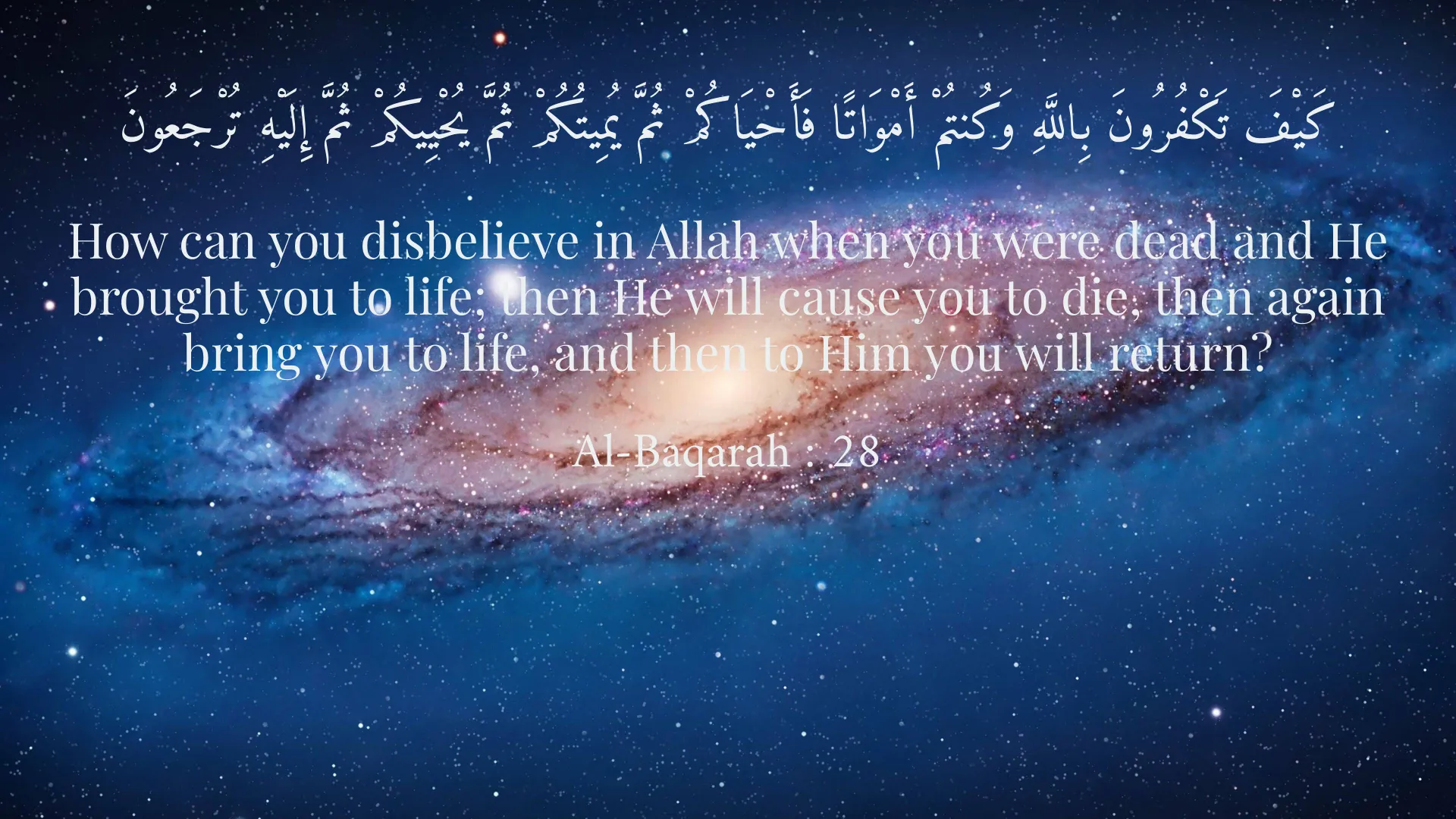
From the perspective of the Holy Quran, death is by no means the absolute end of life; rather, it is a crucial and transformative point that opens the door to another realm and a new phase of existence. This view not only removes the concept of annihilation and non-existence from death but also considers it the beginning of an eternal journey—a journey whose outcomes are determined by human deeds and choices during their worldly life. The Quran clearly states that this worldly life is merely a passage and a test to prepare humanity for entry into the everlasting life of the Hereafter. Death is merely a change of state from one form of existence to another, and the human soul, after separating from the material body, continues its journey through different realms. According to the Quran, this world is transient and perishable, and the primary purpose of human creation is to achieve perfection and return to the Lord. Verse 28 of Surah Al-Baqarah explicitly refers to this life-death-life cycle: "How can you disbelieve in Allah when you were dead and He brought you to life; then He will cause you to die, then again bring you to life, and then to Him you will return?" This verse demonstrates that life and death are all under the boundless power of Allah, and death is merely a stage in this process of returning to Him. After worldly death, the human soul enters the realm of Barzakh. Barzakh is an intermediary world between this world and the Hereafter; a place where souls await the great resurrection. The Holy Quran refers to this realm in verse 100 of Surah Al-Mu'minun: "Until, when death comes to one of them, he says, 'My Lord, send me back that I might do righteousness in that which I left behind.' No! It is but a word he is saying; and behind them is a barzakh until the Day they are resurrected." This verse clearly states that after death, there is no opportunity for return or recompense, and until the Day of Judgment, souls will remain in the realm of Barzakh. Human deeds, whether good or bad, materialize in Barzakh for the individual, and the soul confronts the consequences of its actions, which can bring either peace or torment. The climax of this post-death beginning is on the Day of Judgment and the great resurrection. The Quran emphatically asserts the occurrence of the Day of Judgment and the revival of the dead. The purpose of the Day of Judgment is accountability and the reward or punishment for human actions. This belief forms the foundation of ethics and responsibility in Islam, as every individual knows that one day they will be held accountable for their deeds, and not an atom's weight of good or evil will go unrewarded or unpunished. Numerous verses in the Quran describe the Day of Judgment, its signs, and the scenes of gathering and reckoning. For example, Surah Az-Zalzalah clearly states that on that Day, the earth will report its news, and people will emerge from their graves in groups to see their deeds: "So whoever does an atom's weight of good will see it, and whoever does an atom's weight of evil will see it." The belief that death is a beginning and not an end profoundly impacts the quality of one's worldly life. This conviction motivates individuals to act more purposefully, avoid sins, strive to do good deeds, and consistently seek Allah's pleasure. This world is like a field where one sows the seeds of action, and in the Hereafter, reaps its harvest. Those who grasp this truth do not perceive the world as deceptive and do not become attached to transient wealth and status; instead, they utilize the opportunity of their lifespan to build their eternal abode. This perspective brings peace and assurance to individuals, knowing that even when facing the hardest calamities and losing loved ones, they understand that they have not vanished but have returned to their Lord, awaiting the great resurrection. Consequently, in Islam, death is not merely an end but a new beginning for achieving true and eternal life in the proximity of Divine Mercy.
Related Verses
كَيْفَ تَكْفُرُونَ بِاللَّهِ وَكُنتُمْ أَمْوَاتًا فَأَحْيَاكُمْ ثُمَّ يُمِيتُكُمْ ثُمَّ يُحْيِيكُمْ ثُمَّ إِلَيْهِ تُرْجَعُونَ
How can you disbelieve in Allah when you were dead and He brought you to life; then He will cause you to die, then again bring you to life, and then to Him you will return?
Al-Baqarah : 28
لَّعَلِّی أَعْمَلُ صَالِحًا فِیمَا تَرَکْتُ ۚ کَلَّا ۚ إِنَّهَا کَلِمَةٌ هُوَ قَائِلُهَا ۖ وَمِن وَرَائِهِم بَرْزَخٌ إِلَىٰ یَوْمِ یُبْعَثُونَ
[He says], 'That I might do righteousness in that which I left behind.' No! It is but a word he is saying; and behind them is a barzakh until the Day they are resurrected.
Al-Mu'minun : 100
وَضَرَبَ لَنَا مَثَلًا وَنَسِيَ خَلْقَهُ ۖ قَالَ مَن يُحْيِي الْعِظَامَ وَهِيَ رَمِيمٌ
And he presents for Us an example and forgets his [own] creation. He says, "Who will give life to bones while they are disintegrated?"
Ya-Sin : 78
قُلْ يُحْيِيهَا الَّذِي أَنشَأَهَا أَوَّلَ مَرَّةٍ ۖ وَهُوَ بِكُلِّ خَلْقٍ عَلِيمٌ
Say, "He will give them life who produced them the first time; and He is, of all creation, Knowing."
Ya-Sin : 79
Short Story
It is narrated in Saadi's Golestan that a just and benevolent king sat on his throne for many years, dedicating his entire life to the comfort of his subjects and the prosperity of his kingdom. One day, at the pinnacle of his power and glory, his physician informed him that his appointed time (ajal) was near. The king smiled and said, "I have been preparing for this journey for a long time. The treasures I collected were not gold and silver, but rather righteous deeds, justice, and benevolence that I stored for the Hereafter." His courtiers were astonished that he was not saddened by this news. The king replied, "This world is a bridge to be crossed, not a house to dwell in. A wise person is one who builds their eternal home with good deeds and crosses this bridge with a peaceful mind, rather than building a grand structure on the bridge and leaving it with a heavy heart." This story reminds us that death is not an end, but the beginning of a journey to the true abode, and one must always be prepared for it.