Quranic Answer
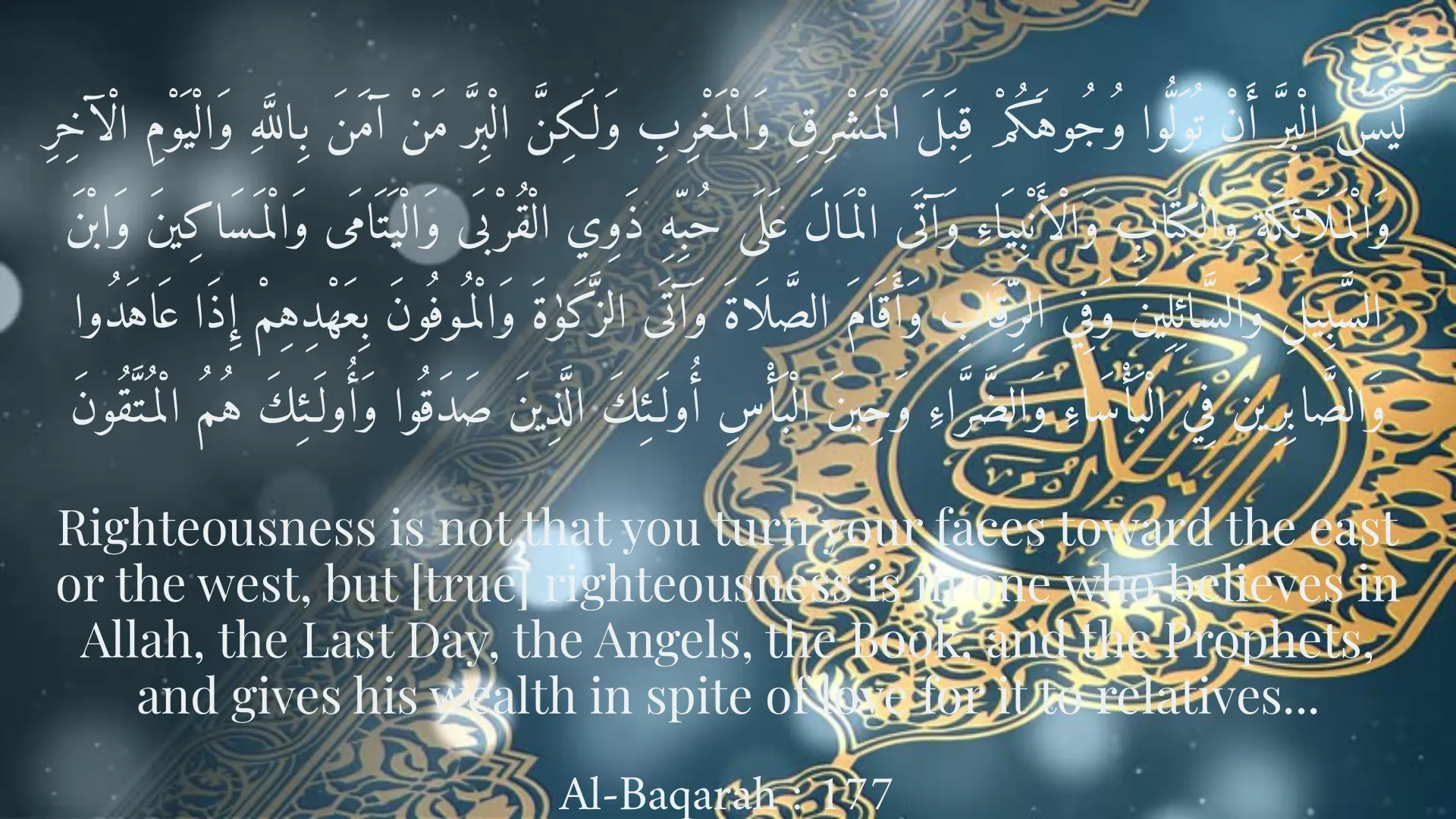
In the Holy Quran, the intricate relationship between knowledge and action plays a pivotal role in the foundation of Islamic beliefs. The Quran emphasizes this interconnection, asserting that belief is not merely an abstract concept but one that must be accompanied by tangible actions. It stresses that faith without action holds no value in Islamic thought, signifying that one's sincere beliefs must be reflected through deeds. This principle is derived from various verses in the Quran, one of which resonates profoundly: Surah Al-Baqarah, verse 177, states, 'Righteousness is not that you turn your faces toward the east or the west, but [true] righteousness is in one who believes in Allah, the Last Day, the Angels, the Book, and the Prophets, and gives his wealth, in spite of love for it, to relatives and orphans, the needy, the traveler, those who ask [for help], and for freeing slaves...' This verse serves as a critical reminder that righteousness and true faith extend beyond the mere acts of worship or the physical direction taken during prayers. Instead, it manifests in generosity, kindness, and a deep-seated commitment to benefitting others, regardless of one's personal attachments. Furthermore, this dichotomy of knowledge and action is further highlighted in Surah Al-Mu'minun, verse 51, where Allah commands, 'O Messengers, eat from the good foods and work righteousness.' Here, the Divine instruction draws attention to two key aspects: the consumption of pure, permissible sustenance and the undertaking of righteous work. This illustrates that believers should not only focus on acquiring knowledge of what is permissible or beneficial but also actively pursue actions that embody this knowledge. This encourages believers to lead lives that are prosperous in both spiritual and worldly affairs, but with a focus on righteousness. The connection between faith and action in Islam paints a comprehensive picture of what it means to be a true believer. Faith is the foundation, and righteous deeds are the manifestations. In Islam, it is fundamentally emphasized that having belief in the heart must translate into concrete actions, as actions serve as the markers of one's faith. Believers are urged to display their faith through their conduct, thereby enshrining their beliefs within their daily lives. In Islamic belief, actions stemming from faith are seen as indicators of steadfastness and sincerity in one's belief. Just as a seed needs fertile soil, water, and sun to grow and bear fruit, similarly, faith requires the nurturing presence of good deeds to flourish. A life of purely theoretical belief, devoid of actionable outcomes, resonates with the metaphor of a seed planted in barren soil that yields no fruit. The Quran explicitly illustrates the importance of righteous deeds for the acceptance of faith, encouraging believers to engage actively in acts of kindness, charity, and social responsibility. In the modern world, where individualism and materialism often dominate, the teachings of the Quran serve as a beacon for believers seeking purpose and direction. Engaging in charitable acts not only enriches the lives of others but also nurtures the believer’s soul. The concept of giving, especially when it is done selflessly, connects individuals to their communities, fostering a sense of belonging and purpose. Almsgiving or Zakat, a cornerstone of Islamic teachings, reiterates the idea that true prosperity is not solely measured by material wealth but is also defined by a person’s contribution to the welfare of society. Through these teachings, the Quran not only highlights the role of action but also provides a framework for believers to evaluate their faith continuously. Each act of kindness, no matter how small, can be a reflection of one’s devotion to Allah. The Prophet Muhammad (PBUH) is noted for exemplifying this ideal; his life was a tapestry of faith and action, guiding his followers to do good in the world. He is quoted as saying, ‘The most beloved of people to Allah are those who are most beneficial to others.’ This saying beautifully encapsulates the essence of faith, which is intertwined with the obligation to help and uplift others. Moreover, the encouragement to partake in good deeds is not merely for the benefit of others but serves as a means of spiritual elevation for the doer. Engaging in charitable acts cultivates virtues such as compassion, empathy, and humility, which are essential components of a well-rounded character. The discourse on faith being linked to action highlights that believers are called to embody their convictions through daily acts that reflect their commitment to God and humanity. In conclusion, the Holy Quran profoundly underscores the inseparable link between knowledge and action. Faith, when not accompanied by righteous deeds, loses its essence and fails to concretize within the believer’s life. Islam teaches that a true believer’s life is characterized by continuous engagement in good deeds, leveraging every opportunity to serve and uplift others. The teachings of the Quran serve as a guideline for every believer to not only seek knowledge but to let that knowledge guide their actions toward righteousness and compassion. Embracing this holistic vision allows individuals to contribute meaningfully to society and live a life that resonates with the principles of faith, ultimately fostering a community grounded in love, support, and mutual respect.
Related Verses
لَيْسَ الْبِرَّ أَنْ تُوَلُّوا وُجُوهَكُمْ قِبَلَ الْمَشْرِقِ وَالْمَغْرِبِ وَلَكِنَّ الْبِرَّ مَنْ آمَنَ بِاللَّهِ وَالْيَوْمِ الْآخِرِ وَالْمَلَائِكَةِ وَالْكِتَابِ وَالْأَنْبِيَاءِ وَآتَى الْمَالَ عَلَى حُبِّهِ ذَوِي الْقُرْبَى وَالْيَتَامَى وَالْمَسَاكِينَ وَابْنَ السَّبِيلِ وَالسَّائِلِينَ وَفِي الرِّقَابِ وَأَقَامَ الصَّلَاةَ وَآتَى الزَّكَوٰةَ وَالْمُوفُونَ بِعَهْدِهِمْ إِذَا عَاهَدُوا وَالصَّابِرِينَ فِي الْبَأْسَاءِ وَالضَّرَّاءِ وَحِينَ الْبَأْسِ أُولَـئِكَ الَّذِينَ صَدَقُوا وَأُولَـئِكَ هُمُ الْمُتَّقُونَ
Righteousness is not that you turn your faces toward the east or the west, but [true] righteousness is in one who believes in Allah, the Last Day, the Angels, the Book, and the Prophets, and gives his wealth in spite of love for it to relatives...
Al-Baqarah : 177
يَا أَيُّهَا الرُّسُلُ كُلُوا مِنَ الطَّيِّبَاتِ وَاعْمَلُوا صَالِحًا إِنِّي بِمَا تَعْمَلُونَ عَلِيمٌ
O Messengers, eat from the good foods and work righteousness. Indeed, I know what you do.
Al-Mu'minun : 51
Short Story
Once in a village, a young man named Hassan was searching for the truth of life. He had many questions in his mind and did not know for what purpose he lived. After some time, he referred to the verses of the Quran and realized that faith without action is meaningless. Therefore, he decided to attend to the needs of the people in his village, and from that time he committed himself to serving others. Hassan ultimately not only strengthened his faith but also won the hearts of many with his kindness and service.