Quranic Answer
Is God truly always watching over us? This is a question that resonates deeply within the hearts of many people, whether believers or non-believers, potentially offering solace or inspiring greater accountability. The answer to this question, from the perspective of the Holy Quran, is an unequivocal and resounding 'Yes.' The Quran explicitly and emphatically stresses God's perpetual presence, continuous observation, boundless knowledge, and ceaseless care over all creation, including humanity. This divine watchfulness is not merely limited to observing our outward actions; it extends profoundly to our innermost intentions, thoughts, and even the faintest whispers of our souls. This fundamental truth forms the cornerstone of faith in Tawhid (the Oneness of God) and complete reliance upon Him, endowing human life with profound meaning and clear direction. In the Quran, God introduces Himself through numerous divine attributes, each of which, in its own way, points to this extensive and encompassing care. He is "Al-Alim" (the All-Knowing of everything, both seen and unseen), "Al-Khabir" (the All-Aware of the minutest details and the most hidden secrets), "As-Sami" (the All-Hearing, even of the whispers of hearts), "Al-Basir" (the All-Seeing, even of a black ant on a black rock in a dark night), "Ar-Raqib" (the Guardian, the Watcher, and the constant Observer), "Al-Hafiz" (the Preserver and Protector of all existence and everything within it), and "Ash-Shahid" (the Witness and Present over everything at all times and places). These sacred names and attributes collectively signify God's complete and flawless encompassment of all existence and everything that transpires within it. Not a single atom in the universe, no soul, no thought, and no movement falls outside the domain of His knowledge, power, and will. Not even the slightest human action, whether good or evil, remains hidden from His sight. One of the most beautiful and impactful Quranic expressions in this regard is Surah Qaf, verse 16, which states: "And We have already created man and know what his soul whispers to him, and We are closer to him than [his] jugular vein." This verse clearly illustrates that God's proximity to man is not a spatial or physical closeness, but rather an encompassment of knowledge and existence. He not only sees our external and open actions but is also intimately aware of our internal whispers, fleeting thoughts, hidden intentions, and even what transpires in the depths of our subconscious. This absolute closeness and awareness instill a profound sense of constant presence and meticulous oversight within human beings, serving both as a source of humility and shame for wrongdoing and as a wellspring of hope in His boundless mercy. Another verse that explicitly and clearly emphasizes God's watchfulness is Surah An-Nisa, verse 1, which, after enjoining piety and upholding the rights of relatives, declares: "Indeed, Allah is ever, over you, an Observer (Raqiba)." The Arabic word "Raqib" signifies someone who is a watchful guardian, keeping all circumstances and details under meticulous observation. This verse serves as both a firm warning and a great glad tidings. It is a warning because humanity should understand that no action, whether good or bad, whether manifest or hidden, remains concealed from God's sight, and it will eventually be brought to account on the Day of Judgment. And it is a glad tidings because righteous and believing servants know that they are under the constant protection, preservation, and care of their Lord, and His hand of assistance and mercy is continuously upon them. The pinnacle of expressing divine encompassment and meticulous care can be observed in Ayat al-Kursi (Surah Al-Baqarah, verse 255). In this magnificent verse, it is stated: "Allah - there is no deity except Him, the Ever-Living, the Sustainer of [all] existence. Neither slumber nor sleep overtakes Him. To Him belongs whatever is in the heavens and whatever is on the earth. Who is it that can intercede with Him except by His permission? He knows what is before them and what will be after them, and they encompass not a thing of His knowledge except for what He wills. His Kursi extends over the heavens and the earth, and their preservation tires Him not. And He is the Most High, the Most Great." This verse unequivocally asserts that God is eternally awake, alive, and observant of all existence, dispelling any notion of fatigue, drowsiness, sleep, or heedlessness on His part. The preservation and meticulous management of the entire universe do not burden Him in the slightest. This description presents a vivid picture of an absolute, self-sufficient, and infinitely powerful Observer, under whose constant supervision and care every detail of creation, from the largest galaxies to the smallest particles, meticulously resides. This profound belief that God is always watching over us has deep and overwhelmingly positive effects on the life of a believer. Firstly, it intensely enhances one's sense of accountability and piety (Taqwa). When we know that every word, every thought, every intention, and every action—whether in private or public—is recorded and will ultimately be precisely accounted for, individuals become more careful and conscientious in their deeds, refraining from committing sins and injustice. This internal self-observation acts as a perpetual 'moral police' within a person, preventing them from straying and guiding them towards righteousness and goodness. This is the true essence of Taqwa: constantly perceiving oneself in the presence of God and accordingly adjusting one's actions and behaviors. Secondly, this divine watchfulness is an unparalleled source of peace, reassurance, and hope. The believer knows that even in the toughest circumstances, during the peak of distress, in moments of loneliness, and at the height of weakness, they are never truly alone. An ever-watchful Eye and an infinite Power are observing them, hearing their supplications, and extending help. This constant sense of presence and unwavering support instills hope in individuals and makes them far more resilient in the face of life's challenges and calamities. The believer understands that even if all people in the world abandon them, there is a God who will never forsake them, and His promise of assistance is true. This belief, especially during moments of weakness, despair, and hopelessness, strengthens the heart and prevents one from falling into the trap of despondency. As stated in Surah Al-Hadid, verse 4: "And He is with you wherever you are." This 'withness' is one of knowledge, encompassment, and divine support, bestowing an unparalleled tranquility upon the human soul. Thirdly, this watchfulness also implies divine guidance, mercy, and wise governance. God, by sending prophets, heavenly books, and inspirations to the hearts of human beings, constantly illuminates and shows the right path. He sees what paths people take and, with His boundless mercy and grace, provides continuous opportunities for repentance and return. Even the mistakes we commit are not hidden from His sight, yet the door of repentance is always wide open, and this stands as one of the greatest manifestations of divine care and mercy. This mercy includes the guidance that illuminates the way for individuals in moments of bewilderment, steering them towards what is good and beneficial for them. It encompasses trials and tribulations whose purpose is not destruction, but rather the growth, purification, and perfection of the human soul; and in all of these, God's helping hand and benevolence are always visible, guiding the believer towards their ultimate destiny. Finally, the belief that God is always watching over us makes human life more meaningful and purposeful. Our actions are not merely confined to the framework of worldly life; rather, they gain eternal dimensions, with their consequences and rewards manifesting in the Hereafter. This profound insight guides individuals towards goodness, piety, justice, benevolence, and service to creation, as they know that the reward and consequence of every action, whether in this world or the Hereafter, will not be hidden from the sight of that incomparable Observer, and no good deed will ever be lost. This divine watchfulness serves as a powerful motivation for continuous personal and social improvement and ethical growth, forming the very foundation of a purposeful, virtuous, and ethical life. Consequently, it can be stated with full certainty that, yes, God is not only always watching over us, but this watchfulness is an inseparable part of His very being and attributes, revealing His infinite mercy, knowledge, and wisdom to us. This awareness is a constant source of growth, boundless peace, and eternal hope for the believer in all stages and circumstances of life.
Related Verses
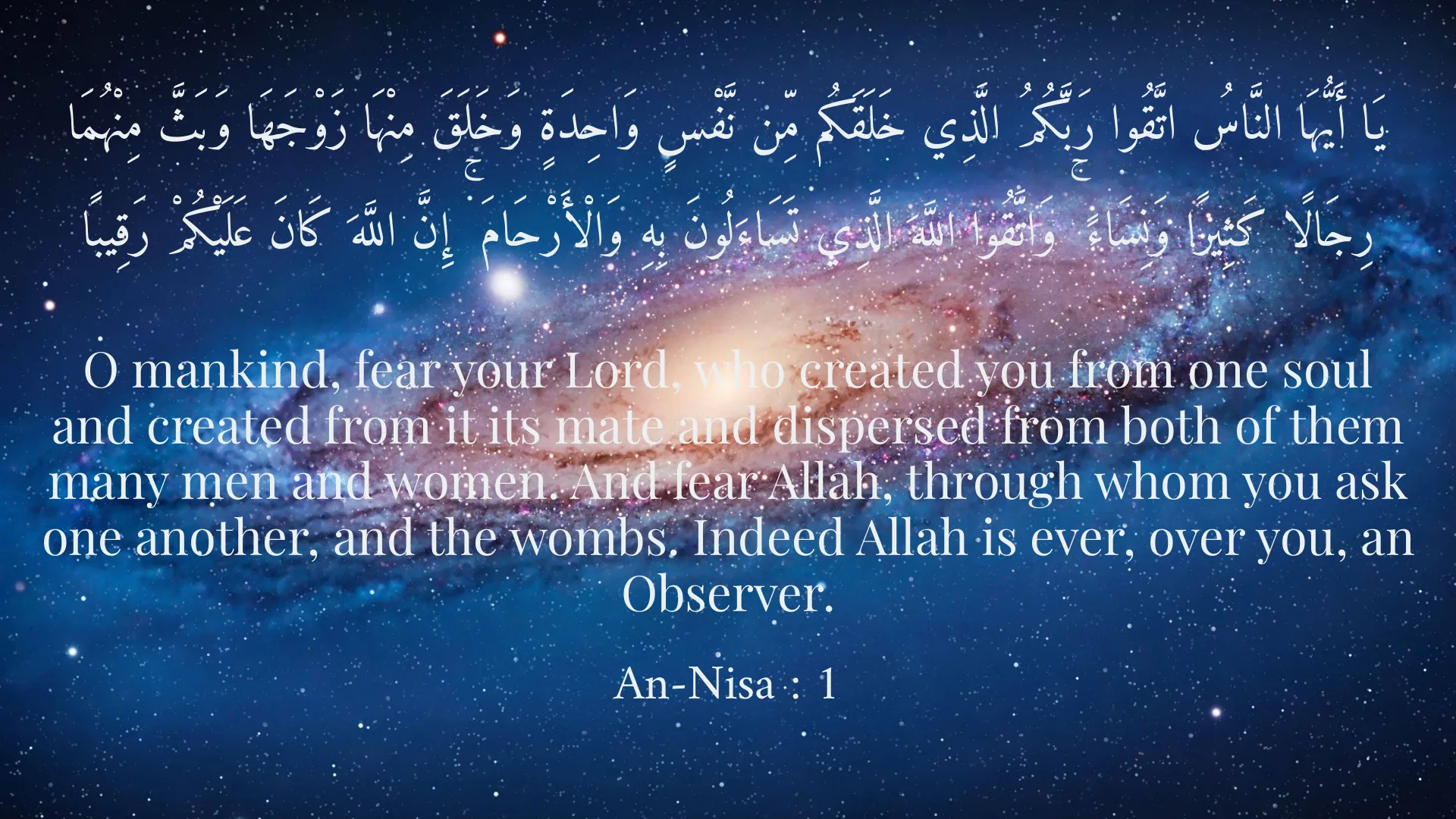
يَا أَيُّهَا النَّاسُ اتَّقُوا رَبَّكُمُ الَّذِي خَلَقَكُم مِّن نَّفْسٍ وَاحِدَةٍ وَخَلَقَ مِنْهَا زَوْجَهَا وَبَثَّ مِنْهُمَا رِجَالًا كَثِيرًا وَنِسَاءً ۚ وَاتَّقُوا اللَّهَ الَّذِي تَسَاءَلُونَ بِهِ وَالْأَرْحَامَ ۚ إِنَّ اللَّهَ كَانَ عَلَيْكُمْ رَقِيبًا
O mankind, fear your Lord, who created you from one soul and created from it its mate and dispersed from both of them many men and women. And fear Allah, through whom you ask one another, and the wombs. Indeed Allah is ever, over you, an Observer.
An-Nisa : 1
وَلَقَدْ خَلَقْنَا الْإِنسَانَ وَنَعْلَمُ مَا تُوَسْوِسُ بِهِ نَفْسُهُ ۖ وَنَحْنُ أَقْرَبُ إِلَيْهِ مِنْ حَبْلِ الْوَرِيدِ
And We have already created man and know what his soul whispers to him, and We are closer to him than [his] jugular vein.
Qaf : 16
اللَّهُ لَا إِلَٰهَ إِلَّا هُوَ الْحَيُّ الْقَيُّومُ ۚ لَا تَأْخُذُهُ سِنَةٌ وَلَا نَوْمٌ ۚ لَّهُ مَا فِي السَّمَاوَاتِ وَمَا فِي الْأَرْضِ ۗ مَن ذَا الَّذِي يَشْفَعُ عِندَهُ إِلَّا بِإِذْنِهِ ۚ يَعْلَمُ مَا بَيْنَ أَيْدِيهِمْ وَمَا خَلْفَهُمْ ۖ وَلَا يُحِيطُونَ بِشَيْءٍ مِّنْ عِلْمِهِ إِلَّا بِمَا شَاءَ ۚ وَسِعَ كُرْسِيُّهُ السَّمَاوَاتِ وَالْأَرْضَ ۖ وَلَا يَئُودُهُ حِفْظُهُمَا ۚ وَهُوَ الْعَلِيُّ الْعَظِيمُ
Allah - there is no deity except Him, the Ever-Living, the Sustainer of [all] existence. Neither slumber nor sleep overtakes Him. To Him belongs whatever is in the heavens and whatever is on the earth. Who is it that can intercede with Him except by His permission? He knows what is before them and what will be after them, and they encompass not a thing of His knowledge except for what He wills. His Kursi extends over the heavens and the earth, and their preservation tires Him not. And He is the Most High, the Most Great.
Al-Baqarah : 255
Short Story
It is narrated that in ancient times, there was a king who became arrogant with his power and imagined that no one had any oversight over him. In the darkness of night, he secretly engaged in reprehensible deeds, and in broad daylight, he oppressed his subjects, without fearing the consequences. One day, in his privacy, he spoke with a wise old man who had come to visit him. The wise elder kindly said: 'O King, you assume that your hidden actions remain concealed from the eyes of men, and your overt deeds are seen by none but your subjects. But know that there is an Eye over which neither slumber nor sleep prevails, and heedlessness finds no way to it. He is a witness to your apparent and hidden acts, even to your breaths and your secret thoughts.' The king laughed at this statement and dismissed it as insignificant. But as time passed, and he did not remain on the throne of power, and his days of distress arrived, he withdrew into seclusion. In his solitude, he remembered the words of that wise old man. It was then that he understood that an Observer had always been a witness to his deeds, and nothing had been hidden from Him. From then on, he saw every moment of his life under the watchful eye of that 'ever-awake Guardian' and turned to repentance and reform, regretting his sins. This story is an account that no action is hidden from the sight of Almighty God, and He is always watching and caring for the state of His servants, so that from this awareness, they may find salvation and peace.