Quranic Answer
The Holy Quran, the central religious text of Islam, serves as a guide for Muslims to navigate the complexities of life. While the Quran does not explicitly delineate the concept of recreation and entertainment, it offers a comprehensive framework from which one can infer the permissibility and even encouragement of healthy leisure activities. The notion that Allah created humans to experience life with joy and pleasure is pivotal to understanding this perspective. Engaging in wholesome recreation not only aligns with Islamic values but also contributes to an individual's emotional and spiritual well-being. One notable aspect that underscores the significance of a balanced life in the Quran can be found in Surah Al-Ahzab, verse 35. This verse states: 'Indeed, for Muslim men and women, for believing men and women, for the patient, for the truthful, for the humble, for those who give charity, and for the fasting men and women, for those who guard their private parts, and for those who remember Allah often, for them Allah has prepared forgiveness and a great reward.' This verse encapsulates the holistic approach to life that Islam advocates. It emphasizes that a Muslim's life should not only be filled with righteous deeds but also with enjoyment derived from activities that promote virtue and well-being. The focus is on cultivating a lifestyle that balances responsibilities with joyful engagement in the world around us. Moreover, the Quran does provide guidelines that remind individuals of moderation; this is articulated in Surah Al-A'raf, verse 31, which states: 'Eat and drink, but be not excessive...' This verse serves as a gentle reminder that while fun and enjoyment are integral aspects of life, they must be approached with a sense of balance and self-restraint. The concept of moderation is a recurring theme in Islamic teachings, urging individuals to enjoy the blessings of this world without falling into excess or indulgence that could lead to harmful consequences. Further insight into the Islamic perspective on recreation can be gleaned from traditions (hadith) attributed to the Prophet Muhammad (peace be upon him). One particularly poignant saying states: 'A sound spirit enlivens the body.' This illustrates the profound connection between physical well-being and spiritual vitality. The Prophet's words encourage Muslims to engage in activities that rejuvenate the spirit and maintain a healthy body, which can include various forms of recreation, such as sports, artistic pursuits, and community gatherings. The historical context of early Islam also provides evidence of recreational pursuits among the companions of the Prophet. They participated in activities such as horseback riding, archery, and other forms of light-hearted competition. These activities were not merely distractions; they served to strengthen bonds of friendship and community while also fostering fitness and agility. By examining these practices, it becomes evident that recreation has been an integral part of Muslim life throughout history, blending enjoyment with moral values and physical health. In the contemporary era, it is essential to redefine recreation within the parameters of Islamic principles, especially given the myriad options available today. With advances in technology and the explosion of digital entertainment, Muslims are constantly bombarded with choices that may or may not align with their values. It is crucial for individuals to navigate these waters carefully, ensuring their chosen forms of recreation enhance their well-being rather than detract from it. Healthy recreation should empower individuals to lead fulfilling lives that reflect the essence of Islamic teachings. Activities such as reading, engaging in sports, traveling, or participating in community service can serve as productive outlets for relaxation and enjoyment. These pursuits not only contribute to personal happiness but also foster a sense of belonging and responsibility towards others. The transformation of leisure into a meaningful practice aligns with the Quranic call to lead lives steeped in virtue while enjoying the bounties of Allah. In conclusion, while the Holy Quran may not directly address the concept of recreation and entertainment, it inherently promotes the idea that healthy and enjoyable leisure activities are permissible and encouraged. By engaging in wholesome recreation within the framework of Islamic values, individuals can achieve a sense of joy and fulfillment that is in harmony with their spiritual journey. Therefore, Muslims are encouraged to relish life and benefit from the abundance that Allah has bestowed, embracing recreational activities that uplift their spirits, strengthen their communities, and enrich their understanding of the world. Ultimately, recreation in Islam is not just a means of relaxation; it is a holistic approach to living a balanced and fulfilling life, where the physical, emotional, and spiritual aspects of existence are intricately interwoven.
Related Verses
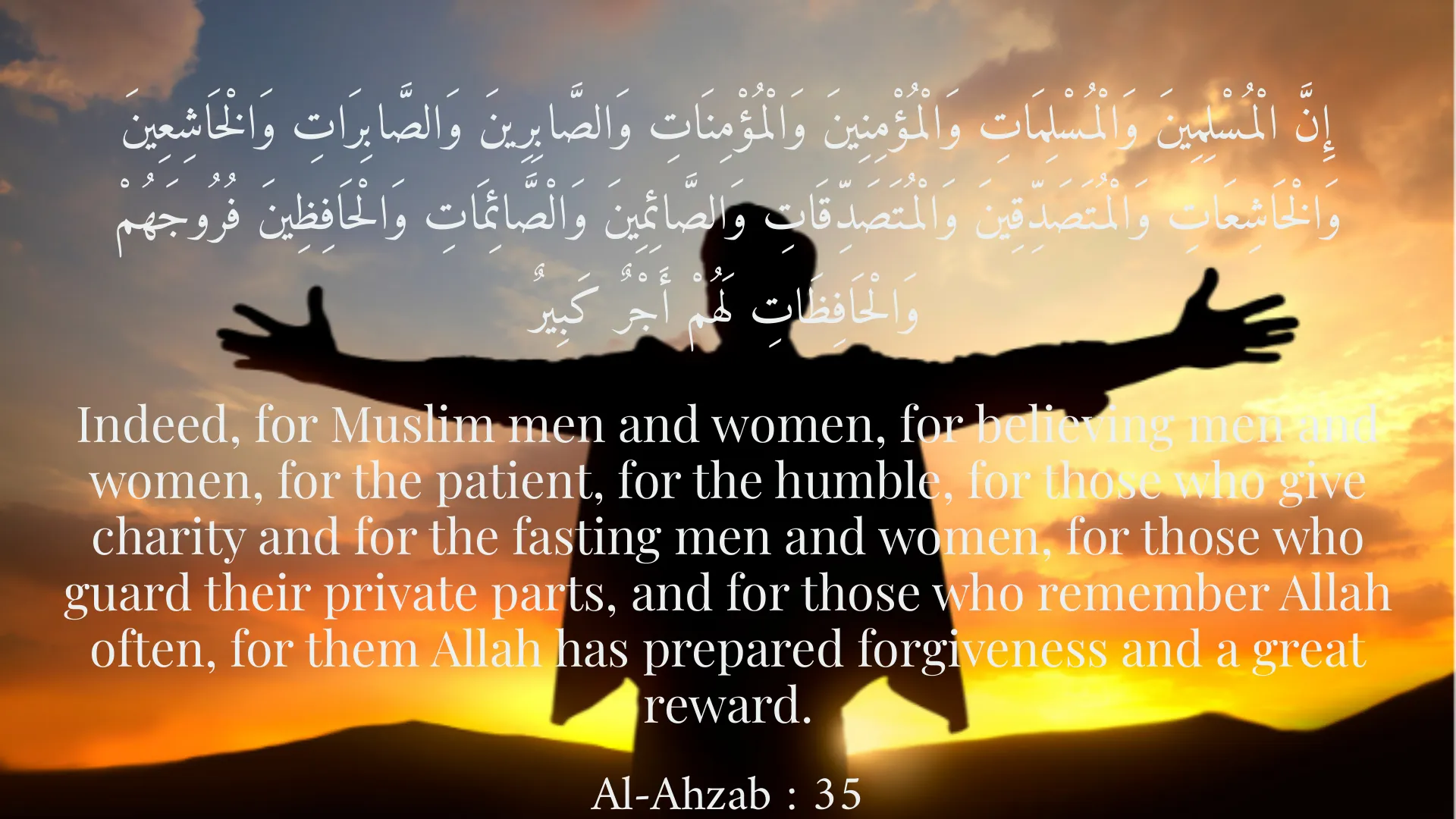
إِنَّ الْمُسْلِمِينَ وَالْمُسْلِمَاتِ وَالْمُؤْمِنِينَ وَالْمُؤْمِنَاتِ وَالصَّابِرِينَ وَالصَّابِرَاتِ وَالْخَاشِعِينَ وَالْخَاشِعَاتِ وَالْمُتَصَدِّقِينَ وَالْمُتَصَدِّقَاتِ وَالصَّائِمِينَ وَالْصَّائِمَاتِ وَالْحَافِظِينَ فُرُوجَهُمْ وَالْحَافِظَاتِ لَهُمْ أَجْرٌ كَبِيرٌ
Indeed, for Muslim men and women, for believing men and women, for the patient, for the humble, for those who give charity and for the fasting men and women, for those who guard their private parts, and for those who remember Allah often, for them Allah has prepared forgiveness and a great reward.
Al-Ahzab : 35
وَكُلُوا وَاشْرَبُوا وَلَا تُسْرِفُوا ۚ إِنَّهُ لَا يُحِبُّ الْمُسْرِفِينَ
And eat and drink, but be not excessive. Indeed, He likes not those who commit excess.
Al-A'raf : 31
Short Story
Once upon a time, a man named Muhammad decided that whenever he felt tired from his daily tasks, he would go for recreation. He went to a garden and played with his friends. After an hour of playing, he felt a sense of refreshment and joy, realizing that this time spent not only relaxed his spirit but also boosted his self-confidence. Muhammad vowed to set aside time for leisure every week, which helped him perform better in his daily activities.