Quranic Answer
In the Holy Quran, the significance of helping the needy and engaging in charitable acts is deeply woven throughout its verses. The importance of performing these acts sincerely, without the allure of recognition or vanity, is profoundly emphasized, highlighting the core values of selflessness and compassion embedded in Islamic teachings. The Quran, as a divine guide for Muslims, stresses that the intentions behind actions are paramount, positioning charity as not just a moral obligation but also a testament to one's faith and sincerity. One of the key verses that emphasize this concept can be found in Surah Al-Baqarah, verse 271: "If you disclose your charitable contributions, they are well and good; but if you conceal them and give them to the poor, it is better for you." This verse brings forth a pivotal understanding of the nature of charity. It suggests that while public acts of charity can hold their own merit and encourage others to give, the true essence of giving lies in anonymity and sincerity. The act of concealing one’s charitable contributions reflects a humble intent devoid of the desire for praise or acknowledgment from others. Such sincerity, as the verse elaborates, is superior and more commendable in the eyes of Allah. The emphasis on maintaining a pure intention while giving charity is further reiterated in Surah Al-An'am, verse 141, which states, "And whoever conceals his charity, it is better for him." This verse underscores the principle that the hidden acts of charity carry a weightier significance. Concealing one’s charitable actions from the public eye prevents the tainting of one’s motives and ensures that the act stems from a genuine desire to assist those in need. It draws attention away from the giver and instead places the focus on the essence of the act itself – the upliftment of those who are less fortunate. These principles encourage a culture of empathy and altruism within the community, fostering a landscape where helping one another is viewed as both a societal responsibility and a divine mandate. Acts of charity are not merely financial transactions but are inherently spiritual pursuits aimed at purifying the soul and contributing positively to the lives of others. The Quran articulates charity as an expression of societal solidarity, one that engenders support, compassion, and unity among individuals within a community. In addition to the emphasis on sincere giving, Surah Al-Ma'idah, verse 22, adds another layer of depth to the understanding of good deeds by stating, "Remember the favors of Allah and seek help because good deeds among you are well-accepted." This verse serves as a reminder to individuals of the countless blessings that Allah bestows upon humanity, urging them to express gratitude through acts of kindness and charity. Furthermore, the promise that good deeds are well-accepted is a source of motivation for believers, encouraging them to actively participate in charitable endeavors and support those in dire need. The Quran's teachings on charity also resonate strongly in a broader societal context. In an age where materialism and self-interest often overshadow altruistic values, these verses serve as a compelling reminder of our collective responsibility to aid those who are marginalized and impoverished. It is a call to action, urging individuals to step beyond the confines of personal gain and consider the welfare of their fellow beings. When assessing the implications of these teachings within modern society, we witness the emergence of a philanthropic culture driven by the fundamental tenets of Islam. Muslims around the world are increasingly engaging in charitable acts, ranging from donations and volunteer work to establishing foundations aimed at providing aid to underprivileged communities. This trend not only reflects adherence to Islamic principles but also signals a growing awareness of the importance of social responsibility in a globalized world. Moreover, the concept of Zakat, one of the Five Pillars of Islam, highlights the obligation of Muslims to give a specific proportion of their wealth to charity. The Quran categorically articulates that Zakat purifies wealth and serves as a means to alleviate poverty. By redistributing wealth to those in need, the cycle of poverty can be interrupted, fostering a more equitable society. Furthermore, the teachings of the Quran encourage believers to establish and maintain a personal connection with those they help, understanding their struggles and forming meaningful relationships rooted in compassion. This interaction not only enriches the lives of those in need but also facilitates the spiritual growth of the giver, bridging the gap between social classes and fortifying community bonds. As Muslims participate in charitable initiatives, their intention remains vital. The community must be reminded that the key to acceptance of one’s good deeds lies in the sincerity of the intention behind those actions. Only when actions are performed with the aim of pleasing Allah, rather than seeking fame, can one hope to truly fulfill the divine requirement set forth in the Quran. In conclusion, the teachings encapsulated in the Holy Quran convey an enduring message on the importance of charity, urging individuals to give sincerely and without the need for recognition. Through verses such as those found in Surah Al-Baqarah, Al-An'am, and Al-Ma'idah, a clear directive emerges: that charity should be borne out of a genuine desire to assist others, emanating from a sincere heart. The advocacy for charitable acts in the Quran promotes a culture of empathy, solidarity, and social responsibility, urging believers to contribute positively to their communities. In a world often marred by inequality and distress, these teachings serve as a timeless reminder of the transformative power of altruism and the profound impact that sincere charitable acts can have in constructing a just and compassionate society.
Related Verses
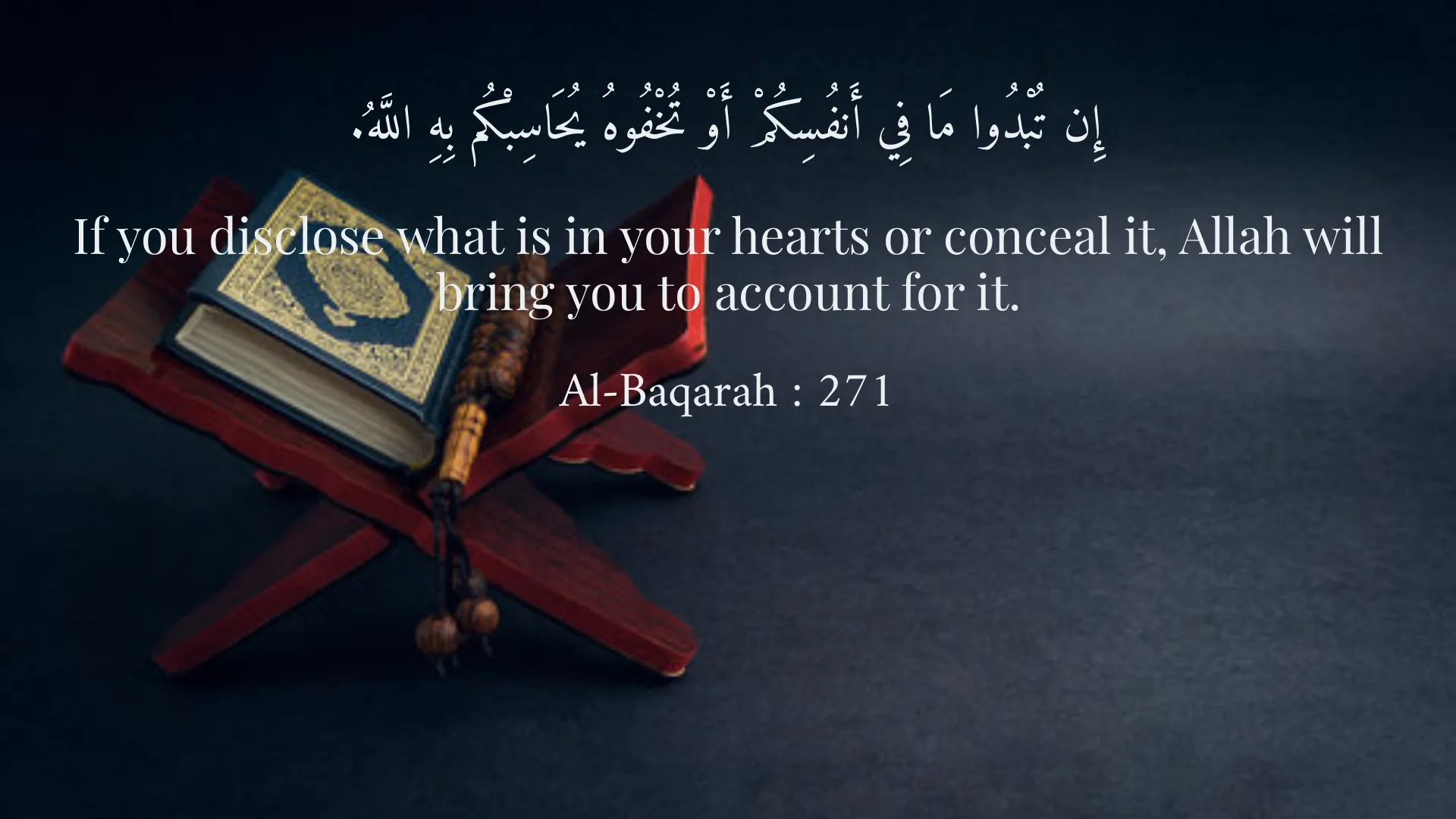
إِن تُبْدُوا مَا فِي أَنفُسِكُمْ أَوْ تُخْفُوهُ يُحَاسِبْكُم بِهِ اللَّهُ.
If you disclose what is in your hearts or conceal it, Allah will bring you to account for it.
Al-Baqarah : 271
وَمَن يُخْفِهُ شَيْئًا مِنَ الصَّدَقَاتِ فَأَحْسَنُ.
Whoever conceals some of his charity, it will be better for him.
Al-An'am : 141
وَاذْكُرُوا نِعَمَ الله واطلبوا المساعدة.
Remember the favors of Allah and seek His help.
Al-Ma'idah : 22
Short Story
One day, a man named Hassan was strolling through the market. He noticed a needy person sitting by the street, looking very sad. Remembering the verses of the Quran emphasizing the importance of helping those in need, Hassan decided to give some money to the person without making a show of it, and with a pure intention. When he did this, he felt a greater sense of peace in his heart and uplifted the spirit of that person. In that moment, he realized that helping others brings blessings and tranquility not only to the needy but also to himself.