Quranic Answer
Yes, from the perspective of the Holy Quran, humanity is inherently in need of divine guidance throughout its life's journey. This need arises not only from humanity's inherent weaknesses and limitations but also has deep roots in the very purpose of its creation and its existential structure. The Quran repeatedly emphasizes that Allah created humanity with a sublime purpose: "And I did not create the jinn and mankind except to worship Me" (Adh-Dhariyat: 56). To achieve this lofty goal (true worship and servitude, which encompasses all dimensions of life), humanity requires a precise and comprehensive roadmap that can only be provided by the Creator of existence. Although humans are endowed with intellect, free will, and an innate inclination towards truth (fitra), these gifts alone are insufficient for traversing the path of perfection and salvation. Human intellect is limited and may err or falter amidst life's complexities and when faced with temptations and ambiguities. Selfish desires, ignorance, forgetfulness (nisyan), and material inclinations can veil one's pure nature and divert them from the right path. The Holy Quran clearly articulates this aspect of human weakness; for instance, in Surah Yusuf, verse 53, it states: "Indeed, the soul is a persistent enjoiner of evil, except for what my Lord has mercy upon." This verse indicates that humanity, by itself, may incline towards evil and is in need of a restraining and guiding force from beyond its own being. Furthermore, humanity needs a comprehensive and stable framework in ethical, social, legal, and even economic matters to establish justice and equity in society. Human laws, no matter how advanced, are always influenced by various factors such as personal interests, cultural biases, and temporal and spatial limitations, and thus cannot provide a complete and eternal answer to humanity's complex needs. It is here that divine guidance, with its unparalleled comprehensiveness and universality, becomes the true pathfinder. Allah the Almighty, who is the Creator and fully aware of all dimensions of human existence and its needs, knows best what is beneficial for human well-being in this world and the hereafter. It is for this reason that in numerous verses, He introduces Himself as "Al-Hadi" (The Guide). The Holy Quran, as the word of God, describes itself as "a guidance for the righteous" (Al-Baqarah: 2). This book not only includes doctrinal and ritualistic teachings but also clarifies ethical principles, social laws, and solutions for achieving individual and collective prosperity. The sending of prophets (anbiya') is another testament to this inherent human need for guidance. Prophets were teachers sent by Allah who conveyed divine teachings to humanity, clarified concepts for them, and practically demonstrated the path of servitude and righteous living. Without the presence of these celestial guides and divine books, humanity would drown in the sea of ignorance and misguidance, with every group choosing a path for itself that would ultimately lead to nothing but conflict and corruption. Even humanity's pure innate disposition (fitra), which yearns for truth, reality, and beauty, requires nourishment and proper direction. If this fitra is not nourished by divine guidance, it may be led astray by environmental influences, improper upbringing, or satanic whispers, turning towards various idols (both material and spiritual) instead of worshipping the One God. Therefore, divine guidance is like a light that illuminates the path for human intellect and fitra, saving it from the darkness of ignorance and misguidance. Accepting this guidance is a sign of wisdom and submission to truth, ultimately leading to inner peace and eternal salvation. Humanity is free to accept or reject this guidance, but the Quran emphasizes that choosing the path of guidance is an act of gratitude, while choosing the path of misguidance is an act of ingratitude: "Indeed, We guided him to the way, whether grateful or ungrateful" (Al-Insan: 3). In summary, the Quran clearly demonstrates that humanity alone cannot reach the pinnacles of perfection and happiness. It is profoundly in need of its Creator's guidance not only in understanding the realities of existence but also in comprehending what is permissible and impermissible, and in managing its instincts and desires. This need for guidance is not a flaw but rather a part of Allah's wise design, which has placed humanity on a path of trial and growth. By relying on divine guidance, humans can achieve their highest potential and fulfill the ultimate purpose of their creation. Without this guidance, human life would be aimless and meaningless, leading towards perdition.
Related Verses
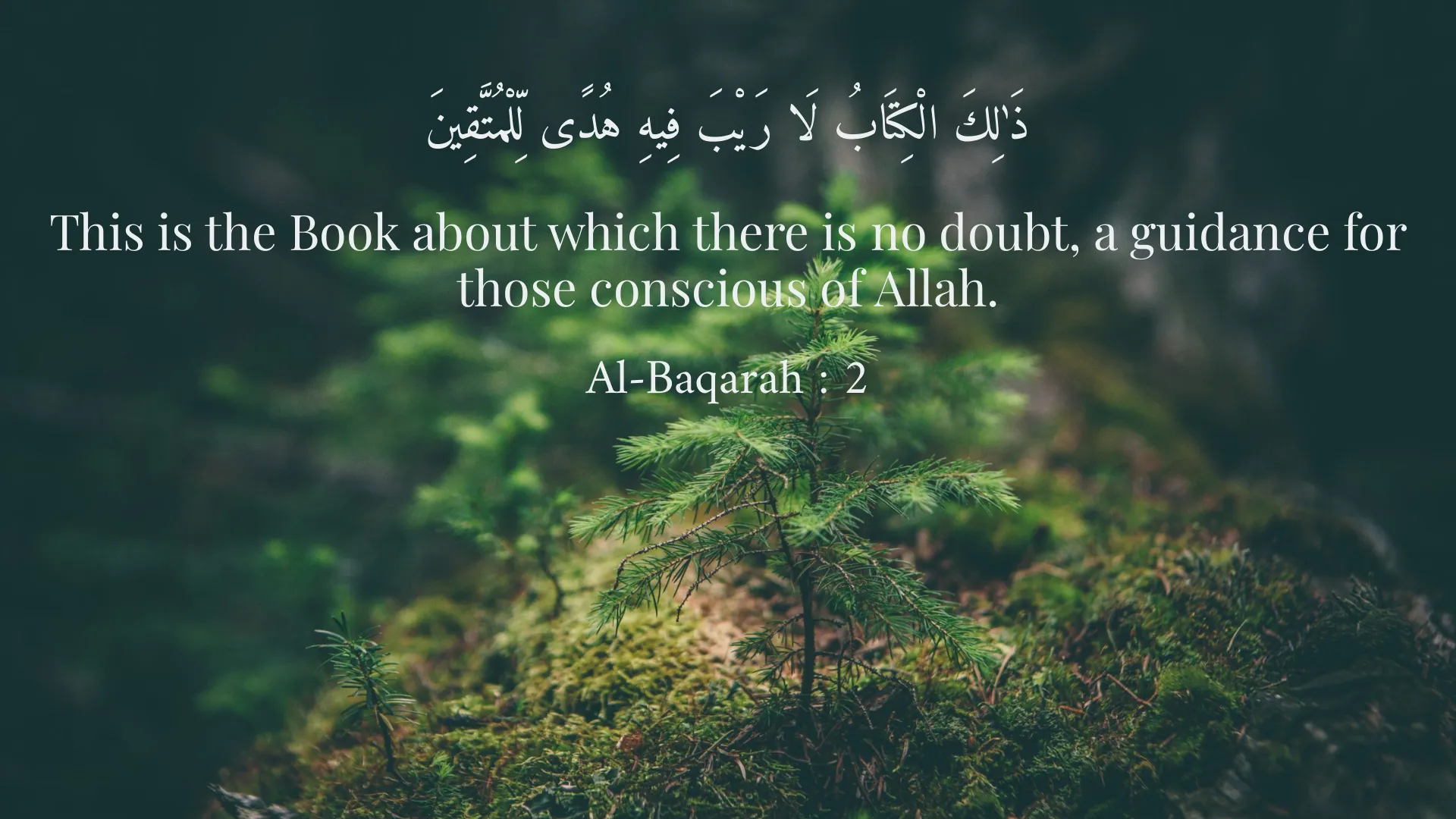
ذَٰلِكَ الْكِتَابُ لَا رَيْبَ فِيهِ هُدًى لِّلْمُتَّقِينَ
This is the Book about which there is no doubt, a guidance for those conscious of Allah.
Al-Baqarah : 2
إِنَّا هَدَيْنَاهُ السَّبِيلَ إِمَّا شَاكِرًا وَإِمَّا كَفُورًا
Indeed, We guided him to the way, whether grateful or ungrateful.
Al-Insan : 3
وَعَلَى اللَّهِ قَصْدُ السَّبِيلِ وَمِنْهَا جَائِرٌ ۚ وَلَوْ شَاءَ لَهَدَاكُمْ أَجْمَعِينَ
And upon Allah is the direction of the [right] way, and some [paths] are deviating. And if He willed, He would have guided you all.
An-Nahl : 9
Short Story
It is narrated that in ancient times, a learned and devout man lived alone in the mountains, believing that with his intellect and knowledge, he could solve any problem and had no need for others' guidance. One day, he became lost on a path he had never taken before. The more he struggled, the deeper he sank into darkness and confusion. Suddenly, an old man appeared from afar and kindly showed him the right way. The learned man humbly realized that even the most knowledgeable individuals sometimes require external guidance, and this inherent human need for direction, especially from the Wise Creator, is ingrained in his very being. From then on, he was never arrogant and understood that only divine guidance is the true pathfinder.