Quranic Answer
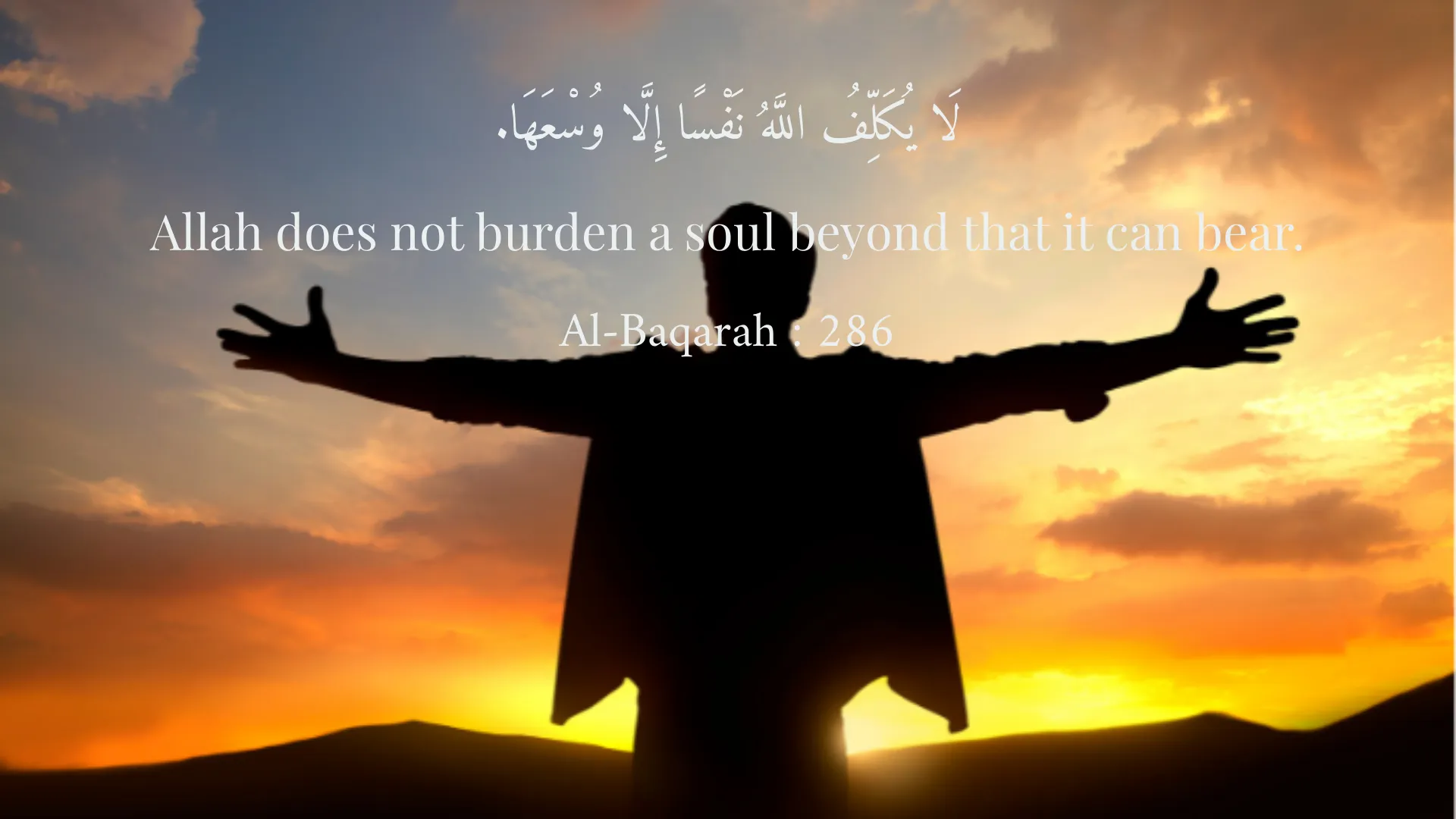
In the Holy Quran, which is revered as the ultimate guide for Muslims, there lies a profound emphasis on the significance of faith and submission to the wisdom of Allah (God). These themes resonate deeply throughout the text, offering insights into the nature of human existence and the divine plan that governs it. One of the pivotal verses that epitomizes this concept is found in Surah Al-Baqarah, verse 286, which states: 'Allah does not burden a soul beyond that it can bear.' This powerful statement serves as a cornerstone for understanding the relationship between human beings and their Creator. It assures believers that all events in human life are meticulously monitored by divine authority and are in alignment with God’s ultimate wisdom. The verses of the Quran emphasize that life’s challenges and tribulations are not arbitrarily inflicted upon human beings; rather, they are part of a greater divine plan that aims to test and refine individuals. The concept of being burdened only with what one can bear reassures believers that they are never alone in their struggles. The trials and tribulations they face are a reflection of their strength, allowing them to grow, learn, and develop resilience. This verse urges individuals to have faith in God’s wisdom and to recognize that hardships are often blessings in disguise, serving a higher purpose in the tapestry of life. Further exploring this theme, we turn to Surah Al-Imran, verse 54, which states: 'And [the disbelievers] planned, but Allah planned. And Allah is the best of planners.' This verse elucidates a crucial aspect of human existence: the limitations of human understanding when it comes to divine wisdom. While it is natural for individuals to formulate plans and ambitions, it is essential to remember that these plans might not always align with divine will. God, in His infinite wisdom, possesses a perspective that transcends human comprehension. This highlights the importance of humility and surrendering to God's wisdom. Questioning God’s wisdom can lead to feelings of despair and confusion, as human beings often grapple with the challenges that life presents. The Quran teaches that man’s understanding is inherently limited, and thus, attempting to question the divine plan is not only inappropriate but ultimately incorrect. Instead, believers are encouraged to cultivate a sense of unwavering trust in Allah's wisdom and mercy. This requires accepting that many events in life are beyond one’s control and that divine wisdom ultimately prevails. The trials faced in life are not merely obstacles but serve as tests of faith. They challenge individuals to rise above their circumstances and to embody patience and resilience. As articulated in another hadith by Prophet Muhammad (peace be upon him), 'A believer is one who is satisfied with God's decree in all circumstances.' This statement echoes the sentiment that true faith lies in accepting the decree of God, regardless of life's ups and downs. It encapsulates the essence of submission – the act of recognizing and accepting that one's own understanding is limited. Through the lens of Islamic teachings, the act of surrendering to God's will becomes not only a demonstration of faith but also a pathway to inner peace and tranquility. By acknowledging God’s plan, believers can find solace in the midst of chaos, knowing that they are part of a grander narrative that transcends their immediate understanding. The challenges and difficulties faced in this life are part and parcel of personal and spiritual development. Bearing witness to the trials endured by figures in the Quran, such as Prophet Job (Ayub) and Prophet Muhammad (peace be upon him), illustrates how patience in the face of adversity can lead to profound spiritual rewards. Such teachings resonate with the fundamental principles of Islam: that life is a combination of joy and sorrow, ease and hardship. It is through these contrasts that individuals fully understand the divine lessons imparted upon them. Furthermore, the notion of divine wisdom forms the bedrock of Islamic belief, urging individuals to reflect on their own lives and the broader world around them. Moreover, the Quran emphasizes the importance of community and collective faith. Believers are encouraged to support one another in their trials, reminding each other of God’s mercy and wisdom. Engaging in acts of charity, communal prayers, and mutual support fosters an environment where individuals can collectively navigate their struggles while remaining anchored in faith. This communal aspect reinforces the idea that faith is not merely an individual journey but a shared experience that enriches the lives of all believers. Building on this sense of community, the Quran advocates for resilience in the face of challenges by illustrating examples of previous communities that overcame adversity through their collective faith and trust in God. These narratives serve as reminders of the continuous cycle of trials and triumphs that characterize human existence, encouraging believers to remain steadfast in their faith and trust in God's plan. In conclusion, the teachings of the Quran regarding faith and submission to God's wisdom serve as a profound guide for navigating the complexities of life. The verses like Surah Al-Baqarah 286 and Surah Al-Imran 54 elucidate the essence of divine wisdom and the human experience. Believers are urged to accept the challenges they face as part of a larger divine plan, trusting in Allah's wisdom and mercy. Ultimately, true faith manifests in the ability to surrender to God's will, embodying patience and resilience in both joyous and difficult times. Through these teachings, individuals are reminded of the strength to be found in faith, the importance of community, and the beauty of trusting in God's ultimate plan for their lives.
Related Verses
لَا يُكَلِّفُ اللَّهُ نَفْسًا إِلَّا وُسْعَهَا.
Allah does not burden a soul beyond that it can bear.
Al-Baqarah : 286
وَمَكَرُوا وَمَكَرَ اللَّـهُ ۗ وَالَّـهُ خَيْرُ الْمَاكِرِينَ.
And [the disbelievers] planned, but Allah planned. And Allah is the best of planners.
Al-Imran : 54
Short Story
One day, a man named Hossein faced difficulties in his life and wondered why these problems had come his way. He felt hopeless until one day he began to recite the Quran and came across the verse that states: 'Allah does not burden a soul beyond that it can bear.' This verse brought him peace and hope. Hossein realized that God is just and His wisdom transcends human understanding. He decided to be patient with his challenges and do his best within his capabilities.