Quranic Answer
The question of whether it is possible to know God, and to what extent, has been one of the most profound and fundamental human inquiries throughout history. The Holy Quran, with its eloquent and heartwarming narrative, not only affirms the possibility of knowing God but also outlines various pathways to achieve this profound understanding. Simultaneously, it clearly delineates the limits of this knowledge, emphasizing that God's infinite essence transcends human comprehension. In essence, the knowledge of God is not merely possible; it is the ultimate purpose of creation and the primary goal of human life, and the Quran illuminates multiple paths to attain this sacred knowledge. One of the most significant avenues for knowing God in the Quran is through contemplation of His 'signs in the horizons and within ourselves' (Ayat al-Afaqi wal-Anfus). In numerous verses, God invites humanity to reflect upon and ponder the creation of the heavens and the earth, the alternation of night and day, the movement of stars, the order governing the cosmos, the cycles of life and death, the creation of living beings, and the intricacies of the human body. Every particle in the universe, from the smallest atom to the boundless galaxies, from the most delicate cellular structure to the complexities of the human brain, all serve as signs of the Creator's infinite knowledge, power, wisdom, and meticulous planning. The Quran states: "We will show them Our signs in the horizons and within themselves until it becomes clear to them that it is the truth" (Surah Fussilat 41:53). This verse clearly indicates that God reveals His signs both in the world around us and within our own beings, so that the truth of His existence becomes manifest. This contemplation of creation not only leads to an acknowledgment of Divine power but also guides humanity towards recognizing the beauty and perfection of the Lord, as the grandeur, order, and beauty of creation constantly point to a Wise and Omnipotent Creator. The more we delve into these signs, the more we perceive the active presence of a wise and powerful Creator. Another path to knowing God is through His 'Most Beautiful Names and Attributes' (Asma al-Husna). God has introduced Himself through ninety-nine beautiful names, each of which reflects an aspect of His infinite perfection. From 'Ar-Rahman' and 'Ar-Rahim,' which manifest His vast mercy, to 'Al-Aleem,' signifying His boundless knowledge; 'Al-Hakeem,' indicating His unparalleled wisdom; 'Al-Khabir,' denoting His awareness of the seen and unseen; and 'Al-Qadeer' and 'Al-Jabbar,' demonstrating His absolute power. Understanding these attributes not only provides us with a clearer image of God but also profoundly influences our character and conduct. When we know that God is 'As-Sami'' (The All-Hearing) and 'Al-Baseer' (The All-Seeing), we feel His constant presence and surveillance, an awareness that calls us to piety and righteousness. Knowledge of these attributes helps us establish a deeper connection with God and fosters greater trust and reliance upon Him. Each name opens a new window into Divine knowledge, and the more familiar we become with these attributes, the deeper our understanding of God becomes. 'Revelation and Prophets' also serve as unparalleled tools for knowing God. The Holy Quran is the direct word of God, revealed through Gabriel to the heart of Prophet Muhammad (peace be upon him). This divine book presents itself as a complete guide for humanity, not only addressing the knowledge of God and His attributes but also outlining the correct path of life, divine laws, and moral teachings. The Prophets of God, through their lives, provided the best practical examples of how to know and obey God. They embodied divine attributes in their actions and invited people to monotheism and a God-conscious life. Studying the Quran and the life of the Prophets helps us gain a deeper understanding of Divine will, the purposes of creation, and how to establish a relationship with the Creator. However, it is crucial to address the question of 'to what extent?' The knowledge of God in the Quran is always accompanied by an emphasis on 'Tanzih' (transcendence – declaring Him free from any imperfection or resemblance to creation). God states: "There is nothing like unto Him" (Surah Ash-Shura 42:11). This means that the finite human mind can never fully comprehend or encompass the boundless and infinite essence of God. Our knowledge of God is always through His effects and attributes, not through encompassing His essence. It is akin to perceiving the effects of the sun (light, warmth) and knowing its existence, but being unable to directly gaze at its core or hold it in our hands. This limitation is not a human deficiency but a testament to God's grandeur and uniqueness. The purpose of knowing God is to attain 'Ma'rifatullah,' which leads to faith, awe, love, trust, and submission, not to encompass His infinite being. The deeper this knowledge becomes, the greater the inner peace, spiritual insight, and guidance on the path of truth will be. Ultimately, knowing God is an endless journey, where every step taken illuminates the light of knowledge and enriches life. This knowledge is gained through observing the universe, contemplating oneself, delving into divine revelation, and following the guidance of the Prophets. It leads to proximity to God and a life full of meaning and purpose. This journey is a path for human spiritual and moral growth, guiding humanity from the darkness of ignorance towards the light of knowledge, allowing individuals to understand their true place in existence and build their lives according to the Creator's will. The further one progresses on this path, the deeper their understanding of God becomes, and their life will be more meaningful and peaceful.
Related Verses
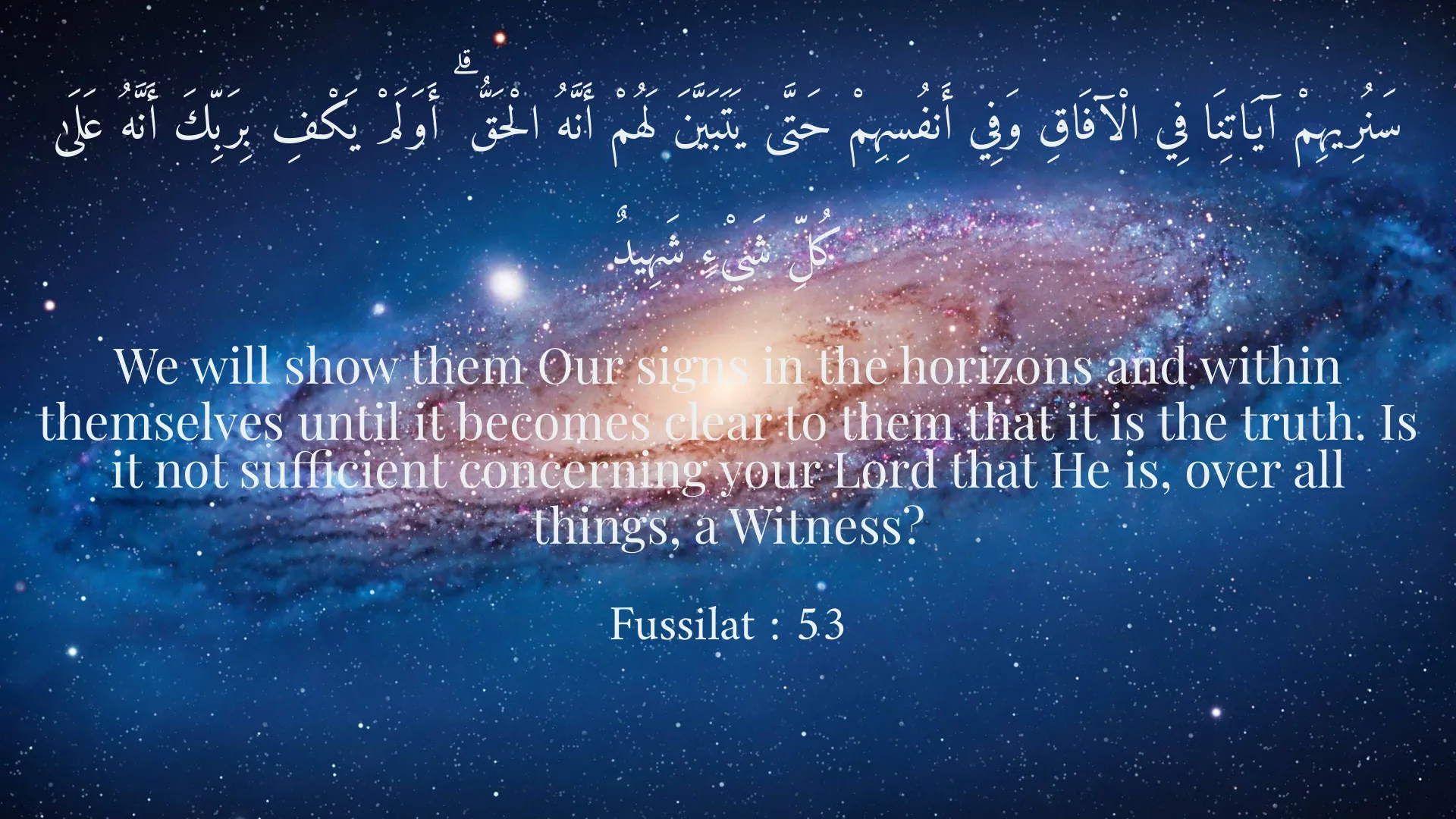
سَنُرِيهِمْ آيَاتِنَا فِي الْآفَاقِ وَفِي أَنفُسِهِمْ حَتَّى يَتَبَيَّنَ لَهُمْ أَنَّهُ الْحَقُّ ۗ أَوَلَمْ يَكْفِ بِرَبِّكَ أَنَّهُ عَلَىٰ كُلِّ شَيْءٍ شَهِيدٌ
We will show them Our signs in the horizons and within themselves until it becomes clear to them that it is the truth. Is it not sufficient concerning your Lord that He is, over all things, a Witness?
Fussilat : 53
اللَّهُ لَا إِلَٰهَ إِلَّا هُوَ الْحَيُّ الْقَيُّومُ ۚ لَا تَأْخُذُهُ سِنَةٌ وَلَا نَوْمٌ ۚ لَهُ مَا فِي السَّمَاوَاتِ وَمَا فِي الْأَرْضِ ۗ مَن ذَا الَّذِي يَشْفَعُ عِندَهُ إِلَّا بِإِذْنِهِ ۚ يَعْلَمُ مَا بَيْنَ أَيْدِيهِمْ وَمَا خَلْفَهُمْ ۖ وَلَا يُحِيطُونَ بِشَيْءٍ مِّنْ عِلْمِهِ إِلَّا بِمَا شَاءَ ۚ وَسِعَ كُرْسِيُّهُ السَّمَاوَاتِ وَالْأَرْضَ ۖ وَلَا يَئُودُهُ حِفْظُهُمَا ۚ وَهُوَ الْعَلِيُّ الْعَظِيمُ
Allah - there is no deity except Him, the Ever-Living, the Sustainer of [all] existence. Neither drowsiness overtakes Him nor sleep. To Him belongs whatever is in the heavens and whatever is on the earth. Who is it that can intercede with Him except by His permission? He knows what is [present] before them and what will be after them, and they encompass not a thing of His knowledge except for what He wills. His Kursī extends over the heavens and the earth, and their preservation tires Him not. And He is the Most High, the Most Great.
Al-Baqarah : 255
وَلَمْ يَكُن لَّهُ كُفُوًا أَحَدٌ
Nor has there ever been unto Him any equal.
Al-Ikhlas : 4
Short Story
It is said that one day in Shiraz, a wise man asked Saadi: “How can one know God, when no eye can behold Him?” Saadi smiled gently and said: “My friend, have you ever walked in gardens and seen the flowers, trees, and birds?” The man replied: “Yes, countless times.” Saadi said: “Does not every flower and plant bear witness to the existence of a wise and capable gardener, even if you do not see the gardener with your own eyes?” The man answered: “Indeed, it is so.” Saadi continued: “Then look at this boundless universe, at its starry sky, its radiant sun and moon, its surging seas and lofty mountains, its thousands of species of animals and plants, and at the precise and astonishing order of each. Does not all this order, beauty, and grandeur speak of the existence of a unique Creator, even if His essence is hidden from sight? When His effects are manifest, His existence cannot be denied. What must be known is that He is so great and unparalleled that our limited understanding cannot encompass His essence, but knowing His attributes and actions brings us closer to Him and fills our hearts with love and faith.” The man was enlightened by Saadi's words and saw the path of knowledge more clearly.