Quranic Answer
In the realms of spirituality and intellect, the interplay of knowledge and faith plays a pivotal role, significantly influencing the ethical framework and societal development within human communities. The Holy Quran embodies this intricate connection, illustrating through profound verses how knowledge and faith are not standalone entities but rather intertwined components that enrich human existence. This article delves deep into the discourse surrounding knowledge and faith in the Quran, particularly focusing on the teachings found in Surah Al-Mu'minun and Surah Ibrahim. ### The Genesis of Knowledge: Surah Al-Mu'minun, Verse 14 Surah Al-Mu'minun opens a pathway to understanding the divine perspective of the creation of man when it states how Allah formed humanity from a drop of fluid and gradually bestowed knowledge and awareness. This verse does not merely narrate the physical creation but implies a gradual journey towards intellectual enlightenment and spiritual awakening. This initiation into knowledge establishes a direct link between our existence and divine influence, suggesting that with every increment in understanding, there exists a connection to a higher purpose. The verse underscores the notion that our emergence from a simple beginning into beings capable of profound cognition highlights the divine intention behind human creation. Faith in God, complemented by awareness of His presence and teachings, empowers individuals to engage with knowledge on a deeper level. It creates a foundation for ethical considerations that guide the use of knowledge in such a manner that it contributes positively to humanity. ### The Dangers of Knowledge Without Faith Knowledge, while a powerful tool for enlightenment and development, poses significant risks when divorced from moral and ethical frameworks. The Quran warns against the potential misuses of knowledge in its absence of faith. Firstly, knowledge lacking in ethics can emerge as a double-edged sword, leading to social discord and human suffering. Historically, we witness instances where scientific advancements, without ethical considerations, have been employed for destructive purposes, whether in warfare or exploitation. The application of knowledge in these contexts illustrates its potential to harm when divorced from a foundation of ethical responsibility rooted in faith. Secondly, knowledge detached from divine guidance can lead individuals and societies astray. Surah Ibrahim, verse 30, encourages believers to refrain from associating with disbelievers and their wrongful desires. This guidance signifies that knowledge is not merely a pursuit of facts and data; rather, it is paramount that knowledge aligns with the divine principles established by God. Consequently, knowledge devoid of faith risks directing individuals towards a path of moral degradation, illustrating the potential for profound societal disruption. ### Fostering Ethical Engagement with Knowledge Understanding knowledge through the lens of faith allows individuals to leverage their insights and education towards serving humanity adequately. The complementary nature of faith and knowledge promotes a holistic approach where individuals are not just repositories of information but become active agents of positive change. This perspective urges a commitment to ethical responsibility—a constant reminder that knowledge, when coupled with faith, has the potential to be a catalyst for social justice and humanitarian efforts, fostering compassion, understanding, and cooperation among diverse communities. Faith fuels the pursuit of knowledge by providing a moral compass; consequently, education grounded in ethical values can guide researchers, scientists, and scholars in their endeavors towards creating advancements that benefit humanity. The interplay between faith and knowledge cultivates a culture of empathy as individuals are encouraged to seek out understanding not solely for personal gain but for the enrichment of humanity as a whole. ### Achieving Growth Through the Divine Path The Quran advocates for a life lived in pursuit of knowledge while remaining steadfast in faith. This duality sustains a path of growth and advancement, encouraging individuals to seek wisdom and understanding as integral to their spiritual journeys. Faith anchors knowledge in a framework that promotes harmony, justice, and compassion, enabling believers to navigate the complexities of the world while adhering to divine principles. Surah Al-Mu'minun affirms this interconnectedness, guiding believers to explore knowledge in a manner that is respectful, ethical, and aligned with God’s purpose for humanity. Knowledge becomes not just an academic endeavor but a spiritual journey that enhances one's understanding of God and humanity, forging a bridge between intellect and belief. ### Conclusion: The Essence of Harmonious Existence In conclusion, the teachings of the Holy Quran offer invaluable insights into the symbiotic relationship between knowledge and faith. It is evident that knowledge acts as a potent instrument for human development when it emerges from a foundation of faith and ethical values. The dangers of knowledge without faith underscore the necessity of moral discernment in our pursuit of truth. Therefore, it is incumbent upon individuals to incorporate faith into their quest for knowledge, ensuring that their discoveries lead to the betterment of humanity and contribute to a harmonious and just society. The Quran serves as a guiding light, reminding believers that true knowledge is achieved not in isolation but rather in conjunction with faith, ultimately fulfilling the divine purpose of creation.
Related Verses
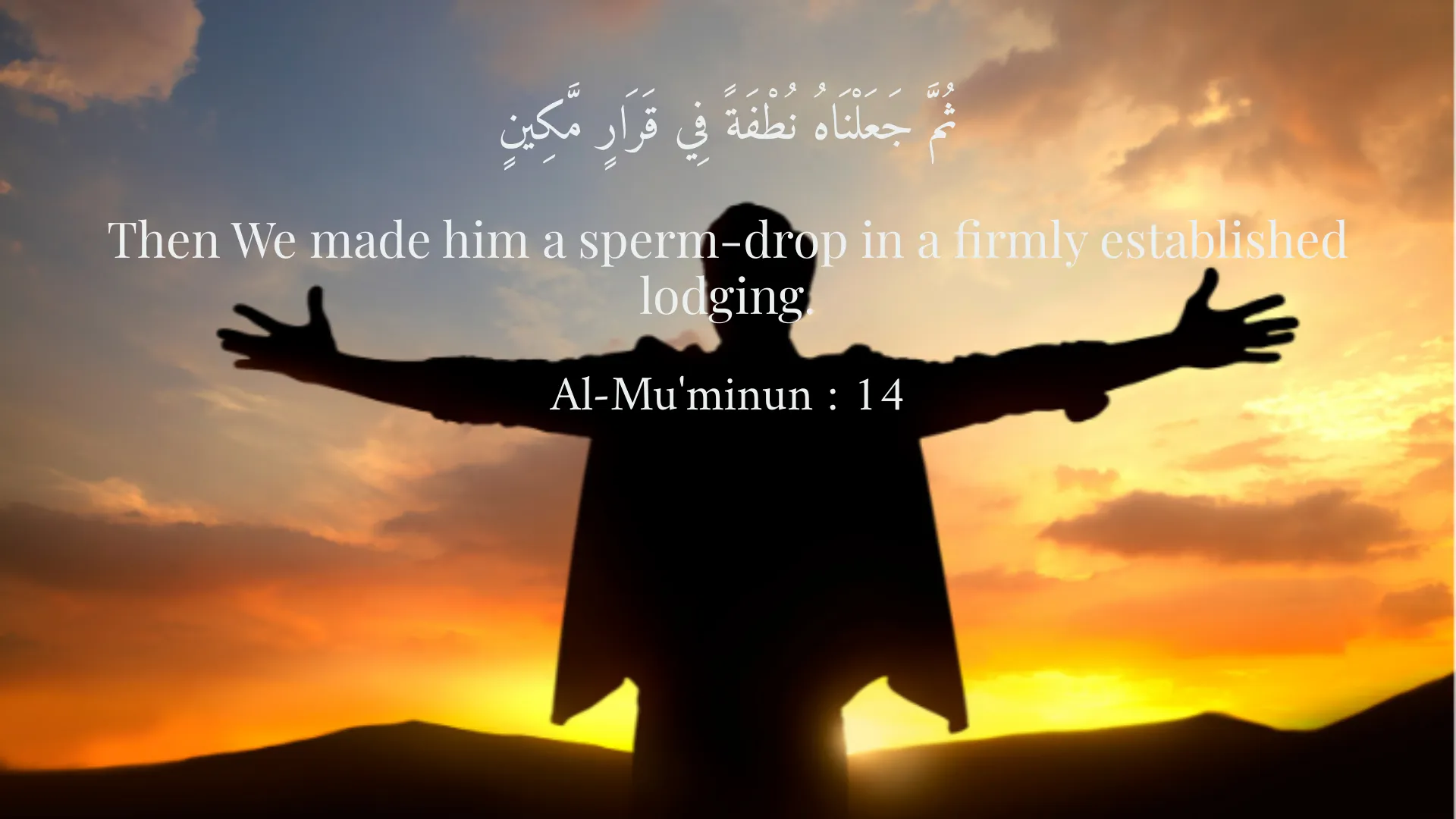
ثُمَّ جَعَلْنَاهُ نُطْفَةً فِي قَرَارٍ مَّكِينٍ
Then We made him a sperm-drop in a firmly established lodging.
Al-Mu'minun : 14
إِنَّ اللَّهَ أَمَرَكُمْ أَلَّا تَعْبُدُوا إِلَّا إِيَّاهُ وَبِالْوَالِدَيْنِ إِحْسَانًا
Indeed, Allah has commanded you to not worship except Him, and to parents, good treatment.
Ibrahim : 30
Short Story
A story from Saadi: Once a great scholar was teaching religious sciences when a young man approached him and asked, 'Can knowledge be valid without faith?' The scholar replied, 'Knowledge is like a seed; without water and soil, it cannot grow. Faith is the water and soil.' Upon hearing this, the young man realized the importance of faith in knowledge and decided to attend religious circles to learn knowledge with faith.