Quranic Answer
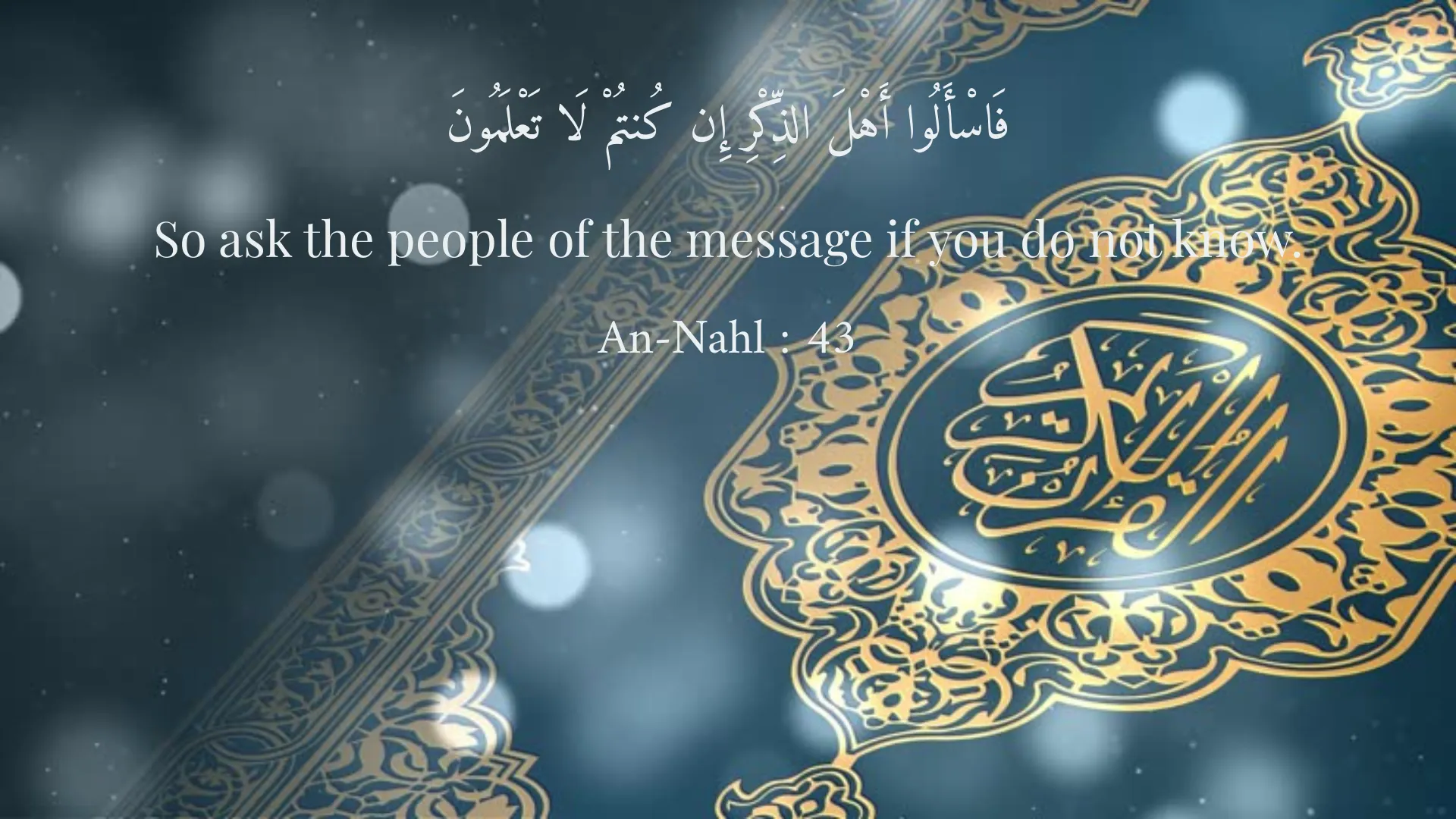
The Holy Quran, regarded as the literal word of God by Muslims, stands as a profound source of knowledge and guidance for billions around the world. This sacred text, composed over 1400 years ago, is not only a spiritual guide but also encompasses various scientific themes within its verses. As we delve deeper into the connections between the Quran and science, it becomes evident that the Quran places immense significance on knowledge, urging believers to actively seek it out. In Surah An-Nahl, verse 43, Allah articulates: 'So ask the people of the message if you do not know.' This verse serves as a directive for individuals to engage in inquiry and to expand their understanding through exploration and questioning. The essence of this message is to acknowledge that ignorance is not a virtue, and that the pursuit of knowledge is a commendable quest within the framework of faith. Similarly, in Surah Az-Zumar, verse 9, the Quran poses a rhetorical question that emphasizes the importance of knowledge: 'Are those who know equal to those who do not know?' This clear distinction between the knowledgeable and the ignorant underscores the high regard for knowledge in Islam. It encourages individuals to strive towards intellectual growth and enlightenment. This perspective aligns with the fundamental Islamic principle that the quest for knowledge is obligatory for every Muslim, irrespective of gender or background. Moreover, modern scientific discoveries frequently echo themes present in the Quran, revealing a harmonious relationship between religious teachings and empirical findings. For example, theories of cosmology describing the origin of the universe parallel Quranic references to the creation of the heavens and the earth. The Big Bang theory, which suggests that the universe originated from a singular point, resonates with Quranic verses indicating that the heavens and the earth were once a unified entity. Such correlations highlight that the Quran does not stand in opposition to science, but rather complements it. In the realm of biology, contemporary discoveries about the development of life and the intricacy of biological systems echo Quranic affirmations. Verses in the Quran describe the creation of living beings and the intricate processes that govern life in ways that are remarkably consistent with modern biological understanding. For instance, the Quran elaborates on the stages of embryonic development, which aligns with current scientific explanations and research findings. This not only demonstrates the Quran's knowledge of biological processes but also advocates a perspective where science and religion can coexist and enhance each other’s understanding. Furthermore, the field of medicine has also benefited from the Islamic emphasis on knowledge. The Quran encourages not only the pursuit of knowledge but also its application for the betterment of humanity. The encouragement towards seeking knowledge can facilitate advancements in medicine as professionals utilize their understanding to alleviate suffering and improve health outcomes. The Islamic Golden Age witnessed monumental strides in medicine, as scholars sought to harmonize Islamic teachings with medical practices, setting foundational principles that are still relevant today. The relationship between religion and science extends beyond mere acknowledgment of compatibility; it underscores the holistic nature of understanding existence. The Quran emphasizes that understanding the natural world is part of comprehending the divine. This perspective serves as a reminder that science and religion are not mutually exclusive but are, in fact, intertwined in a way that contributes significantly to the broader meaning of life. Both domains encourage inquiry, critical thinking, and an understanding of the universe and our place within it. In addition, the Quran presents the natural world as a sign of God's creation. In multiple verses, believers are invited to reflect on the wonders of creation—from the vastness of the universe to the microscopic intricacies of life. This reflective approach not only fosters a sense of awe and reverence towards the Creator but also encourages scientific exploration. For instance, Surah Al-Imran highlights contemplative observation: 'Indeed, in the creation of the heavens and the earth and the alternation of the night and the day are signs for those of understanding.' Such verses challenge believers to engage actively with the world and seek scientific explanations while reinforcing faith through their discoveries. As we approach the interplay between Quranic teachings and modern science, it is essential to recognize that both realms are fueled by a shared quest for understanding. The Quran inspires believers to seek knowledge as an Islamic duty, while modern science aids in comprehending the mechanisms of creation and natural systems. This symbiotic relationship serves to deepen one's faith and knowledge, enriching both the spiritual and intellectual dimensions of life. The continuous pursuit of knowledge, be it through science or religious reflection, enhances our understanding of existence, our responsibilities towards it, and ultimately leads us closer to the divine. In conclusion, the Holy Quran emerges not only as a spiritual guide but as a comprehensive source of wisdom that emphasizes the importance of knowledge. The enduring relationship between the teachings of Islam and scientific inquiry highlights that knowledge is a noble pursuit, fundamental to both understanding God's creation and enhancing our lives on Earth. As believers engage with both realms, they embrace a holistic view of existence—a view that fosters growth, discovery, and a deeper connection to the divine. The Quran's call to knowledge serves as a reminder for all of humanity to explore, learn, and reflect—a testament to the intertwined nature of science and faith which collectively contribute to the meaningful journey of life.
Related Verses
فَاسْأَلُوا أَهْلَ الذِّكْرِ إِن كُنتُمْ لَا تَعْلَمُونَ
So ask the people of the message if you do not know.
An-Nahl : 43
هَلْ يَسْتَوِي الَّذِينَ يَعْلَمُونَ وَالَّذِينَ لَا يَعْلَمُونَ
Are those who know equal to those who do not know?
Az-Zumar : 9
Short Story
One day, a young science student was reading the Quran and noticed fascinating scientific verses that demonstrated the compatibility of science and religion. After reading the verses, he decided to pursue his studies in natural sciences and aimed to achieve a deeper understanding of creation and existence. This experience not only enhanced his knowledge but also strengthened his faith in God.