Quranic Answer
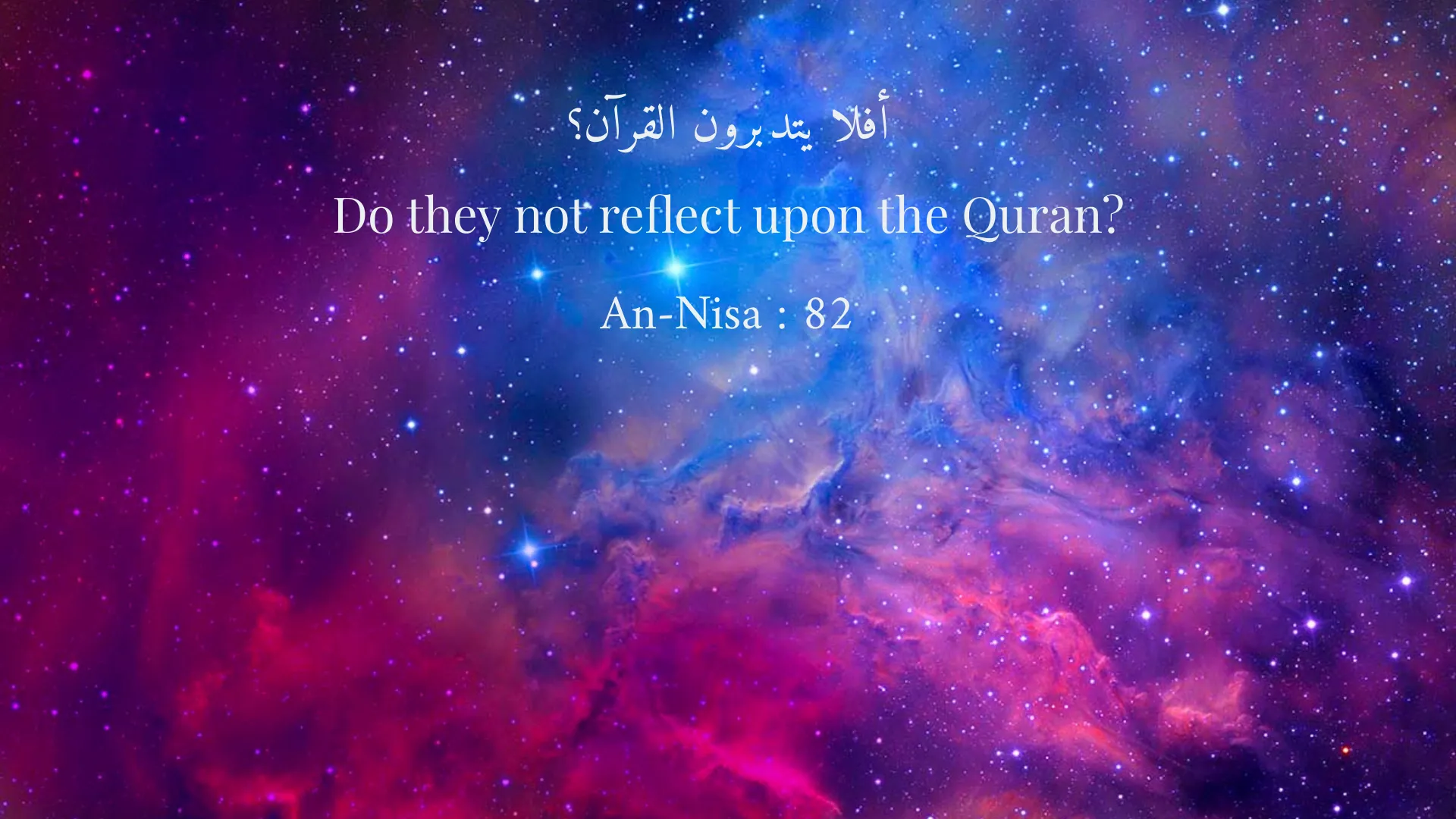
The Quran, revered by Muslims as the ultimate source of divine guidance, is not merely a text meant for vocal recitation; it is a compendium of deep, life-altering wisdom that requires time, patience, and intellectual engagement to fully comprehend. This sacred scripture, compiled over a span of 23 years, has a unique ability to address the human condition at its core, guiding its followers toward a life of moral integrity, spirituality, and social justice. As emphasized in verse 82 of Surah An-Nisa, wherein Allah challenges believers with the rhetorical question, 'Do they not reflect upon the Quran?', it is clear that the act of reflection is not only encouraged but is essential for a fulfilling spiritual journey. Reflection on the Quran invites believers into a profound dialogue with the text, urging them to ponder its meanings and implications deeply. Simply reciting verses without attempting to understand their essence diminishes the value of this divine communication. In the hustle of modern life, many may find themselves caught in the routine of recitation while losing sight of the necessity to engage with the content on a deeper level. Yet, the Quran is not a static artifact of religious practice but a living, breathing guide designed to inspire and lead individuals toward a more profound existence. Consider the example of the great Islamic scholars and thinkers throughout history, many of whom have devoted their entire lives to the rigorous study and interpretation of the Quran. Figures such as Imam Al-Ghazali and Ibn Kathir shaped Islamic thought by delving into the nuances of the text and drawing connections between its verses and the broader scope of human experience. Their work exemplifies the principle that the Quran must be approached with a spirit of inquiry and a desire not only to grasp its meanings but also to apply its teachings in a practical manner. In verse 29 of Surah Sad, God further asserts, 'This is a Book We have sent down to you so that you may give a warning to people.' This statement underlines the multifunctional role of the Quran—not just as a reminder for the faithful but also as a moral compass intended for society at large. This clarion call compels Muslims to move beyond mere personal spirituality toward communal responsibility. The wisdom imparted by the Quran is a means to promote social justice, encourage altruism, and foster compassionate relationships between individuals. It engages readers in the urgent questioning: what do these verses instruct us to do in our daily lives? The Quran, as a guide, pushes us to discover ethical practices that resonate within the framework of justice and compassion. It seeks individuals who are not just passive recipients of divine words but active participants in rectifying the various social and moral dilemmas prevalent today. As such, reflection on the Quran necessitates a conscious effort to translate understanding into action. This reflection is akin to 'tadabbur'—a term commonly invoked in Islamic teachings that highlights contemplation and ponderous exploration of meanings. Achieving this type of profound understanding does not occur in isolation; rather, it thrives in discussions and dialogues, where communal reflection can flourish. Engaging with a community of believers encourages a collaborative approach to reading the Quran. Study circles and Quran classes, where people from different walks of life come together, unlock different perspectives and interpretations. These gatherings instill a culture of curiosity, encouraging participants to ask questions and explore differing viewpoints about particular verses. Moreover, personal reflection requires sincerity of intention—an understanding that divine guidance is not meant to serve selfish needs but rather to elevate one's character and impact those around them positively. In moments of quiet contemplation, one might find that certain verses resonate deeply with their personal experiences and challenges. By inviting these verses into our thoughts, there is potential for hardship to be alleviated as faith and divine wisdom enlightens the path. The Quran is also a reminder of the importance of humility. When one approaches it with the intent to learn, they often find that the depths of meaning are inexhaustible. New contexts, experiences, and realizations can result in entirely new insights each time one engages with the text. Such humility fosters harmony within oneself and one’s surrounding community, as it necessitates recognizing and appreciating perspectives different from your own. Rituals surrounding the Quran's recitation can also promote a contemplative approach. Setting aside specific times daily to engage with its verses—be it through traditional reading, listening to scholarly interpretations, or participating in group discussions—introduces a sense of discipline and reverence into the process. The reflective practice of journaling one's thoughts and personal reflections on particular passages can deepen one’s understanding and commitment to living by its precepts. In essence, the approach to reading the Quran must be holistic; it involves commitment, reflection, and action for the sake of personal and communal growth. As Allah encourages in Surah Al-Baqarah, 'Indeed, this Quran guides to that which is most suitable.' The emphasis on using the Quran as a guide underscores the necessity of constituent processes. In so doing, lives can be transformed—individuals can cultivate faith, character, compassion, and unity. In conclusion, the Quran is not simply an eloquent recitation meant to beautify the air around us; it is a profound guide demanding active engagement, critical thought, and ongoing reflection. Only through a thoughtful approach can one access the eternal wisdom imbued in its verses, which ultimately leads to a more righteous, compassionate, and fulfilling life. If the ultimate purpose of reading the Quran is to live as better individuals in society—contributing positively and ethically in our interactions with others—then reflection is undeniably an essential step in that journey. Therefore, let us not confine ourselves to the recitation alone; let us embark upon a shared quest for understanding, deeply engaging with the teachings therein to better illuminate ourselves and the world around us.
Related Verses
أفلا يتدبرون القرآن؟
Do they not reflect upon the Quran?
An-Nisa : 82
هذا كتاب أنزلناه إليك لتخرج الناس من الظلمات إلى النور.
This is a Book We have sent down to you to guide people from darkness into light.
Sad : 29
Short Story
Once upon a time, there was a young man named Ali who loved the Quran but was oblivious to the need for reflection. One night, while reading verses of the Quran, he realized how each verse could carry a great lesson. He decided to spend more time pondering over the verses each night. Soon, his life changed, and he felt his connection with God had deepened.