Quranic Answer
In the realm of understanding truth and navigating the realities of existence, few texts have been as pivotal as the Holy Quran. Among its many teachings, the Quran offers a profound perspective on the interrelationship between reason, revelation, and truth-seeking. While it acknowledges the importance of human intellect, it also firmly establishes that individual reasoning must be aligned with divine guidance. This article seeks to explore these themes extensively, providing a comprehensive understanding of how reason and revelation coexist and compliment each other according to Islamic teachings. The idea that reason and rationale play a critical role in understanding the truth is entrenched in Islamic thought. The Quran encourages followers to utilize their intellect, to think critically, and to engage with the world around them. The Quran does not dismiss the role of reason; rather, it elevates it as an essential tool in the quest for understanding. This is exemplified in Surah Al-Baqarah, verse 170, where Allah criticizes those who cling stubbornly to false beliefs, indicating that their failure to utilize reason has led them astray. They have neglected to interrogate the beliefs they hold, failing to employ their innate intellectual faculties to seek the truth. However, this reliance on reason comes with a caveat—individual reasoning must be guided and informed by revelation. The Quran makes it explicitly clear that while human intellect is a gift, it is not infallible. In Surah Al-Maidah, verse 51, believers are warned against forming friendships and alliances with those who operate contrary to their faith. This underscores a critical notion: that reason and religion should not exist in isolation from one another. Rather, they should function in tandem, molding the moral and ethical framework within which believers navigate their lives. Furthermore, human intellect possesses inherent limitations; it cannot fully grasp the complexities and nuances of existence. Allah created humans with the capacity for thought and reasoning, but He also endowed them with a source of ultimate guidance—the divine revelation. Engaging in critical thought without the anchoring of divine principles can lead to errant conclusions and moral confusion. The Quran stresses the importance of recognizing these limitations and understanding that true insight and knowledge are derived from a higher source. In Surah Al-Isra, verse 70, Allah proclaims that humans are created as the best of creation. This elevating statement serves as a reminder of the potential ingrained in every individual. However, it also highlights the responsibility that comes with such stature: utilizing one's capacities and initiatives in service of religion and divine guidance. The verse beckons humans to recognize their intellectual abilities and to channel them towards seeking knowledge that aligns with divine will. Indeed, the Quran depicts an array of historical narratives, prophecies, and philosophical inquiries that encourage believers to employ their reasoning in discovering the essence of faith. By contemplating the signs of Allah in nature and within themselves, individuals are invited to engage with life in a manner that goes beyond mere reason—it is a call for a holistic approach that integrates spirituality and intellect. At the heart of Islamic teaching is the idea that reason alone, when detached from religious principles, cannot lead to truth. This delineation is essential, particularly in today's world where secularism and rationalism often contend for dominant paradigms. The contemporary discourse frequently implies that reason is the sole path to understanding reality—an assertion that the Quran challenges. It asserts that while reason is vital, it must be accompanied by faith and divine ordinance to unveil the depths of truth. The integration of reason and revelation invites believers to nurture a continuously evolving relationship with their faith. Engaging with texts, teachings, and discussions within religious frameworks encourages individuals not only to understand the doctrines of their faith but to logically and critically assess their implications in their daily lives. This dynamic interaction fortifies believers against the pitfalls of dogmatism while simultaneously deepening their connection with the divine. Furthermore, the Quran provides numerous examples of prophets who exemplified the harmony between reason and revelation. These figures did not shy away from questioning societal norms or confronting falsehoods with reasoned arguments. Their journeys serve as archetypes for Muslims today to embody—encouraging a spirit of inquiry bounded by faith, which leads to more profound understandings of their religion. In conclusion, the Holy Quran elucidates the intrinsic relationship between reason and revelation as essential tools in the pursuit of truth. Allah emphasizes the importance of intellect while simultaneously highlighting the limitations of human reasoning when divorced from divine guidance. The teachings in Surah Al-Baqarah, Surah Al-Maidah, and Surah Al-Isra showcase the necessity for believers to intertwine personal reasoning with the principles laid out in divine revelation. The best of creation is not merely a status symbol but a call to action—to harness one's intellect within the framework of faith diligently. Ultimately, this balance fosters a mature and reflective faith, allowing individuals to engage with the world dynamically and faithfully.
Related Verses
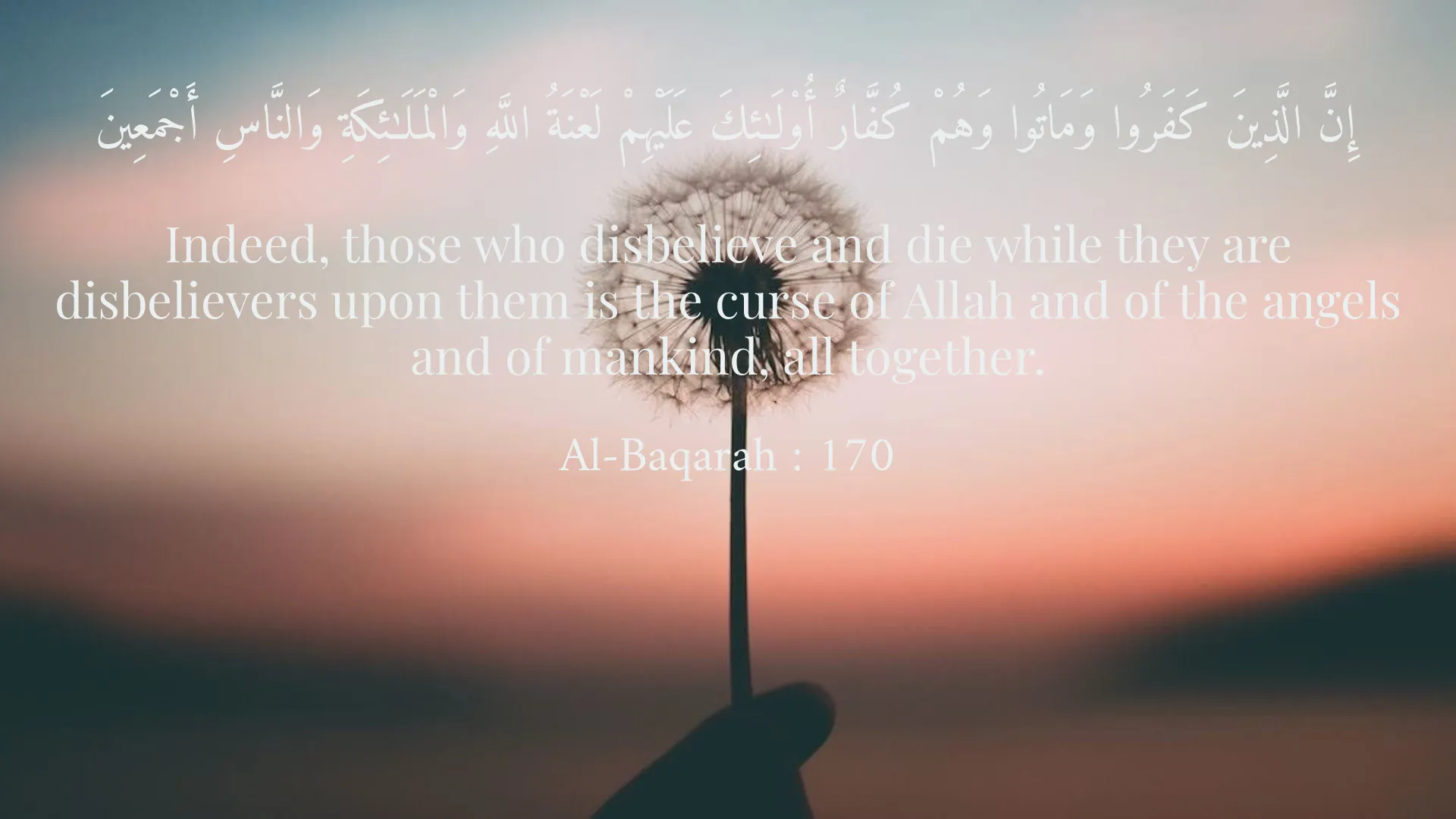
إِنَّ الَّذِينَ كَفَرُوا وَمَاتُوا وَهُمْ كُفَّارٌ أُو۟لَـٰئِكَ عَلَيْهِمْ لَعْنَةُ اللَّهِ وَالْمَلَـٰئِكَةِ وَالنَّاسِ أَجْمَعِينَ
Indeed, those who disbelieve and die while they are disbelievers upon them is the curse of Allah and of the angels and of mankind, all together.
Al-Baqarah : 170
يَا أَيُّهَا الَّذِينَ آمَنُوا لَا تَتَّخِذُوا الْيَهُودَ وَالنَّصَارَى أَوْلِيَاءَ ۚ بَعْضُهُمْ أَوْلِيَاءُ بَعْضٍ ۖ وَمَن يَتَوَلَّهُم مِّنكُمْ فَإِنَّهُ مِنْهُمْ ۗ إِنَّ اللَّهَ لَا يَهْدِي الْقَوْمَ الظَّالِمِينَ
O you who have believed, do not take the Jews and the Christians as allies. They are allies of one another. And whoever of you takes them as an ally - then indeed, he is one of them. Indeed, Allah guides not the wrongdoing people.
Al-Maidah : 51
وَلَقَدْ كَرَّمْنَا بَنِي آدَمَ وَحَمَلْنَاهُمْ فِي الْبَرِّ وَالْبَحْرِ وَرَزَقْنَاهُمْ مِنَ الطَّيِّبَاتِ وَفَضَّلْنَاهُمْ عَلَى كَثِيرٍ مِّمَّنْ خَلَقْنَا تَفْضِيلًا
And We have certainly honored the children of Adam and carried them on land and sea and provided for them good things and preferred them over much of those We created.
Al-Isra : 70
Short Story
Ali was sitting by the sea one day, reflecting on his life and decisions. He realized that he had made many decisions without considering religious principles. Acknowledging this truth, he decided to pay more attention to consulting the Quran and religious advice. Over time, he found a deeper understanding of life and felt a greater sense of peace.