Quranic Answer
The Holy Quran: A Timeless Guide for Humanity The Holy Quran stands as the principal source of guidance for Muslims across all eras and diverse human communities. Its verses, infused with divine wisdom, touch upon every aspect of life, serving not only as a religious text but also as a comprehensive manual for ethical living. Among its myriad of teachings, the phrase from verse 2 of Surah Al-Hajj is particularly significant: 'warn the worlds.' This divine command further elucidates the universality of the Quran's message, indicating that it transcends geographical, cultural, and temporal boundaries. The Quran is not merely a book restricted to historical context; it embodies timeless principles that cater to the multifaceted needs of humanity. In surah Yunus, verse 54, we find a profound declaration: 'This Book is a detailed explanation of everything and a guidance and mercy for the believers.' This verse emphasizes the Quran's role as a thorough guide, providing insights and solutions applicable to various situations, dilemmas, and crises that individuals encounter throughout life. Since its revelation over fourteen centuries ago, the challenges faced by humanity have transformed significantly. However, the Quran's fundamental principles and ethical values continue to hold relevance. This enduring nature of its teachings is a testament to its divine origin, suggesting that while societal contexts may change, the core tenets of morality and guidance outlined in the Quran remain crucial. One of the remarkable features of the Quran is its ability to address the evolving issues of society without compromising its eternal truths. For instance, themes such as justice, compassion, integrity, and the pursuit of knowledge are woven throughout its text. These themes are not relegated to their historical contexts but are adaptable to contemporary society’s moral dilemmas. As human beings grapple with challenges like social injustice, inequality, environmental degradation, and ethical dilemmas in science and technology, the Quran offers perspective and wisdom that can inform thoughtful solutions. Moreover, verse 97 of Surah An-Nahl reinforces this idea by stating, 'We have not sent you except as a mercy for the worlds.' This verse highlights the significance of the Quranic message as an all-encompassing mercy, intended for every segment of humanity, regardless of their background or circumstances. The Islamic faith promotes the notion that the teachings of the Quran should extend beyond the Muslim community, encouraging dialogue, understanding, and compassion among people of all beliefs. Thus, the Quran can be viewed as a roadmap toward a more harmonious world, fostering empathy and mutual respect. The timelessness of the Quran also highlights a juxtaposition between fixed moral principles and an adaptable application of guidance. For example, the teachings regarding charity, reflected in numerous verses, underscore the importance of caring for the less fortunate and contributing to societal well-being. This principle remains unchanged, yet the modalities of delivering aid can evolve to address modern challenges, such as poverty alleviation through technological innovation and global cooperation. The Quran also serves as a source of spiritual nourishment, providing believers with solace, strength, and hope in times of distress. Its verses can be an anchor in turbulent times, urging individuals to maintain faith, patience, and efforts in pursuing righteousness. The repetitive calls to remember the Creator, reflect on His creation, and uphold morality resonate deeply across generations, offering reassurance amidst life’s uncertainties. Furthermore, the intellectual depth of the Quran invites continuous exploration and understanding. Scholars and seekers of knowledge have dedicated their lives to study its meanings and implications, analyzing its verses to extract teachings relevant to various fields, including philosophy, sociology, and even science. This rich tapestry of interpretation demonstrates the Quran’s dynamism, encouraging critical thinking and deep reflection on the human experience. As a living document, the Quran adapts to modern interpretations while fostering an environment of intellectual growth. This characteristic makes it a critical resource in contemporary discussions around ethics, society, and governance. Its teachings can inspire policymakers, community leaders, and individuals engaged in social work to promote justice, peace, and equality based on unwavering moral foundations. In conclusion, the Holy Quran serves as a timeless, universal guide for humanity. Through its overarching themes of morality, justice, and mercy, it encapsulates essential values that remain relevant across various cultures and eras. Its verses provide clarity and comprehensive answers to life’s complexities, urging individuals to reflect: to seek knowledge, practice compassion, and cultivate justice. The Quran invites humanity on a journey that transcends temporal and geographical boundaries, offering guidance and insight for future generations. The promise that it remains a reliable source of wisdom and direction solidifies its status as not only a religious text but a guide for a balanced and ethical way of living in an ever-evolving world.
Related Verses
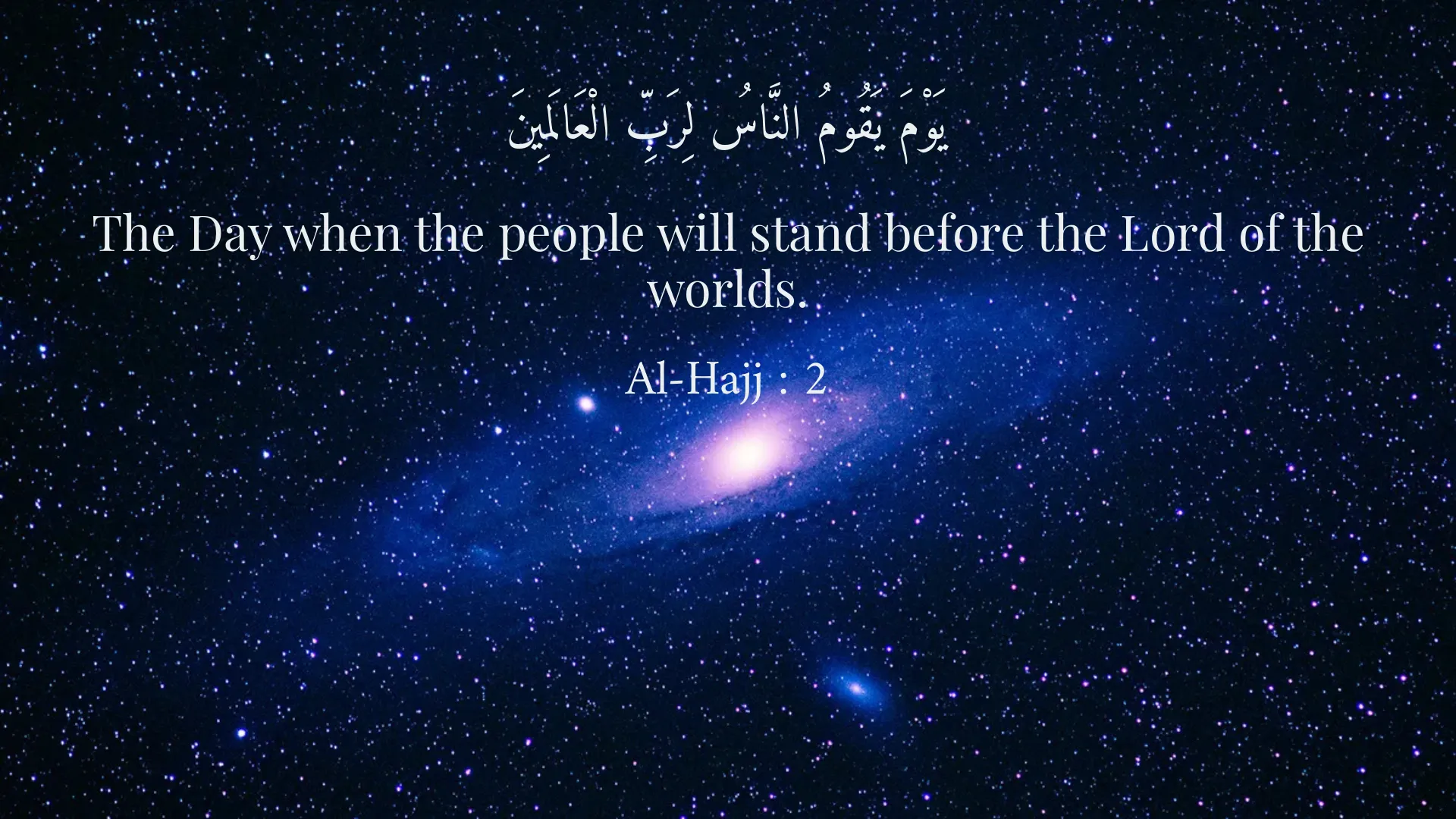
يَوْمَ يَقُومُ النَّاسُ لِرَبِّ الْعَالَمِينَ
The Day when the people will stand before the Lord of the worlds.
Al-Hajj : 2
إِنَّ هَذَا الْكِتَابَ يُبَيِّنُ كُلَّ شَيْءٍ وَهُدًى وَرَحْمَةً لِّلْمُؤْمِنِينَ
Indeed, this Book explains everything and is a guidance and mercy for the believers.
Yunus : 54
إِنَّا أَنْزَلْنَاكَ إِلَى النَّاسِ كَافَّةً
Indeed, We have sent you to all mankind.
An-Nahl : 97
Short Story
Once upon a time, there was a young man named Mahmoud who was searching for an answer to a big question: Are the teachings of the Quran valid for all times? He decided to explore the Quran and after reading several verses, he realized that the Quran was not only a guide for its own time but for all generations. He never felt alone because he found its most important teachings reflected in their lives. This led him to always act based on the Quran in his life and to share it with others.