Quranic Answer
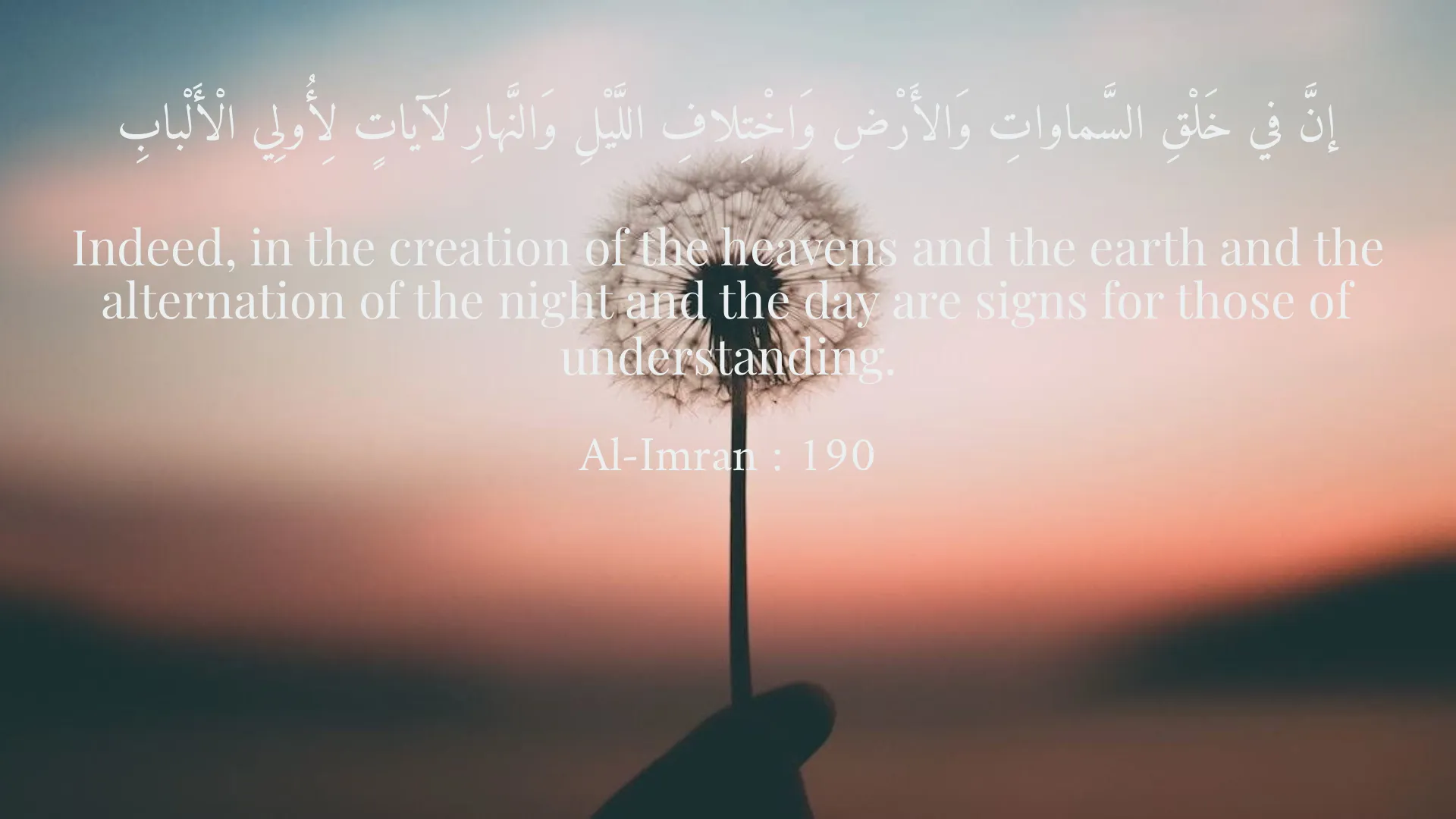
In the Holy Quran, reflecting and contemplating upon the divine verses is regarded not merely as an act of reading, but as a rewarding practice filled with immense virtue. The Quran serves as a guide for humanity, providing wisdom, guidance, and insight into the purpose of existence and the nature of the universe. Emphasizing this importance, Allah calls upon believers to engage with the text critically and thoughtfully, encouraging a deeper understanding of not just the verses themselves, but the meanings and implications embedded within them. In Surah Al-Imran, verse 190, Allah states, 'Indeed, in the creation of the heavens and the earth and the alternation of the night and the day are signs for those of understanding.' This profound verse invites individuals to contemplate the natural world—a world meticulously crafted by the Creator. Such contemplation is not a passive action but a deliberate and engaging process that requires the soul to reflect on the signs of Allah permeating through the creation. The heavens, with their magnificent stars and galaxies, the earth, with its lands and seas, and the cyclical transitions of night and day all serve as signs demonstrating Allah’s omnipotence and wisdom. It is essential for individuals to observe meticulously these signs which serve as reflections of God’s greatness. Diving deeper into the nature of this contemplation, it is crucial to recognize that reflecting on Quranic verses instills awareness and a profound understanding of human existence. The Quran provides a foundational framework designed to guide readers in their journey of life, encouraging them to see the intricate connections between their own lives and the divine teachings. This reciprocal relationship between individual experiences and Quranic wisdom acts as a bridge, guiding believers towards a deliberate practice of reflection and personal growth. Continuing the theme of reflection, in Surah Al-Mu'minun, verse 68, Allah prompts believers by asking, 'Do they not reflect upon themselves?' This verse poses a compelling challenge, encouraging humanity to delve into their own essence and existence. Rather than being mere passive observers of the world around them, individuals are urged to engage in a process of self-reflection. This act of introspection offers the opportunity to assess one’s beliefs, values, and actions, and thus it cultivates a deeper connection with the Creator and oneself. Through self-reflection, individuals can significantly reinforce their faith. Understanding one’s own existence against the backdrop of divine creation fosters gratitude and introspection, propelling believers to seek a harmonious relationship with God. By acknowledging their imperfections and limitations, believers are more likely to turn towards divine guidance, seeking forgiveness and strength from Allah. As individuals see the divine signs in their lives, they develop a heightened awareness of God's grace and mercy, drawing them closer to Him. The practice of contemplating Quranic verses is further enriched by the multiplicity of interpretations offered by scholars over centuries. Engaging with these interpretations not only broadens the horizon of understanding but also reveals layers of meaning and wisdom that may have been previously unrecognized. The discourse around various interpretations serves as a continuous dialogue that helps contemporary readers relate the timeless messages of the Quran to modern-day challenges and complexities. The benefits of embodying a contemplative spirit in relation to the Quran are numerous. Steadfastness in faith emerges as a robust outcome, as individuals become more entrenched in their relationship with Allah through regular reflection. This steadfastness fosters resilience against doubts and tribulations encountered in life. Furthermore, the inner peace attained through contemplation acts as a sanctuary for believers amidst external chaos. Quranic teachings promote a sense of tranquility, and reflections on its verses can create profound psychological and spiritual healing. Contemplation on divine verses leads not only to personal enrichment but also fosters a sense of community and connectedness among believers. As individuals share insights gained through reflection, they contribute to a collective understanding of faith that promotes unity and support within the Ummah. This sense of communal thinking can lead to a stronger bond among believers as they navigate the complexities of life together, reinforcing the shared values evidenced in the Quran. Moreover, the Quran’s invitation to contemplation extends beyond individual reflection. Societal growth and progress can emerge from a collective understanding of Quranic teachings. Communities that engage in the dialogue of contemplation can work towards addressing social issues, fostering empathy and compassion, and striving toward justice. Such collective engagement underscores that the Quran is not merely a personal guide but also a blueprint for societal development rooted in divine wisdom. In conclusion, reflecting upon and contemplating the divine verses of the Quran serves as a vital act filled with numerous rewards and benefits. The verses invite individuals to explore the signs of Allah in nature, engaging in profound self-reflection that nurtures deeper faith and understanding of one’s existence. Through this practice, believers foster inner peace and resilience while contributing positively to their communities. There lies a profound significance in the Quran's emphasis on contemplation, as it serves as an essential pathway towards self-awareness, spiritual growth, and a richly interconnected collective experience. By heeding the call to reflect and act upon divine teachings, individuals and communities alike can unlock the transformative power of the Quran and lead a life rooted in faith and understanding.
Related Verses
إنَّ في خَلْقِ السَّماواتِ وَالأَرْضِ وَاخْتِلافِ اللَّيْلِ وَالنَّهارِ لَآياتٍ لِأُولِي الْأَلْبابِ
Indeed, in the creation of the heavens and the earth and the alternation of the night and the day are signs for those of understanding.
Al-Imran : 190
أفَلَا يَتَفَكَّرُونَ في أَنفُسِهِمْ
Do they not reflect upon themselves?
Al-Mu'minun : 68
Short Story
One day, Yasser was sitting in the garden, contemplating the verses of the Quran. He realized that thinking about Allah's verses brought him peace and joy. From that day onward, Yasser decided to read a portion of the Quran each day and reflect on it. This practice helped him find greater tranquility and happiness in his life.