Quranic Answer
The Islamic perspective on worship is deeply rooted in the concept of sincerity and attentiveness of the heart. The Holy Quran, which serves as a fundamental guide for Muslims, emphasizes that worship devoid of a genuine connection and heartfelt focus is neither accepted by God nor is it beneficial for the worshipper. This core teaching is illustrated in various verses throughout the Quran, highlighting the significance of intentions behind acts of worship. One of the pivotal verses that encapsulate this message is verse 14 of Surah Al-Baqarah: 'In their hearts is a disease, and Allah has increased their disease.' This profound statement speaks volumes about the spiritual state of individuals who engage in worship without paying true attention or commitment. They are described as being afflicted with a 'disease' in their hearts, which serves as a metaphorical representation of their hypocrisy and negligence. The implication here is clear: the less sincere one’s worship is, the more it reflects a disconnection from the divine. The Quran's mention of 'disease' in the heart signifies that a person's spiritual well-being is compromised when they engage in worship absent of focus or true intention. Such worship becomes meaningless, reducing the act of devotion into mere rituals performed habitually. For instance, participating in prayer, fasting, or any other form of worship without a sincere effort to connect with God transforms these actions into hollow gestures, ultimately leading to their rejection by Allah. The Quran stresses that worship requires more than just the physical enactment of rituals; it demands the involvement of one’s inner self. In verse 165 of Surah Al-‘Imran, it is noted that 'Among them are those who only follow their own desires and do not have the power to truly worship.' This verse points out that following one’s desires is a form of distraction that can hinder the ability to engage in true worship. Merely reciting prayers or going through the motions is insufficient; what is crucial is that every word, every action performed in worship must resonate with sincerity and a pure intention to seek attachment to the divine. In essence, these verses convey a fundamental truth about the nature of worship: it must arise from genuine and heartfelt devotion. When worship is performed without this intention, the individual not only deprives themselves of spiritual fulfillment but also risks falling into a state of disconnection from God’s mercy. The implications of performative worship can lead to spiritual stagnation and can hinder a person’s growth in their faith and relationship with Allah. Additionally, the Quran illustrates how sincere worship acts as a means of spiritual healing and enlightenment. When an individual approaches their acts of worship with true attention and a sincere heart, it can uplift them spiritually, provide peace and solace, and foster a deeper connection with God. Conversing with Allah through prayer, seeking forgiveness through repentance, and showing gratitude through remembrance are all elevated when conducted with heart and sincerity. From this perspective, it becomes clear that the foundation of an individual’s relationship with God is built on the quality of their worship rather than the quantity. Engaging in fewer acts of sincere worship is infinitely more valuable than numerous acts performed without thought or intention. The Quran encourages believers to reflect on their intentions and to strive for quality over quantity in their spiritual practices. Moreover, understanding the importance of sincere worship can also lead individuals to actively engage in self-reflection and personal growth. When worship becomes an opportunity for genuine interaction with the Creator, it can inspire believers to rectify their inner states and work towards cultivating a heart that is free from diseases like hypocrisy, negligence, and insincerity. This inner work is pivotal for spiritual development and allowing one’s worship to flourish in a manner that is pleasing to God. Another dimension to this understanding is how the collective worship of a community is influenced by the sincerity of individual members. When individuals come together in worship, their collective intentions significantly impact the spiritual atmosphere amongst them. A group of worshippers who are sincerely attentive in their prayers and rituals can create an environment filled with peace and connection, while insincerity can lead to a discord that affects the entire community. Thus, sincere worship serves as not just a personal journey but also as a communal responsibility. Each individual is tasked with ensuring that their worship is heartfelt, creating a ripple effect that influences their community. The Quran teaches that collective worship should be a reflection of the inner spiritual states of its participants, leading to a harmonious and spiritually enriching experience for all involved. In conclusion, the significance of having heartfelt attention in worship cannot be overstated within the Islamic faith. The Holy Quran illuminates the dire consequences of engaging in worship without sincerity, identifying it as a reflection of a heart afflicted by spiritual ailments. True worship requires one's heart, mind, and spirit to be engaged, as it is this connection that allows for the spiritual blessings of worship to manifest. Therefore, Muslims are encouraged to approach their acts of worship with profound sincerity and attentiveness, acknowledging that it is these qualities that will ultimately lead to a fruitful and fulfilling spiritual journey. The emphasis placed on genuine intention serves to inspire believers to seek a deeper connection with Allah, as without such authenticity, worship remains a mere shadow of what it is meant to be. This approach will not only enhance individual spiritual experiences but will also cultivate a vibrant communal worship environment, bringing the faithful closer together in their pursuit of divine blessings and grace.
Related Verses
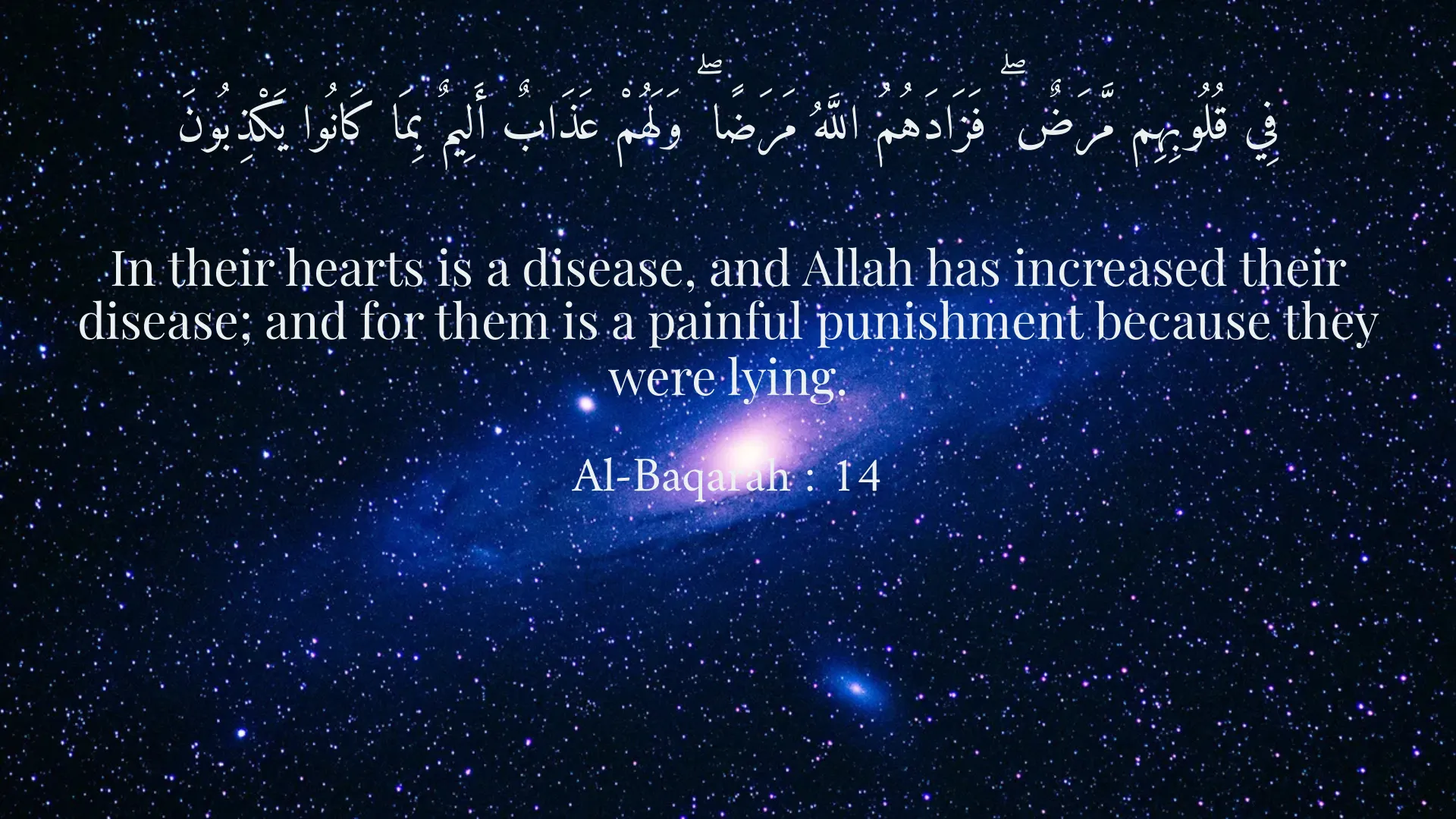
فِي قُلُوبِهِم مَّرَضٌ ۖ فَزَادَهُمُ اللَّهُ مَرَضًا ۖ وَلَهُمْ عَذَابٌ أَلِيمٌ بِمَا كَانُوا يَكْذِبُونَ
In their hearts is a disease, and Allah has increased their disease; and for them is a painful punishment because they were lying.
Al-Baqarah : 14
وَمِنْهُمْ مَنْ يَقُولُ آمَنَّا بِاللَّهِ وَبِيَوْمِ الْآخِرِ وَمَا هُم بِمُؤْمِنِينَ
And among them are some who say, 'We have believed in Allah and the Last Day,' but they are not believers.
Al-‘Imran : 165
Short Story
Once upon a time, a young man named Ali was going to the mosque to pray. However, he always found himself thinking about his daily tasks during worship. One day, one of the scholars of the town saw him and said, 'Dear Ali, worship should be with heartfelt attention; you must draw near to God with your whole being.' Ali took this advice to heart and from that day on focused entirely on his worship. He felt that his life had changed and he connected with God on a deeper level.