Quranic Answer
The interplay between the beauty of the world and its deceptive nature is a central theme in the Holy Quran, which addresses human tendencies toward materialistic desires and the ultimate truths of existence. Throughout its verses, the Quran reflects on the transient nature of worldly pleasures, urging believers to maintain a cautious perspective on life’s adornments. This article will dive deeper into the exploration of this theme, referencing specific Quranic verses, the implications behind them, and how they guide us toward a more profound spiritual understanding. One of the most striking verses that elucidates this theme is found in Surah Al-Imran (3:14). Here, Allah presents an array of worldly delights: "Beautified for people is the love of that which they desire - of women and sons, heaped-up sums of gold and silver, fine branded horses, and tilled land." This verse highlights the natural allure of physical beauty and material wealth. Women, children, wealth, and status are depicted as instinctual desires that tempt the human heart. Each of these elements embodies a form of beauty that can captivate one's attention and devotion. While it is not inherently wrong to appreciate life’s beauty, the Quran nuances this appreciation by framing it within a context of caution. The word 'beautified' suggests that these attractions are enhanced and decorated in a way that can distract individuals from their spiritual obligations. Humanity, in its fragility, is prone to be seduced by these captivating features of the world, often neglecting the reality of their temporary nature. Moreover, it is imperative for believers to understand that these pleasures are ephemeral. They can lead to a misdirection of priorities, causing people to become engrossed in the fleeting beauty of worldly life, all while neglecting their duties toward God. The Quran calls attention to the importance of recognizing these distractions and placing faith and good deeds at the forefront of one's pursuits. Transitioning from worldly temptations to the underlying trials they possess, in Surah Al-Anfal (8:28), Allah reminds humanity, "And know that your properties and your children are but a trial, and Allah has with Him a great reward." This verse serves as a sobering reminder that while wealth and familial bonds are indeed blessings bestowed upon us, they also serve as tests of our faith and character. The attachment to riches and the emotional investment in children are not merely marks of success; they can become chains that bind individuals to the earth, often leading to neglect of spiritual responsibilities. Considering the deeper implications, this verse challenges readers to evaluate their relationships with material possessions and human attachments critically. It compels believers to ask themselves: Are we using our wealth and familial bonds as means to draw closer to God, or are we becoming ensnared by them? In contemplation of the afterlife, Surah At-Taghabun (64:15) reiterates this notion, stating, "Indeed, your wealth and your children are but a trial, and Allah has with Him a great reward." The repetition of this fundamental idea highlights its significance: worldly ensnarements are not only temporary but are, in essence, trials designed to test our allegiance to God. The reference to 'a great reward' emphasizes the hope of the hereafter that outshines earthly pleasures. This calling to a higher purpose sustains believers amidst the trials of life. The Quran significantly emphasizes that while it is natural to desire beautiful things, one must remain vigilant against the deceptive nature of such beauty. The prudent seeker understands that one's true wealth is measured not in material possessions, but in the quality of their faith and adherence to righteous deeds. Good actions, sincere faith, and moments spent in remembrance of God are posts on which a believer's soul can truly thrive. Additionally, reflecting on how to balance worldly enjoyment with spirituality is essential for Muslims in today’s society. In modern times, the distractions of contemporary life are manifold, and the ease of access to material bounties makes it arduous to remain focused on what truly matters. The Quran's counsel invites believers to seek a path where one can appreciate the beauty of life while not allowing it to create a barrier between themselves and their spiritual aspirations. Engaging in community service, helping the needy, and contributing in any way to the betterment of society are vital ways to transform one’s worldly attachments into spiritual gains. Ultimately, recognizing life's beauty as a tool for enhancing faith rather than a hindrance to it fundamentally shifts the perspective from one of mere indulgence to one of purpose. The glorious mountains, fresh waters, and vibrant life surrounding us are not just aesthetic delights; they can be invigorating reminders of God’s infinite creation and a call to gratitude and mindfulness. Thus, engaging deeply with these aspects can iterate our spiritual journey forward. In conclusion, the beauty of the world, as described in the Quran, serves both as a temptation and a reminder. While worldly possessions, family, and status can be alluring, they are also tests from God. The true measure of success lies not in the abundance of possessions but in the abundance of good deeds and the unwavering closeness to God. By cultivating a mindful perspective towards the beauties of life, Muslims can navigate the challenges of worldly attachments while striving for spiritual elevation. The Quran serves as a guiding light in this endeavor, encouraging believers to embrace the transient beauty of the world while focusing on the eternal rewards promised in the hereafter.
Related Verses
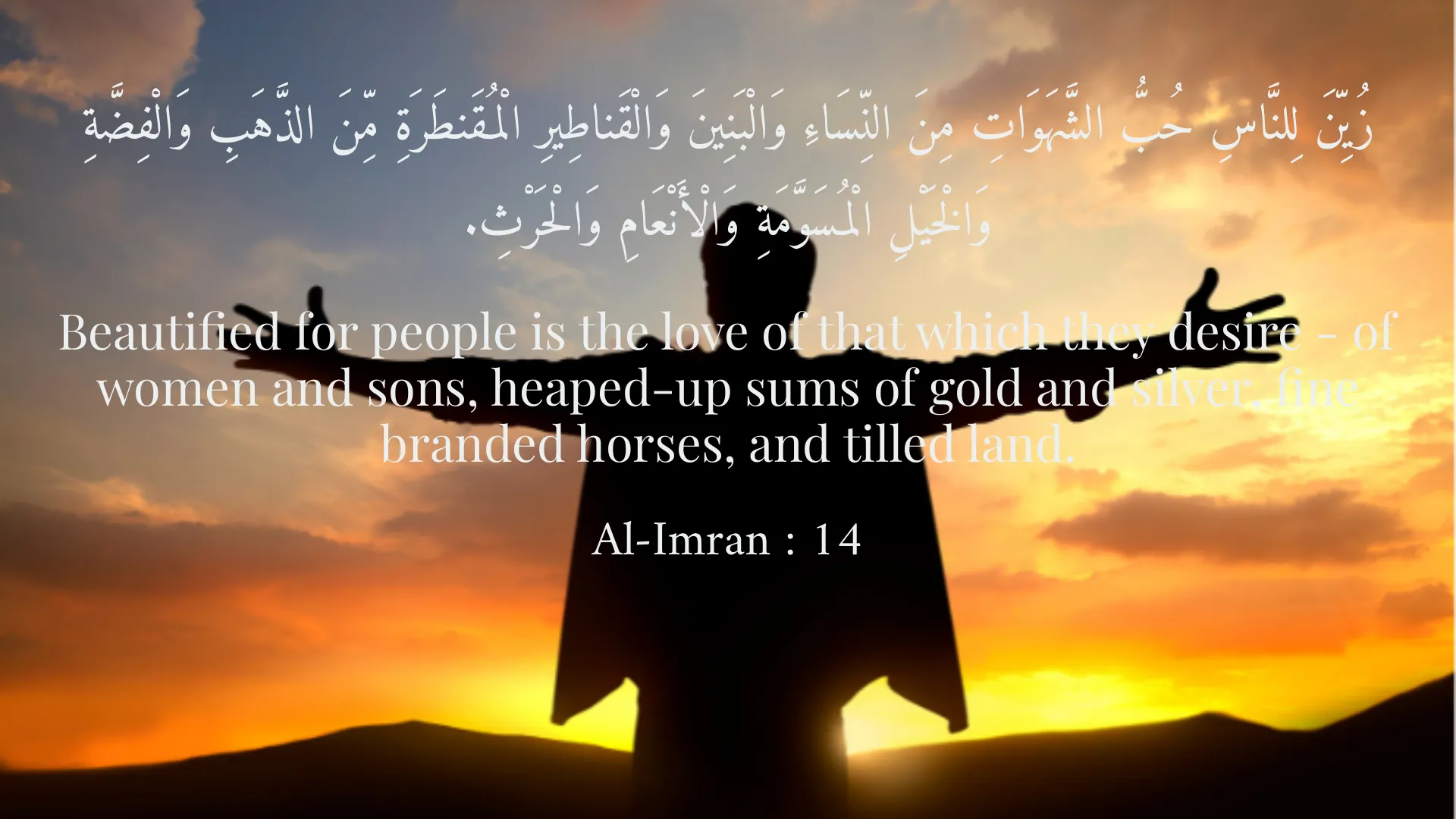
زُيِّنَ لِلنَّاسِ حُبُّ الشَّهَوَاتِ مِنَ النِّسَاءِ وَالْبَنِينَ وَالْقَناطِيرِ الْمُقَنطَرَةِ مِّنَ الذَّهَبِ وَالْفِضَّةِ وَالْخَيْلِ الْمُسَوَّمَةِ وَالْأَنْعَامِ وَالْحَرْثِ.
Beautified for people is the love of that which they desire - of women and sons, heaped-up sums of gold and silver, fine branded horses, and tilled land.
Al-Imran : 14
وَاعْلَمُوا أَنَّمَا أَمْوَالُكُمْ وَأَوْلَادُكُمْ فِتْنَةٌ ۖ وَأَنَّ اللَّهَ عِندَهُ أَجْرٌ عَظِيمٌ.
And know that your properties and your children are but a trial, and Allah has with Him a great reward.
Al-Anfal : 28
إنما أموالكم وأولادكم فتنة، والله عنده أجر عظيم.
Indeed, your wealth and your children are but a trial, and Allah has with Him a great reward.
At-Taghabun : 15
Short Story
A story from Saadi: One day, a traveler saw that pigs were playing and enjoying in the forest. He approached them, and one of the pigs said, 'We enjoy the things we see because we only know worldly happiness.' The traveler replied, 'But the beauties of the world are not permanent, and we must think of what remains in the hereafter.' This advice made the pigs reflect and think beyond worldly pleasures.