Quranic Answer
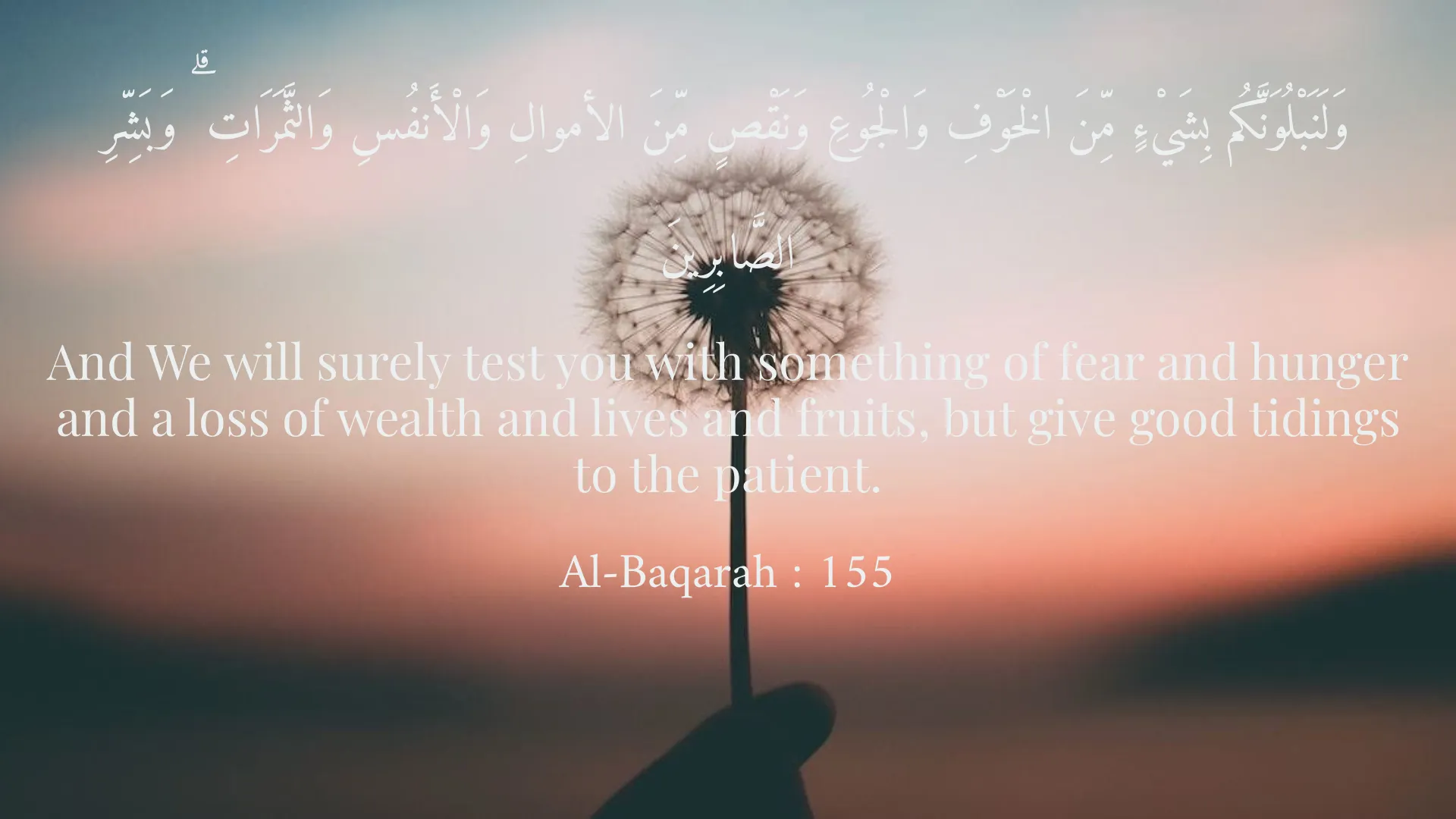
The concept of testing plays a fundamental role in the spiritual journey of individuals as elucidated in the Holy Quran. In religious contexts, tests are not merely seen as burdens or hardships but as significant opportunities for personal development and reinforcement of faith. In the Quran, Allah provides clarity regarding these trials, framing them as a means to refine human character and bolster one's relationship with the divine. Through various verses, the Quran imparts essential wisdom about the nature of these tests, their purposes, and their importance in the lives of believers. In Surah Al-Baqarah, verse 155, Allah states: 'And We will surely test you with something of fear and hunger and a loss of wealth and lives and fruits, but give good tidings to the patient.' This verse encapsulates the multifaceted nature of divine trials which can manifest as fear, bodily hunger, the loss of material wealth, the demise of loved ones, or unfavorable circumstances. Such tests present challenges that encourage believers to exhibit qualities of patience and perseverance. The Quran reassures that these characteristics are indispensable indicators of true faith. The notion that tests are divinely orchestrated reinforces the belief that trials are predestined circumstances designed for human betterment. Each test serves as an invitation to introspect and transform adversity into an avenue for spiritual growth. In an era where individuals often grapple with disappointments, loss, or insecurity, the Quran offers solace, encouraging them to remain steadfast in their faith. Thus, challenges are not simply obstacles; they are opportunities for enrichment and spiritual elevation. The verse's concluding exhortation to give good tidings to the patient underscores a profound understanding that patience fosters resilience and hope amid trials. Further contemplations on the nature of testing can be found in Surah Al-Mulk, verse 2, wherein Allah states: 'Who created death and life to test you as to which of you is best in deeds.' This assertion reveals that the ultimate purpose of tests extends beyond mere endurance or survival. Rather, they serve to distinguish individuals based on their actions and the quality of their endeavors. This testing denotes a continuum within life's experiences where one's deeds, both in favorable and unfavorable circumstances, reflect one’s true character. In this light, the Quran profoundly indicates that tests are an essential aspect of human existence, shaping our journey towards becoming better individuals. Through the lens of faith, these trials cultivate patience and endurance, prompting individuals to strive for excellence in their deeds. The essence of this examination is not predicated on the nature of the trials itself; it's about how one responds to these challenges. It is through grace in adversity that the character and essence of an individual are revealed. Moreover, these divine tests impart lessons that extend far beyond individual experiences. They bind communities together in shared suffering, empathy, and support. It encourages people to foster compassion, solidarity, and a deeper understanding of their fellow beings. The trials faced collectively help to cultivate a spirit of unity, reflecting Allah's words in the Quran. The importance of understanding the nature of tests in the Holy Quran transcends mere acceptance. It is crucial for believers to realize that testing serves an orchestrated divine purpose. Understanding this can transform one's perspective on challenges, instilling hope and a proactive approach toward life’s adversities. This understanding can foster resilience, encouraging individuals to draw from their inner strength while relying on their faith in Allah. Furthermore, the Quran emphasizes the idea that Allah's love for His servants is often manifested through the tests He bestows upon them. These trials are not solely punitive; rather, they are akin to the nurturing guidance of a loving guardian who wishes to guide and strengthen their charges. In this sense, tests can be regarded as signs of Allah's affection and consideration, meant to propel individuals on their journeys of self-discovery and spiritual enhancement. This belief can significantly aid individuals in their pursuit of maintaining steadfast faith during turbulent times. From a psychological viewpoint, the intersection of faith and resilience explains that engaging with life’s challenges through a spiritual lens cultivates a sense of purpose. Individuals can cultivate hope by comprehending their circumstances within a broader divine context. The trials faced nurture a sense of unity, reconciling individual struggles with collective experiences that underline the inherent essence of humanity. Furthermore, overcoming trials can lead individuals to a deeper understanding of their strengths and capabilities, promoting self-awareness and personal growth. Trials may stimulate exploration of spirituality, ultimately guiding individuals toward emotional and spiritual healing. Building a strong community characterized by empathy and support can transform personal trials into collective victories. This collective aspect can be traced back to the teachings of the Quran, where the significance of patience and collective strength is consistently emphasized. In conclusion, the intricate concept of testing in the Holy Quran serves as a profound reminder of the nature of human existence. It frames life's trials as divine opportunities for self-improvement, reevaluation of faith, and reinforcing communal bonds. The Quran's perspectives on tests imbue individuals with hope and resilience, instilling a strong belief in the overarching benevolence of Allah. Believers are encouraged to embrace these challenges not merely as adversities but as instruments of divine love and opportunities for spiritual advancement. This lens of understanding transforms life’s trials into a pathway towards a richer connection with oneself and with Allah, ultimately leading to a rewarding and purposeful existence.
Related Verses
وَلَنَبْلُوَنَّكُم بِشَيْءٍ مِّنَ الْخَوْفِ وَالْجُوعِ وَنَقْصٍ مِّنَ الأموالِ وَالْأَنفُسِ وَالثَّمَرَاتِ ۗ وَبَشِّرِ الصَّابِرِينَ
And We will surely test you with something of fear and hunger and a loss of wealth and lives and fruits, but give good tidings to the patient.
Al-Baqarah : 155
الَّذِي خَلَقَ الْمَوْتَ وَالْحَيَاةَ لِيَبْلُوَكُمْ أَيُّكُمْ أَحْسَنُ عَمَلًا
Who created death and life to test you as to which of you is best in deeds.
Al-Mulk : 2
Short Story
One day, Adel was reflecting on his life and wondered why he always faced difficulties. He recalled the Quranic verses and decided to view divine tests as an opportunity for personal growth. Adel called his parents and asked them to support him on this path. Gradually, he was able to overcome hardships and find peace.