Quranic Answer
### Understanding Fear and Reverence in Islam: A Deeper Insight In the rich tapestry of Islamic thought, the concepts of fear (خوف) and reverence (خشیت) stand out as pivotal emotions that believers experience in their relationship with God (Allah). Both these feelings embody a profound recognition of the divine, yet they emanate from different sources and lead to varied responses in human behavior. To fully appreciate the dynamic interplay between fear and reverence in the context of the Holy Quran, it is imperative to explore their definitions, implications, and significance in the spiritual journey of a believer. #### Defining Fear and Reverence Fear, in its basic essence, is an emotion that arises in response to the awareness of potential threats or negative outcomes. Within the framework of Islamic spirituality, this fear is primarily linked to the consciousness of sin and its consequences. When an individual acknowledges the possibility of divine punishment for disobedience or transgression against the commandments of God, it gives rise to what is commonly termed as "fear." This fear is not merely a passive state but serves as a motivational force urging believers to refrain from actions that are contrary to God’s will. For example, the Holy Quran mentions in Surah Maryam (19:48): "And he (Yahya) calls to remembrance the name of his Lord." Here, Prophet Yahya (Peace be upon him) articulates the significance of glorifying God through actions driven by the awareness of one’s sins and the associated anxiety about the Hereafter. This reflects a profound understanding of fear, rooted in the recognition of moral responsibilities and the potential for disobedience that could lead to divine accountability. Conversely, reverence is a more elevated emotional state that transcends mere fear. Reverence comes from a deep-rooted love and respect for the Creator, emphasizing the believer's acknowledgment of God’s infinite mercy, wisdom, and sovereignty. It produces a sense of awe that inspires believers to submit humbly before God, acknowledging His greatness and majesty. A poignant reference to this concept can be found in Surah Al-Imran (3:75): "And no soul knows what it will earn tomorrow, and no soul knows in what land it will die. Indeed, Allah is Knowing and Acquainted (with all things)." This verse emphasizes the unique knowledge of God and the reverence that arises from understanding His omnipotence and omniscience. #### The Interconnection of Fear and Reverence Despite their differences, fear and reverence are not mutually exclusive; rather, they can coexist harmoniously, enriching a believer's spiritual life. Fear, understood in the context of accountability, acts as a deterrent against sinning, while reverence cultivates a loving relationship with God. Together, these emotions play a critical role in guiding moral behavior and encouraging adherence to Islamic principles. The interplay between fear and reverence can be likened to two sides of the same coin. A believer who possesses a healthy fear of God’s punishment will also likely have a profound reverence for His mercy and compassion. The dual presence of these emotions plays an essential role in the journey of spiritual maturity. As believers cultivate their understanding of God and deepen their love for Him, they simultaneously develop a respectful fear that prompts them to act righteously and avoid immoral behavior. #### Cultivating a Balanced Approach Engaging with both fear and reverence calls for a balanced approach in the practice of faith. On one hand, it is vital for believers to recognize God's authority and the seriousness of sin. The Quran repeatedly emphasizes the reality of the Day of Judgment, serving as a reminder for believers to reflect on their actions and to embody virtues in their daily lives. Therefore, fear becomes an essential component of self-awareness and moral fortitude. On the other hand, an excess of fear can lead to despair and a diminished sense of God’s mercy. Conversely, a lack of fear can result in complacency and indifference towards sin. Hence, Islam encourages its followers to nurture a relationship with God rooted in both love and respect, enabling them to experience a holistic spiritual growth. #### The Role of Education in Shaping Perceptions Education plays a critical role in shaping how believers perceive and experience fear and reverence. The teachings presented in the Holy Quran, coupled with the Hadiths of Prophet Muhammad (Peace be upon him), serve as guiding stars in navigating the complexities of these emotions. Islamic scholarship often emphasizes the transformative power of knowledge in understanding God’s attributes. Learning about God’s names, such as Ar-Rahman (The Most Merciful) and Al-Jabir (The Compeller), fosters both affection and fear in the believer’s heart. This dual awareness enables believers to approach their relationship with God thoughtfully and respectfully. Moreover, the community also plays a vital role in shaping these emotions. Collective worship, community gatherings, and discussions about God’s attributes can encourage a supportive environment where individuals feel empowered to seek knowledge and grow in their faith. By fostering an atmosphere that values both fear and reverence, believers can cultivate a well-rounded understanding of their relationship with God. #### Conclusion: The Spiritual Journey In conclusion, fear and reverence in Islam are complex emotions that profoundly influence a believer's relationship with God. While fear serves as a deterrent against wrongdoing, reverence nurtures a loving and respectful connection, inspiring adherence to God's will. Together, these feelings can coexist and complement each other, promoting spiritual growth and maturity. Ultimately, engaging with these two emotions provides believers with a framework for a balanced spiritual life that emphasizes both accountability and love for God. As Muslims strive to deepen their understanding of their faith, cultivating a harmonious relationship with fear and reverence will undoubtedly guide them on a path of righteousness, leading to a more fulfilling and enriching spiritual journey.
Related Verses
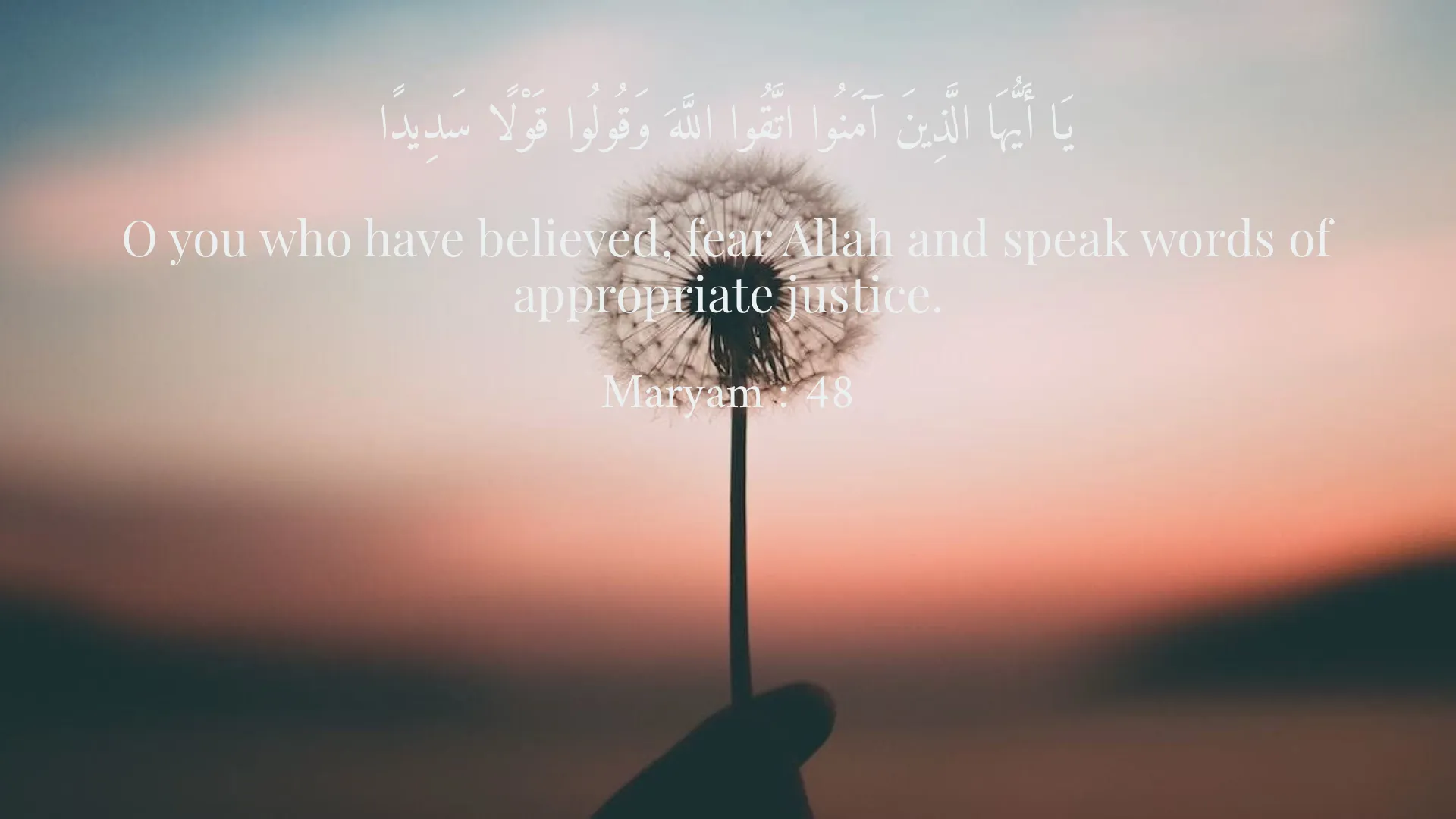
يَا أَيُّهَا الَّذِينَ آمَنُوا اتَّقُوا اللَّهَ وَقُولُوا قَوْلًا سَدِيدًا
O you who have believed, fear Allah and speak words of appropriate justice.
Maryam : 48
إنما يخشى الله من عباده العلماء.
Only those fear Allah, from among His servants, who have knowledge.
Al-Imran : 75
Short Story
Once upon a time, a young man named Yusuf decided that he wanted a richer spiritual life. He would read the Quran at night and ponder the meanings of the verses. One night, while reflecting on fear and reverence, he felt compelled to pray more from a place of love and respect for God. From that day forward, Yusuf dedicated himself to understanding God more deeply and drew closer to Him with a pure heart. He realized that alongside the fear of divine punishment, love for God and reverence could illuminate his life.