Quranic Answer
In the Holy Quran, the purpose of human life is profoundly articulated, providing Muslims and scholars insights into the essence of existence. A key verse that addresses this compelling topic is found in Surah Adh-Dhariyat, verse 56: "And I did not create the jinn and mankind except to worship Me." This verse encapsulates the primary goal of human life, namely, to serve and worship Allah. However, while worship stands at the forefront of human life’s purpose, the Quran equally emphasizes the importance of earthly existence. The intricate relationship between spiritual responsibilities and worldly engagements presents a holistic understanding of living a balanced and fulfilling life. The act of worship in Islam transcends ritualistic practices; it signifies a profound connection with the Creator. Worship is not merely confined to prayer or fasting; it encompasses all actions performed in compliance with the divine will of Allah. The Quran encourages individuals to seek a personal relationship with God, where righteousness and ethical living play crucial roles. This broader interpretation suggests that every act performed with the intention of pleasing Allah is, in fact, an act of worship. Moreover, the Quran's teachings reflect that life's goal is not restricted to the metaphysical realms of spirituality but also encompasses the practical realms of community building and social responsibility. The Quran teaches us to cultivate goodness, establish justice, and create a healthy society, as seen in various verses emphasizing the importance of compassion, charity, and cooperation. For instance, Surah Al-An’am (verse 151) points out the essence of knowledge and work in Islam. Allah instructs the Prophet Muhammad (peace be upon him) to state, "Utilization of knowledge and wisdom in all aspects of life is essential." This proclamation is foundational in Islamic teaching, indicating that the pursuit of knowledge is inherently linked to one’s spiritual journey. It teaches that the purpose of human life goes beyond mere worship; it includes the continuous quest for understanding, the elaborate process of learning, and striving towards Allah through righteous actions. Knowledge in Islam is not just academic or theoretical; it extends to practical wisdom applicable in various facets of life, be it in personal decisions, community interactions, or even governance. The Quran further emphasizes hard work and earnest effort as vital contributions toward achieving a purposeful life. This aligns with Islamic teachings that valorize productivity. In verses encouraging labor and diligence, believers are reminded that they must strive towards achieving success, not just in spiritual matters but also in their professional endeavors. There is a significant emphasis on the need to earn a lawful livelihood, reflected in numerous verses where work is portrayed as an act synonymous with responsibility and loyalty to God. Apart from knowledge and work, the Quran advocates for community improvement, highlighting the need for a balanced existence that honors both God and society. The teachings encourage the establishment of a supportive community where believers assist one another in their spiritual and temporal engagements. Initiatives such as taking care of the vulnerable, fostering unity, and resolving disputes are presented as not just optional but essential practices for Muslims. Furthermore, within the diverse teachings of the Quran, one can derive that mutual respect, tolerance, and understanding are pivotal in strengthening community ties. Encounters with differences—be they cultural, religious, or intellectual—should not weaken one's commitment to collective welfare. Instead, the Quran encourages discussions and mutual understanding among varied ideologies to create a more inclusive society. In recent times, this holistic approach to human life as presented in the Quran becomes increasingly relevant. Many people grapple with existential crises and feelings of disconnection as they try to navigate the complexities of modern living. This often results in a profound search for meaning and fulfillment that transcends material success. The simplicity of worshipping Allah while engaging earnestly with the world provides a dual pathway to finding peace and satisfaction. It reflects humanity’s inherent need to be connected, both to God and to other people. Through the Quran's teachings, believers are reminded that true happiness cannot be separated from one’s connection with Allah and His creation. The intrinsic satisfaction derived from worship, paired with the fulfillment of one's duties towards family, community, and the environment, results in a rounded and joyous existence. It suggests that every individual is a vital part of a larger tapestry, where each thread contributes to the overall beauty of creation. In essence, a person’s commitment to both divine and societal responsibilities fosters a sense of belonging and purpose. This synthesis of worship, knowledge, hard work, and community involvement reflects a vision for life that is balanced and dynamic. The Quran perceives human beings as not merely passive recipients of divine mercy but active participants in a broader narrative of creation and divine intention. Ultimately, therefore, the Quranic premise offers a rich framework for understanding the purpose of human life, providing guidance that is timeless and relevant across various contexts. It invites every individual to engage deeply with their spiritual life while actively working towards the betterment of society, achieving a harmonious existence that honors both God and humanity.
Related Verses
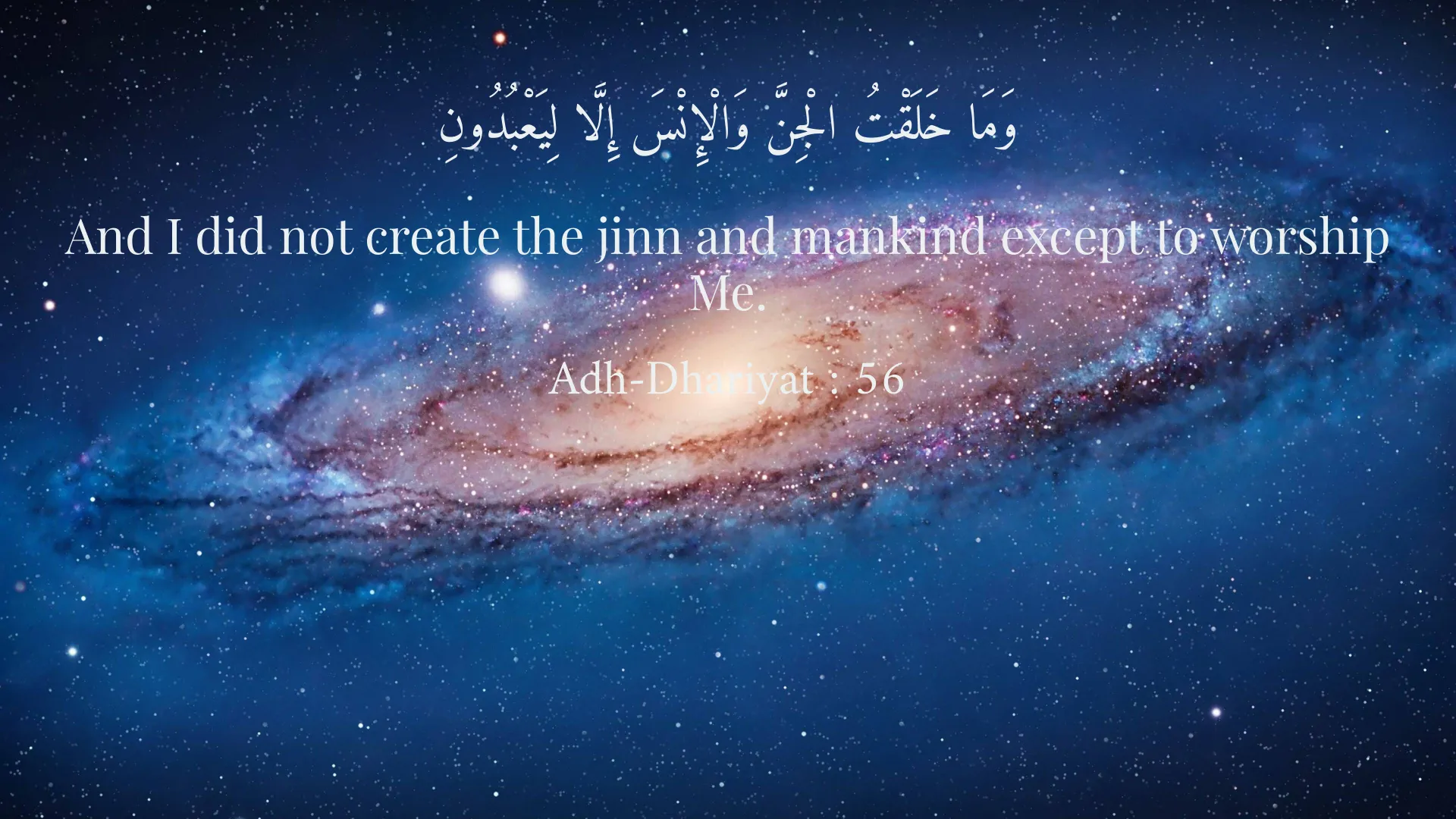
وَمَا خَلَقْتُ الْجِنَّ وَالْإِنْسَ إِلَّا لِيَعْبُدُونِ
And I did not create the jinn and mankind except to worship Me.
Adh-Dhariyat : 56
قُلْ تَعَالَوْا أَتْلُ ما حَرَّمَ رَبُّكُمْ عَلَيْكُمْ أَلَّا تُشْرِكُوا بِهِ شَيْئًا وَبِالْوَالِدَيْنِ إِحْسَانًۭا
Say, 'Come, I will recite what your Lord has prohibited to you — that you not associate anything with Him and to parents, good treatment.'
Al-An'am : 151
Short Story
One day, a man in a village was working diligently. He always kept in mind his duties towards God and aimed to be good in all his tasks. Because of his worship, he felt peace and blessings in his life. His neighbors followed his example and started to lead better lives.