Quranic Answer
The Holy Quran, regarded as the central religious text of Islam, is a source of guidance and wisdom for millions of adherents around the globe. Comprising 114 chapters, or Surahs, the Quran is celebrated not only for its profound theological insights but also for its poetic beauty and linguistic richness. Among the various features of the Quran that merit scholarly attention is the phenomenon of verse repetition. The strategic repetition of specific verses serves multiple purposes, encompassing emphasis, remembrance, moral instruction, and guidance. This article seeks to explore the significance of repeated verses in the Quran, examining the reasons behind this practice as well as its effects on the reader's understanding and engagement with the divine message. One of the primary motivations behind the repetition of verses in the Quran is to underscore critical themes that Allah wishes to imbed in the consciousness of believers. The act of repetition serves as a powerful rhetorical device, effectively reinforcing essential concepts and lessons. For instance, Surah Al-Baqarah contains verses 23 and 24, which repeatedly address the themes of disbelief and faithlessness. By reiterating topics such as disbelief, Allah aims to ensure that individuals remain conscious of the repercussions associated with sin and disobedience. This repeated emphasis acts as a reminder of the importance of faith and righteousness—a vital component of the Islamic faith. In this regard, the Quran functions not only as a spiritual text but also as a moral compass guiding individuals toward a path of repentance and ethical living. The Quranic approach to repetition also seeks to generate a sense of hope and encouragement among believers. Certain passages reflecting on mercy, grace, and virtuous conduct are reiterated throughout the text, strengthening believers' spirits and reassuring them of Allah's compassionate nature. The repetition of these verses serves to uplift believers, reminding them that no matter how far they stray, there exists a pathway back to divine forgiveness and love. This theme of relentless mercy is particularly significant, as it reinforces the idea that repentance is always available, thus instilling a sense of optimism within the hearts of practicing Muslims. Such repeated affirmations can be deeply comforting, reminding individuals of Allah's continual presence and support in their lives. Additionally, the repetition of verses holds educational significance, particularly for those engaged in learning and memorizing the Quran. The Quran is often recited and studied by individuals at various stages of spiritual development. For novice learners, a singular reading of a verse may not suffice in imparting the intended meaning or message. Therefore, the act of repetition can assist learners in solidifying their understanding and memorization skills, making it easier to grasp complex themes and teachings. As they hear and recite the same verses multiple times, they become more familiar with the content, leading to deeper engagement with the text. This educational function of repetition is particularly essential in Islamic tradition, which places a high value on memorization and recitation. The Quran's structure itself, with its divisions into Surahs and verses, often results in certain phrases and themes echoing across different sections. This thematic reiteration reflects the interconnectivity of the Quran's messages, where similar concepts may arise in diverse contexts. For example, discussions pertaining to divine guidance, social justice, and ethical behavior recur throughout the text, each time enlightening readers with new perspectives. The repetition allows for a fluid understanding of these principles, making it evident that they are central to the Quranic worldview. By repeating key phrases, Allah emphasizes their importance, indicating that they should not be overlooked or taken lightly. Furthermore, the Quran’s repeated verses serve as a tool for reflection and contemplation. In a world filled with distractions, the act of engaging with repeated verses prompts an opportunity for deeper reflection on divine wisdom. Reciting and contemplating these verses can lead believers to ponder their meanings and implications in their daily lives. The power of repetition lies not only in the ability to memorize but also in the capacity to catalyze reflection and self-assessment, encouraging individuals to apply the teachings to their own experiences. In essence, the repetition of verses in the Holy Quran is a multifaceted phenomenon, enriching the religious experience through emphasis, guidance, education, and reflection. It serves as an artistic and rhetorical device that connects believers with critical messages about faith, morality, and divine mercy. As such, this practice is integral to both the structure of the Quran and the spiritual journey of its readers. The repeated verses manifest Allah's intention to engrave valuable lessons in the hearts of believers, solidifying their faith and fostering a sense of community among followers. Ultimately, the Quran stands as a literary masterpiece that continues to inspire, guide, and educate generations. Its repeated verses not only reinforce key themes but also create a roadmap for believers seeking to lead fulfilling lives grounded in faith and righteousness.
Related Verses
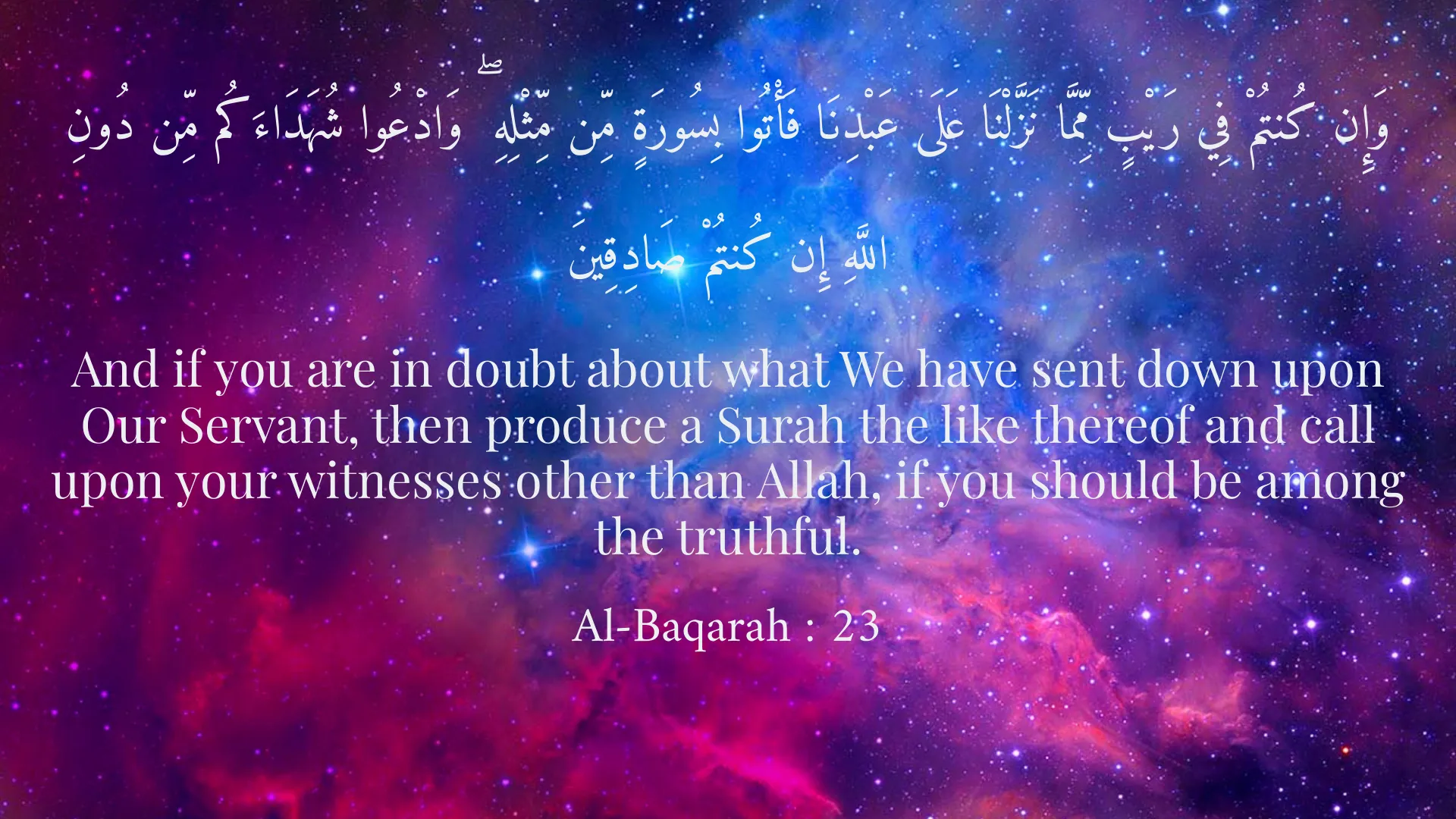
وَإِن كُنتُمْ فِي رَيْبٍ مِّمَّا نَزَّلْنَا عَلَى عَبْدِنَا فَأْتُوا بِسُورَةٍ مِّن مِّثْلِهِ ۖ وَادْعُوا شُهَدَاءَكُم مِّن دُونِ اللَّهِ إِن كُنتُمْ صَادِقِينَ
And if you are in doubt about what We have sent down upon Our Servant, then produce a Surah the like thereof and call upon your witnesses other than Allah, if you should be among the truthful.
Al-Baqarah : 23
فَإِن لَّمْ تَفْعَلُوا وَلَن تَفْعَلُوا فَاتَّقُوا النَّارَ الَّتِي وَقُودُهَا النَّاسُ وَالْحِجَارةُ أُعِدَّتْ لِلْكَافِرِينَ
But if you do not do it - and you will never be able to - then fear the Fire whose fuel is men and stones, made ready for the disbelievers.
Al-Baqarah : 24
وَإِن كَانُوا فِي قَذَارةٍ مِّن عَمَلِهِمْ فَهُم بِلَاهُم يكيدون.
And if they were in filth of their deeds, surely, they would plot with their vulgarity.
Al-Mulk : 13
Short Story
One day, in a large tree, two birds were having a conversation. One bird asked, 'Why are some verses of the Quran repeated so often?' The other bird replied, 'It is because Allah's teachings need to be stronger and more enduring, reminding us to always think of Him.' This dialogue showed the listeners that the repetition of verses was a sign of Allah's love and attentiveness to us.