Quranic Answer
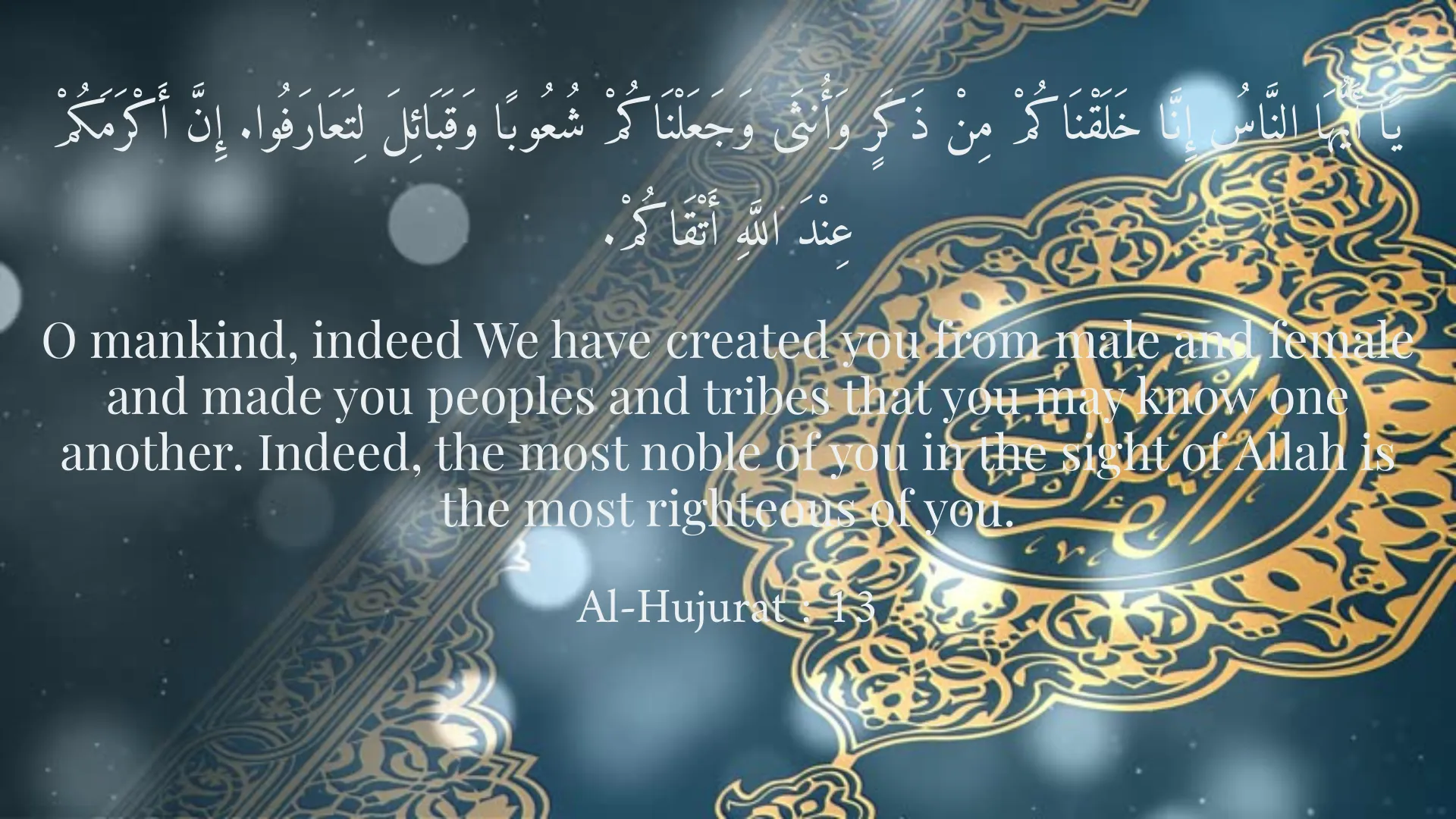
In the Holy Quran, Allah clearly articulates the differences among humankind, emphasizing the importance of these distinctions in promoting understanding and cooperation. One of the most quoted verses that encapsulates this message is found in Surah Al-Hujurat, verse 13: "O mankind, indeed We have created you from male and female and made you peoples and tribes that you may know one another. Indeed, the most noble of you in the sight of Allah is the most righteous of you." This verse serves as a profound reminder that ethnic and racial differences exist not for the purpose of superiority but rather for recognition and mutual understanding. The notion that diversity among human beings is intrinsic to our creation signifies a deeper wisdom embedded within divine design. Allah, in His infinite knowledge, has intentionally fashioned people of various ethnicities, cultures, and backgrounds to ensure a rich tapestry of human experience. This cultural and social diversity plays an essential role in enriching our lives and broadening our perspectives. It allows individuals from different backgrounds to learn from one another, to share stories, wisdom, and experiences that may resonate across cultural divides. The Quran elucidates that the purpose behind the creation of diverse peoples and tribes is fundamentally social. By fostering interactions among different groups, humanity can cultivate compassion, empathy, and understanding. Differences allow us to appreciate beauty in variety—much like an art piece composed of vibrant colors, each hue contributes to the overall aesthetic. Certainly, this aesthetic can be observed in our interactions, where distinct traditions, belief systems, and customs come together to foster friendship, collaboration, and community. Surah Al-Imran, verse 6, further underscores this notion by stating, "It is He who forms you in the wombs as He wills." This verse emphasizes that God, as the Creator, has endowed each individual with unique attributes, personalities, and capabilities, tailored according to His divine will. The idea that everyone possesses distinct traits serves to affirm that each individual has a role to fulfill. According to Islamic teachings, the diversity present among humans is not meant to be a cause of division but rather a source of strength and unity. Each person has been molded to contribute something unique to society, shaping the way we learn, adapt, and grow together. Diversity in human creation also reflects God's wisdom and intelligence. The Quran places great emphasis on the value and dignity of individuals irrespective of their background. Hence, it's critical that we view differences as divine gifts—tools for learning and understanding rather than grounds for discrimination or prejudice. The lessons gleaned from the experiences of others can cultivate a better society, encouraging growth through collaboration instead of competition. From a sociocultural perspective, recognizing diversity requires an active effort to engage with and respect those who are different from ourselves. It involves breaking down barriers, combating preconceived notions, and fostering environments that promote inclusivity. Such engagement paves the way for dialogue, enabling individuals to convey their perspectives and to foster a genuine appreciation for their cultural heritage. Living truly in harmony with our diverse identities also means confronting the harsh realities of racism, discrimination, and marginalization. The Quran encourages believers to reflect on their attitudes and behaviors towards others to ensure they align with the tenets of justice, fairness, and compassion that Islam promotes. It is essential to combat stereotypes and prejudices, both within ourselves and within the communities in which we live. Moreover, in understanding our differences, we can also recognize our shared humanity. Despite coming from varied backgrounds, beliefs, and cultures, all individuals experience fundamental emotions and challenges inherent to the human condition. This commonality can foster connection and solidarity, paving the way toward mutual respect and understanding. Recognizing our shared values can cultivate a sense of belonging, not only among Muslims but among all of humanity. In practical terms, the implications of this understanding can extend to various aspects of our lives—education, relationships, workplaces, and community interactions. In educational settings, encouraging diversity can enrich the learning experience and prepare individuals for a world that is increasingly interconnected. Encouraging collaboration among students from different backgrounds enhances critical thinking and problem-solving abilities, leading to a more holistic approach to education. Moreover, workplaces benefit immensely from diversity. Diverse teams drive innovation and creativity—combining different perspectives leads to unique solutions to problems. By valuing diversity and inclusion, organizations can cultivate an environment that attracts and retains talent from all backgrounds, ensuring a broader range of ideas and experiences. This commitment to diversity can ultimately influence the success of individuals and organizations alike. In conclusion, the Quran not only explains the differences among humans but emphasizes the purpose behind these distinctions. Our differences in ethnicity, culture, and experiences serve as invaluable lessons in learning, growth, and understanding. As Allah has designed humans with unique characteristics, it is our duty to embrace these differences to foster cultural and social diversity. By actively engaging with one another, fostering compassion, and valuing our shared humanity, we can create a world that reflects the beauty of Allah's creation—a world in which we can thrive together as one united humanity.
Related Verses
يَا أَيُّهَا النَّاسُ إِنَّا خَلَقْنَاكُمْ مِنْ ذَكَرٍ وَأُنثَى وَجَعَلْنَاكُمْ شُعُوبًا وَقَبَائِلَ لِتَعَارَفُوا. إِنَّ أَكْرَمَكُمْ عِنْدَ اللَّهِ أَتْقَاكُمْ.
O mankind, indeed We have created you from male and female and made you peoples and tribes that you may know one another. Indeed, the most noble of you in the sight of Allah is the most righteous of you.
Al-Hujurat : 13
هُوَ الَّذِي يُصَوِّرُكُمْ فِي الْأَرحَامِ كَيْفَ يَشَاءُ ۚ لَا إِلَٰهَ إِلَّا هُوَ الْعَزِيزُ الْحَكِيمُ
It is He who forms you in the wombs as He wills. There is no deity except Him, the Exalted in Might, the Wise.
Al-Imran : 6
Short Story
Once upon a time, there was a man named Ahmad who felt lonely in his heart. He was worried about why others were different from him and why he couldn't be like them. Then, by studying the Quran, he understood that God created humans differently for a specific wisdom. He learned that these differences are a blessing and should be embraced. He learned from others, made new friends, and his life became rich with activities and colors.