Quranic Answer
The creation of man is a topic that has received a significant amount of focus in many religious texts and philosophical discussions. Among these, the Quran stands out as a foundational source for Islamic beliefs about the essence and purpose of humanity. The verses concerning the creation of man encapsulate not only the narrative of humanity's origin but also the underlying philosophy that governs human existence from an Islamic perspective. In this article, we delve into some of the crucial verses of the Quran, particularly Surah Al-Imran, Surah Adh-Dhariyat, and Surah At-Tawbah, to understand the divine purpose attributed to human creation. The Nature of Creation in the Quran The Quran introduces the concept of human creation in a profound manner. Not merely a scientific inquiry into how humans came into being, the Quran addresses the ontological and existential dimensions of human life. Surah Al-Imran, verse 185 states: "Every soul will taste death, and you will only be given your full compensation on the Day of Resurrection." This verse lays down a critical principle of Islamic belief: the inevitability of death and the consequent accountability that follows in the afterlife. This assertion serves as a reminder of the transitory nature of earthly life. Earthly existence is viewed as a stage, a test of how an individual chooses to navigate their time on earth, facing trials, tribulations, and joys. The mention of "full compensation" not only speaks to justice but also emphasizes that human efforts, intentions, and struggles will be recognized and rewarded by a higher authority on the Day of Judgment. Therefore, the Quran posits that an integral part of human life is this element of accountability, urging individuals to live with purpose and mindfulness. The Purpose of Existence The Quran further elaborates on the purpose of humanity's creation in Surah Adh-Dhariyat, verse 56, where it states: "And I did not create the jinn and mankind except to worship Me." This verse unveils the primary aim of human existence — worship. Worship in Islam is not limited to ritualistic actions or prayers; instead, it encompasses all actions undertaken in alignment with divine commandments and ethical behavior. The idea of worship highlights the relationship between the Creator and the created. This relational aspect is vibrant and dynamic, indicating that humans are meant to develop a spiritual connection with God that transcends mere obedience. It emphasizes that mankind is created not in isolation but as part of a larger cosmic order, where reverence for God is central to achieving true fulfillment and purpose. Thus, worship becomes a tool for cultivating virtue, empathy, and understanding, which are essential qualities for realizing a higher status in the spiritual realm. Divine Decree and Human Agency In Surah At-Tawbah, verse 51, the Quran states, "Say, 'Never will we be struck except by what Allah has decreed for us.'" This verse brings to light another essential aspect of the human experience — the concept of divine decree or destiny. It reminds believers that every occurrence in life, whether perceived as good or bad, is under the prerogative of divine wisdom. What this implies is that while human beings possess free will, their ultimate journey is shaped by God's will. This duality invites individuals to engage fully with life, making choices while also surrendering to a higher decree, fostering a sense of peace even amidst challenges. Understanding that all events unfold according to a divine plan cultivates patience and resilience in the face of adversity. This perspective on life encourages a trust that transcends the immediate challenges individuals may face. The Journey Towards Perfection The interplay of these principles creates a framework within which humans are called to strive for excellence. It is not merely a matter of existing; rather, it is the pursuit of self-improvement and fulfilling one's purpose that defines human life. As individuals act upon their duties and adhere to divine commandments, they cultivate human qualities that ultimately draw them nearer to God. The Quran repeatedly encourages believers to reflect, grow, and improve themselves. It posits that through struggles and sincere efforts in worship and obedience, individuals can evolve spiritually. The successful ones are those who embrace their journey, meet the challenges of life head-on, and seek God's pleasure, thus attaining nearness to Him. Conclusion In summary, the creation of man, as expounded in the Quran, encapsulates profound theological concepts that answer foundational questions about human existence. Life is framed as a test, with the inevitability of death reminding individuals of the transient nature of worldly pursuits. The purpose of existence is elucidated as worship, which is manifested through ethical living, nurturing one's consciousness of God, and striving for improvement. Furthermore, while human agency plays a crucial role in this journey, it is balanced with the concept of divine decree, guiding believers through the trials that life presents. Ultimately, these principles converge to outline a path that not only leads to personal fulfillment but also fosters a deep connection with the Divine. In embracing these teachings, individuals can aspire towards achieving a higher status in the afterlife, culminating in closeness to Allah.
Related Verses
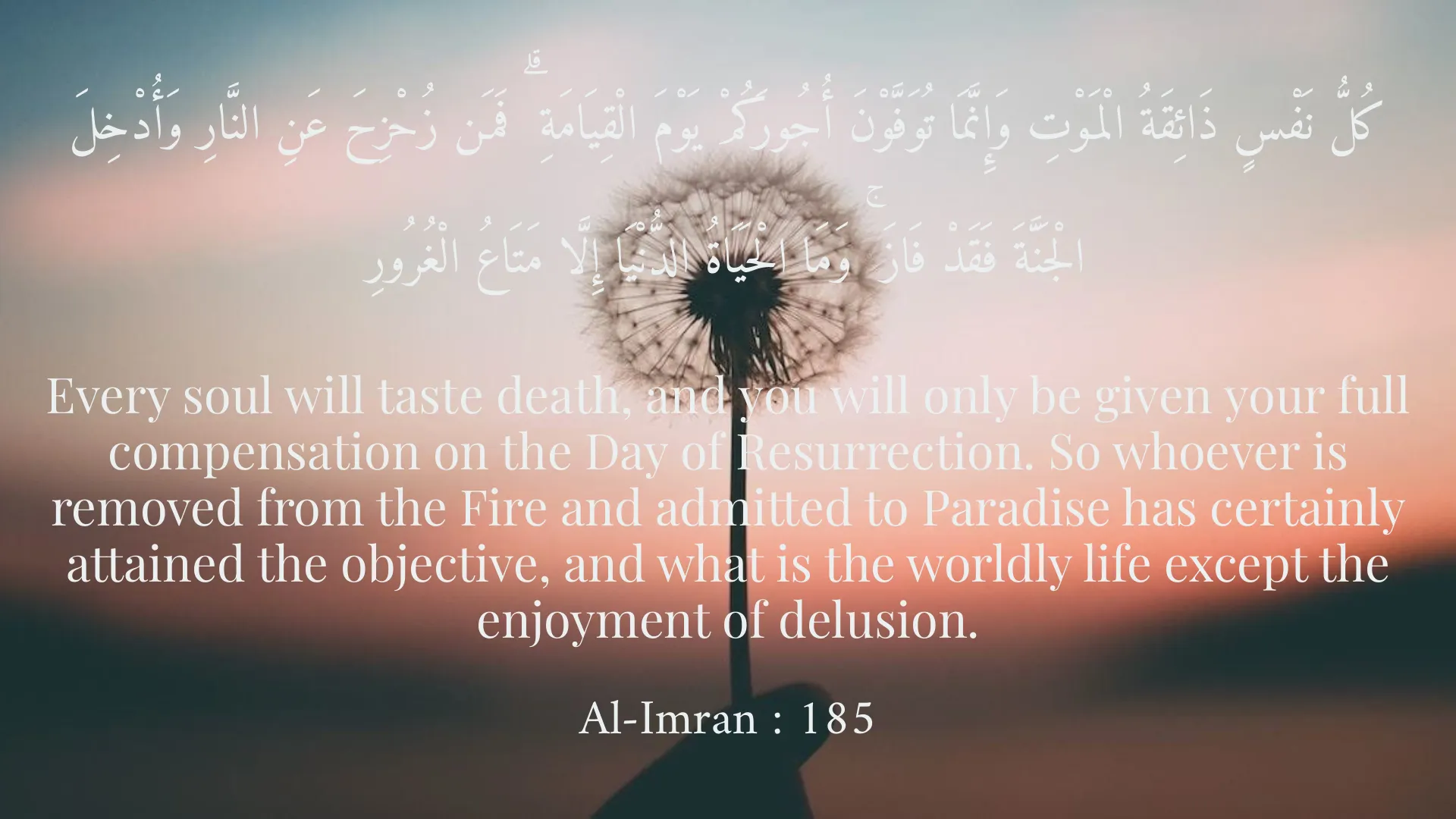
كُلُّ نَفْسٍ ذَائِقَةُ الْمَوْتِ وَإِنَّمَا تُوَفَّوْنَ أُجُورَكُمْ يَوْمَ الْقِيَامَةِ ۗ فَمَن زُحْزِحَ عَنِ النَّارِ وَأُدْخِلَ الْجَنَّةَ فَقَدْ فَازَ ۚ وَمَا الْحَيَاةُ الدُّنْيَا إِلَّا مَتَاعُ الْغُرُورِ
Every soul will taste death, and you will only be given your full compensation on the Day of Resurrection. So whoever is removed from the Fire and admitted to Paradise has certainly attained the objective, and what is the worldly life except the enjoyment of delusion.
Al-Imran : 185
وَمَا خَلَقْتُ الْجِنَّ وَالْإِنْسَ إِلَّا لِيَعْبُدُونِ
And I did not create the jinn and mankind except to worship Me.
Adh-Dhariyat : 56
قُل لَّن يُصِيبَنَا إِلَّا مَا كَتَبَ اللَّهُ لَنَا ۚ هُوَ مَوْلَانَا ۖ وَعَلَى اللَّهِ فَلْيَتَوَكَّلِ الْمُؤْمِنُونَ
Say, 'Never will we be struck except by what Allah has decreed for us. He is our protector; and upon Allah let the believers rely.'
At-Tawbah : 51
Short Story
One day, Adel felt a need for the purpose of his life. He went to a sage and asked him, "Father, what is the purpose of life?" The sage smiled innocently and said, "Dear, man was created for worship and drawing closer to God, and the more he strives in this path, the greater understanding he will gain of the meaning of life." Adel was inspired by his words and decided to focus all his efforts on worship and servitude. From that day onward, he felt that his life was changing, and peace and contentment settled in his heart.