Quranic Answer
In the Holy Quran, numerous stories illustrate the profound concept of faith, perseverance, and the trials that the prophets of God endured in their divine missions. Among these narratives, the experiences of the prophets Noah (AS) and Muhammad (PBUH) are particularly enlightening, as they highlight a disconcerting theme: that apparent defeats or failures can often be misunderstood when viewed through the lens of worldly success. Instead, these so-called defeats serve as pivotal tests of faith and patience, illuminating the divine wisdom of God and the ultimate purpose behind life's challenges. The story of Prophet Noah (AS) is a striking example of this theme. He devoted an incredible 950 years to preaching monotheism and urging his people to abandon idolatry. Despite his relentless efforts and the sincerity of his message, only a handful of individuals chose to heed his call to faith. This rejection was not only a bitter disappointment for Noah but also a severe test of his determination and reliance upon Allah. In Surah Hud, verse 36, Allah conveys to Noah that his people would not accept his message. This revelation must have been heartbreaking for Noah, who likely experienced the detachment of his community and the feeling of impending failure. However, this apparent defeat did not deter Noah from continuing his mission. Instead, it strengthened his resolve and solidified his faith. His perseverance showed that a true prophet's strength is not measured by the number of followers, but by their unwavering commitment to God's message and by their ability to remain steadfast in the face of overwhelming adversity. Eventually, his persistence bore fruit, and the believers alongside him were saved by the Ark from the catastrophic flood that God unleashed on the disbelievers. In this context, the trial of Noah serves as a powerful reminder: that sometimes, the path to spiritual victory may involve facing rejection and enduring hardships. In a similar vein, the life of Prophet Muhammad (PBUH) also illustrates the concept of apparent defeats leading to spiritual elevation. The Battle of Uhud stands as a significant event in the early days of Islam, showcasing how initial victory can turn into a moment of introspection and learning for believers. Initially, the Muslims held the advantage at Uhud, but due to disobedience and a failure to follow the Prophet's strategic commands, they faced a substantial defeat. This incident not only caused physical losses but also inflicted emotional trauma on the Muslim community. The aftermath of the Battle of Uhud prompted deep reflection and taught the Muslims invaluable lessons about unity, obedience, and reliance on God. This trial tested their faith and resilience in a way that ultimately fortified their commitment to Islam. They learned that defeat in battle was not the end, but rather an opportunity for growth, introspection, and renewal of their faith. The Prophet Muhammad (PBUH) emphasized this upon addressing the community after the battle, guiding them toward understanding that losses can pave the way for greater spiritual victories when approached with patience and the right mindset. Both Noah (AS) and Muhammad (PBUH) exemplify the profound truth presented in the Holy Quran: that the trials and defeats faced by the prophets were tests designed by Allah to refine their faith and draw them closer to Him. These experiences elucidate the divine perspective on success and failure: that true victory is not defined by outward achievements but by profound faith and endurance during the trials of life. Furthermore, the apparent defeats faced by the prophets serve as significant reminders to all believers. They urge us to reflect on our understanding of success and failure. In contemporary society, individuals often associate success with material gains, recognition, and unbroken triumphs. However, the lessons from the lives of Noah and Muhammad elucidate that genuine success in the eyes of Allah may sometimes manifest in resilience during tribulations, a staunch commitment to one’s faith, and an unwavering reliance on divine wisdom. The Quran consistently emphasizes that Allah is testing His servants and that these tests are integral to spiritual growth. Surah Al-Baqarah, verse 155, states: "And We will surely test you with something of fear and hunger and a loss of wealth and lives and fruits, but give good tidings to the patient." This verse encapsulates the essence of the trials faced by believers: it is through patience and perseverance during hardships that one attains true salvation. Therefore, when faced with challenges or perceived failures, believers are encouraged to follow the examples set by the prophets. By adhering to faith, nurturing patience, and trusting the divine plan, they can find solace during difficult times and remain steadfast along their spiritual journeys. The narratives of Noah and Muhammad (PBUH) serve as beacons of hope, assuring believers that steadfastness in faith amid adversity ultimately leads to divine reward and fulfillment in the afterlife. Ultimately, the stories of these prophets and their experiences with apparent defeat highlight an essential truth: True victory, as defined by God, lies not in worldly achievements but in the steadfastness of faith, the perseverance through trials, and a heart resolutely devoted to serving the Almighty. Thus, whether faced with rejection, loss, or apparent failure, believers can find profound strength in the teachings of the Quran, using their trials as stepping stones towards spiritual elevation and true success in the sight of God.
Related Verses
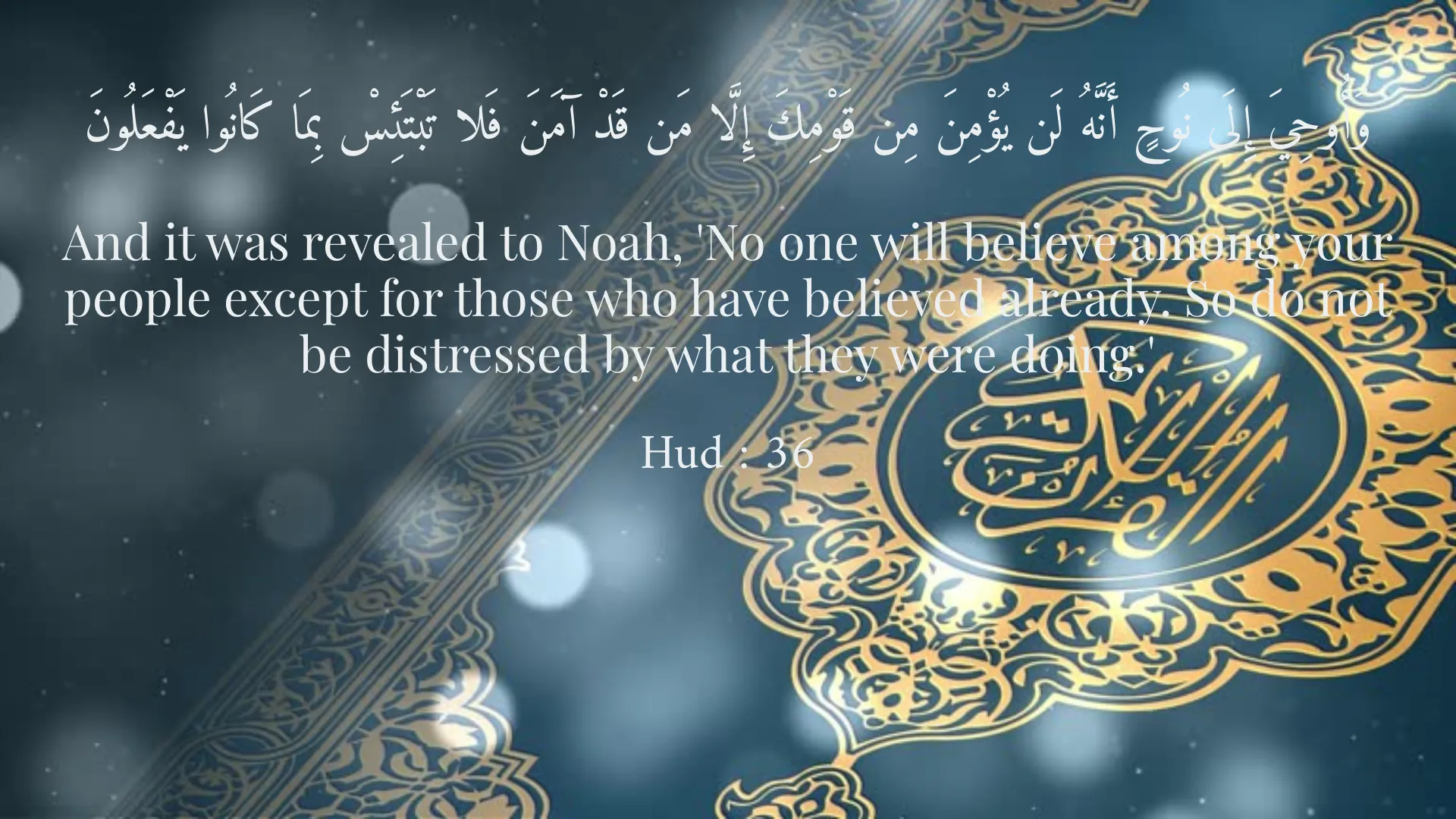
وَأُوحِيَ إِلَى نُوحٍ أَنَّهُ لَن يُؤْمِنَ مِن قَوْمِكَ إِلَّا مَن قَدْ آمَنَ فَلا تَبْتَئِسْ بِمَا كَانُوا يَفْعَلُونَ
And it was revealed to Noah, 'No one will believe among your people except for those who have believed already. So do not be distressed by what they were doing.'
Hud : 36
أَمْ حَسِبْتُمْ أَن تَدْخُلُوا الجَنَّةَ وَلَمَّا يَعْلَمِ اللَّهُ الَّذِينَ جَاهَدُوا مِنكُمْ وَيَعْلَمَ الصَّابِرِينَ
Did you think that you would enter Paradise without [having] like that of those who passed on before you? They were struck by poverty and adversity and were shaken until [the Messenger] and those who believed with him said, 'Where is the help of Allah?' Unquestionably, the help of Allah is near.'
Al-Imran : 165
يَاأَيُّهَا الَّذِينَ آمَنُوا اسْتَعِينُوا بِالصَّبْرِ وَالصَّلَاةِ ۚ إِنَّ اللَّهَ مَعَ الصَّابِرِينَ
O you who have believed, seek help through patience and prayer. Indeed, Allah is with the patient.
Al-Baqarah : 153
Short Story
Once upon a time, there was a young man named Yahya. He always dreamed of becoming one of the prophets of God one day. Yahya found himself facing many difficulties and challenges in his life. However, he learned that behind every apparent defeat lies a great lesson. One day, he came across a Quranic verse that said, 'Indeed, with hardship comes ease,' and he realized that there is certainly ease after every hardship. From that day forward, Yahya began to think differently about his challenges and managed to learn from every trial he faced.